LTL, short for less-than-truckload, sits between parcel shipping and a full trailer. It is the usual way to move a few pallets without paying for a whole truck, and it is one of the most searched topics in freight. This guide explains what LTL is, how it differs from parcel and from full truckload (FTL), what the size ranges mean, and what to check before choosing it. The size ranges come from the National Motor Freight Traffic Association (NMFTA), which publishes the freight classification system LTL pricing relies on. LTL freight is the shared-trailer service: the carrier builds each trailer from several shippers' loads and prices each shipment from inputs such as class, weight and distance.
What LTL Shipping Is
NMFTA describes LTL as a method in which the trailer carries freight from several sources, with the carrier possibly making multiple pickup and drop-off stops. Each shipper pays for the space and handling its freight uses instead of the whole trailer. NMFTA says LTL is suited to occasional, smaller shipments where delivery times can be flexible.
The same description explains the trade-offs. The freight may be loaded and unloaded at more than one point. Transit can therefore be longer, and the chance of loss or damage is higher than when a load goes directly to its destination.
Parcel, LTL and Full Truckload Compared
| Parcel | LTL | Full truckload (FTL) | |
|---|---|---|---|
| Typical size (NMFTA) | Up to 150 lb per package | 150 to 10,000 lb per shipment; generally one to six pallets; a truckload carrier would expect under 12 linear feet | Typically a load that fills a 53-foot dry van trailer |
| Packaging | Individual boxes | Usually pallets or crates | Loaded for a whole trailer |
| What the price is based on (NMFTA) | Weight, dimensions and distance | Freight classification, dimensions, weight, density, distance and handling needs | One trailer contracted to a single shipper |
| Handling | Not covered in the NMFTA comparison | May be loaded and unloaded at several points | Goes directly from origin to destination |
| Where it fits (NMFTA) | Smaller, lightweight shipments | Occasional, smaller shipments with flexible delivery | Large volumes, urgent or fragile goods, frequent shipments |
These figures describe typical use, not legal limits. Carriers set their own cutoffs for what they accept as an LTL shipment, and different published sources give different ranges, so confirm the limits with the carrier you plan to use.
How LTL Is Priced
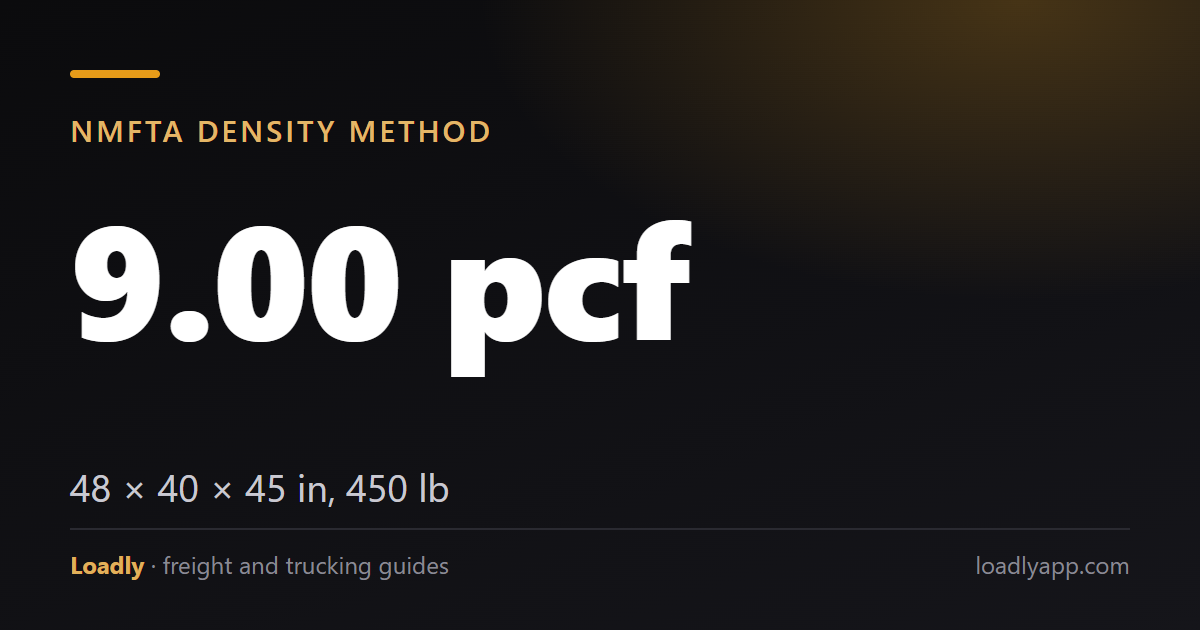
NMFTA lists the inputs to an LTL price as dimensions, weight, density, distance, the NMFC classification code, volume and handling needs. The classification and density parts are explained, with worked arithmetic, in LTL Shipping: How Freight Class and Density Are Calculated. On top of the base charge, carriers add accessorial services where needed. NMFTA gives liftgate service and inside delivery as examples. Accessorials are priced in each carrier's own tariff or contract, so the cheapest base rate is not always the cheapest total.
To check the density of a pallet yourself, the LTL Density Calculator uses the method NMFTA publishes.
Parcel, LTL or Truckload? Three Shipments
Three made-up shipments, sorted by the size ranges above:
- A 40-pound box. Under 150 pounds, in a single box: a parcel shipment.
- Three pallets weighing 2,400 pounds in total, delivery date flexible. This is within the 150 to 10,000 pound range, within one to six pallets, and the delivery is flexible: a typical LTL shipment.
- A load of 26 pallets that fills a 53-foot dry van. It is far above the one-to-six-pallet range and fills a trailer: a full truckload.
Shipments near a boundary, such as seven or eight pallets or something just over 10,000 pounds, may be handled differently by different carriers. NMFTA notes that a truckload carrier would expect an LTL shipment to be under 12 linear feet, and that larger volumes can go as volume LTL if a carrier offers it.
Comparing LTL Carriers Before You Book
Terms differ between LTL carriers, and between small regional LTL trucking companies and large national ones, so a short checklist helps:
- Registration and insurance. A for-hire interstate carrier operating commercial motor vehicles needs to be registered with FMCSA, and the federal minimum for non-hazardous freight is $750,000 of liability insurance. See Federal Minimum Liability Insurance for Trucks, Explained.
- Claims terms. Ask for the carrier's liability limit and claims filing period in writing. By statute a carrier cannot set a filing period shorter than nine months, and the carrier has fixed response deadlines. See Freight Loss and Damage Claims: Deadlines and Carrier Duties.
- Accessorials. Ask which fees apply for liftgate, inside delivery and residential delivery, and how reclassification and reweighing charges are handled.
- Documentation. Put the correct piece count, dimensions and weight for each pallet on the bill of lading.
No carrier is rated or recommended here. Cross-border LTL adds customs requirements, and parcel dimensional weight is a separate pricing system (our free tools include a calculator for the arithmetic). Terms such as accessorial and consignee are defined in Freight Terms Glossary: Trucking and Shipping Definitions From Federal Sources. The paperwork is explained in Shipper, Carrier and Consignee: Who Does What in a Freight Shipment.
Frequently Asked Questions
What does LTL mean in shipping?
Less-than-truckload. The shipment is too large for parcel but does not need a whole trailer, so it shares space with other shippers' freight.
How many pallets is an LTL shipment?
NMFTA says shipments of one to six pallets are generally considered LTL, and that a truckload carrier would expect an LTL shipment to be under 12 linear feet. Carriers set their own cutoffs.
Is LTL cheaper than full truckload?
For smaller loads it is generally cheaper because you pay only for the space you use. NMFTA also notes that for frequent deliveries the economies of scale of full truckload can come into play.
Why is there a higher risk of damage in LTL?
Because freight may be loaded and unloaded at several points, which raises the chance of loss or damage compared with a direct full truckload.
Sources
NMFTA pages read on 11 October 2026; they carry no publication date.