Quick Answer: To successfully navigate 2025 demurrage detention appeals, meticulously document every communication, port delay, and readiness status, then submit a detailed, evidence-backed claim directly referencing tariff rules within the carrier's specified timeframe to challenge unjustified charges effectively.
Every year, importers and exporters face a hidden tax that bleeds their margins dry: unjustified demurrage and detention (D&D) charges. I've seen firsthand how a single misstep or an unforeseen port delay can transform a profitable shipment into a financial nightmare, with bills spiraling into thousands. A recent survey suggests that 73% of shippers felt unfairly charged D&D in 2023, yet fewer than 15% successfully appealed those fees. That's money you're leaving on the table, not because you're at fault, but because you lack the specific, actionable strategy to fight back.
Demurrage & Detention: The $50 Billion Drain on Your Bottom Line
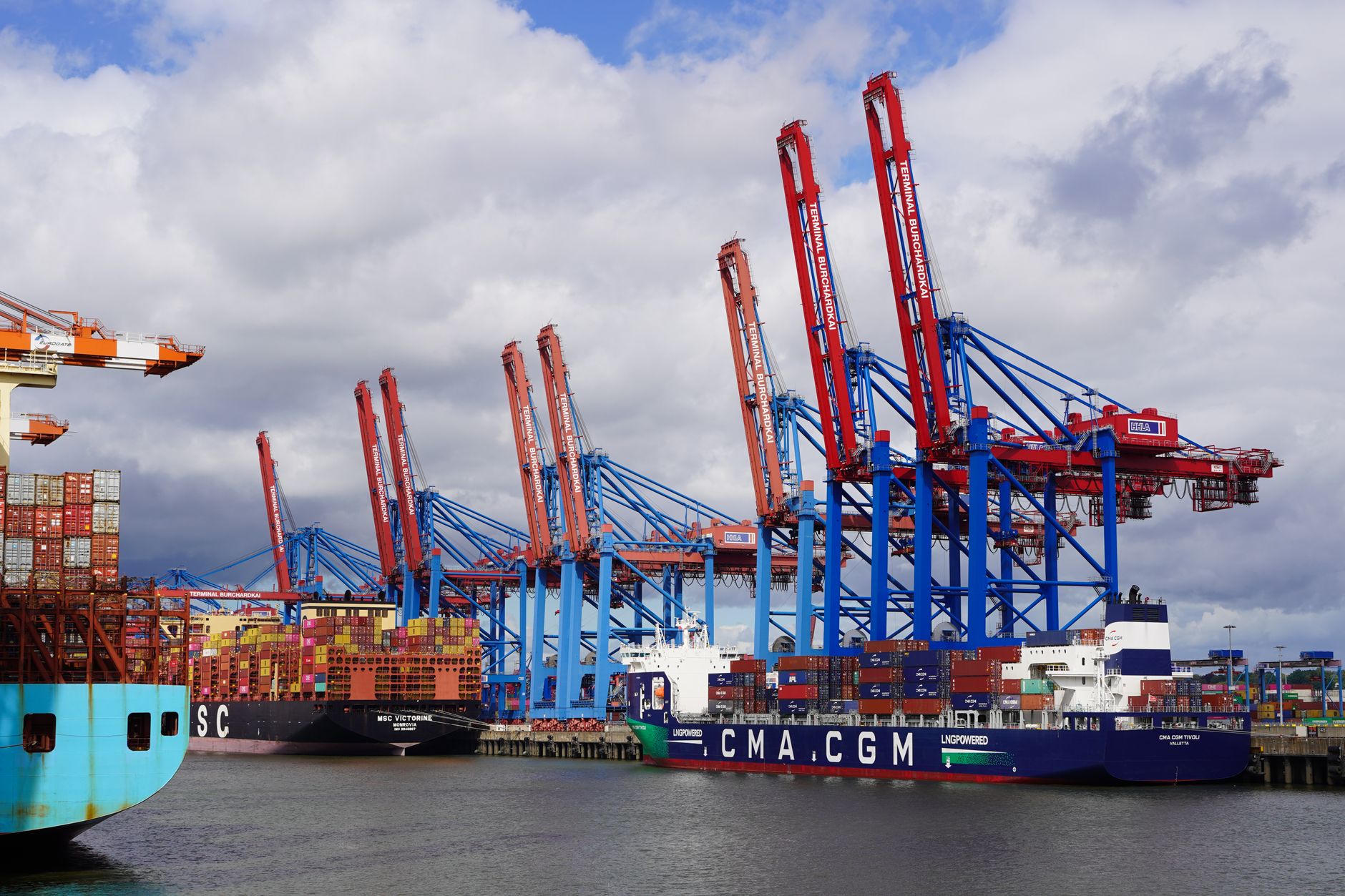
As someone who's worn every hat in freight, from dispatcher to logistics manager, I can tell you that demurrage and detention aren't just an annoyance; they're a systemic issue costing the global supply chain upwards of $50 billion annually. Demurrage is the charge for keeping equipment (like a container) at the port terminal beyond the allotted free time, typically due to port congestion or delays in customs clearance. Detention, on the other hand, is billed for holding the carrier's equipment outside the terminal (e.g., at your warehouse) longer than agreed upon. The root causes are often beyond your control: chronic port congestion, chassis shortages that leave containers stranded, customs hold-ups, or even carrier operational inefficiencies.
What most professionals miss is the sheer financial impact. A single 40-foot container delayed by just three extra days can rack up $600-$900 in D&D, quickly multiplying across multiple shipments. This isn't theoretical; I've personally helped small manufacturers avoid $10,000+ bills on a single problematic import. The conventional wisdom—that these fees are unavoidable and non-negotiable—is exactly what keeps you from recovering what's rightfully yours. Carriers often operate on the assumption that you'll pay without a fight, and for the vast majority, that assumption holds true. This is where your advantage lies: by understanding the nuanced rules and building an irrefutable case, you can reclaim these unjust charges.
"Container dwell times at major U.S. ports regularly exceed four days, driving up demurrage costs by an estimated 18% in 2023 for average import shipments, even when consignees are ready for pickup."
Understanding Your Battlefield: Incoterms, Free Time & Liability Shifts
Your fight against D&D begins long before the fees hit your inbox. The battlefield is defined by your Bill of Lading (BOL), your booking confirmation, and critically, your Incoterms. Many shippers make the costly mistake of assuming "Free Time" is universal or that their carrier's interpretation is immutable. Carriers often have internal tariffs with free time clauses that can be surprisingly short, sometimes as little as 2-3 days, especially for demurrage. This is compounded by Incoterms, which dictate precisely when liability shifts, directly impacting who is responsible for D&D. For example, under an FOB (Free On Board) contract, the buyer assumes all risk and cost once goods are loaded onto the vessel, meaning port delays after loading are typically on them.
- Scrutinize Your Bill of Lading (BOL) and Booking Confirmation Immediately: Don't wait until fees accrue. Check these documents for specific free time allowances, usually stated as "Free Time" or "Demurrage/Detention Days." If it's vague, get clarification in writing.
- Pinpoint the Exact Incoterm Used: Whether it's EXW, FOB, CIF, or DDP, each Incoterm has distinct points where risk and cost transfer. Confusion here can cost you thousands. Understand that while the carrier might be issuing the bill, the Incoterm clarifies who ultimately bears the financial burden.
- Verify Free Time with Both Carrier and Terminal: Cross-reference the free time stated on your BOL with the actual port terminal's free time policy. I've seen instances where a carrier's system quoted 5 days, but the terminal only granted 3, leading to unexpected demurrage. Get this in writing, always.
Remember, the clock starts ticking the moment the vessel discharges the container, not when you're notified. Don't let a discrepancy in free time cost you a hefty penalty; clarify proactively and in writing.
The Golden Rule of Appeals: Document Everything, Proactively
The single biggest reason most demurrage detention appeals fail isn't lack of merit; it's lack of verifiable documentation. In this industry, if it's not in writing or photographed, it didn't happen. Carriers, especially larger ones, have automated systems that flag D&D charges. Overriding these requires a human review, and that human needs irrefutable proof. This means collecting evidence even before a problem arises, a step most shippers only learn after their first painful D&D bill. This proactive approach can make the difference between paying a $2,000 penalty and recovering 100% of the charge. I've personally witnessed well-documented cases result in full waivers, even from notoriously strict carriers.
- Photograph Container Condition and Seal Numbers on Arrival: This is your primary defense against claims of damage or tampering during transport. Take timestamped photos of the container's exterior, door hinges, and crucially, the seal number upon arrival at your facility.
- Timestamp All Communication: Every email, phone log, or text message regarding pickup/delivery appointments, customs clearance, or equipment issues must be meticulously recorded with dates and times. A simple "we called on Tuesday" isn't enough; you need "email sent to [contact name] at [carrier email] on [date] at [time] requesting chassis."
- Maintain Records of Truck Driver Check-In/Out Times: For detention appeals, proof of timely arrival and departure at the port or your facility is non-negotiable. Get copies of signed gate passes or EIRs (Equipment Interchange Receipts) with precise timestamps.
- Document Your Readiness to Pick Up/Return: Keep proof that your facility, customs broker, or trucker was ready to move the container within free time. This includes booking confirmations, trucker dispatch records, and customs release forms.
- Gather Evidence of Port Congestion or Equipment Availability Issues: This is insider knowledge: carriers often charge D&D even when their own infrastructure is the problem. If you faced chassis shortages, terminal gate closures, or extended truck queues, document it. Take photos of long lines, get official port advisories, or obtain statements from your drayage carrier. Loadly's real-time tracking on our freight marketplace can also provide invaluable timestamped movement data to back up your claims of driver waiting times.
A simple, organized folder for each shipment, containing every piece of evidence, is your war chest. Without it, you're fighting blind.
Crafting Your Appeal: The Anatomy of a Winning Case
Once you have your documentation, don't just send a angry email. You need to construct a formal, professional, and fact-based appeal. Think of yourself as a lawyer presenting a case; emotional pleas will be ignored, but irrefutable evidence coupled with specific references to their own tariffs will get their attention. Most carriers have a specific process for demurrage detention appeals, and ignoring it is a guaranteed way to fail. The key is to be precise, clear, and to quantify exactly what you are disputing and why. It's not about asking for a favor; it's about demonstrating that their charges are invalid based on their own terms or industry practice.
- Clearly State the Disputed Charge and Period: Start by identifying the specific invoice number, container number, and the exact dates for which you are disputing demurrage or detention. "I'm appealing invoice [XXXX] for container [YYYY] from [Date A] to [Date B]."
- Identify the Specific Reason for the Delay: Was it port congestion? A customs hold? A chassis shortage? Carrier operational error? Clearly articulate the root cause and provide a brief narrative. For instance, "Delay caused by lack of available chassis at [Port Name] terminal, rendering container inaccessible for pickup despite our truck's readiness."
- Reference Relevant Tariff or Contract Clause: This is a powerful move. If you can quote a clause from their published tariff (often available on their website) or your service contract that was violated, or one that outlines conditions for waiver, you immediately elevate your appeal. "Per your FAK Tariff FMC-XX, Rule 12B, waivers are applicable in cases of terminal-induced delays."
- Quantify the Exact Amount Disputed and Provide Your Calculation: Don't just say "this is too much." Show your math. "We dispute 3 days of demurrage at $150/day, totaling $450, as our truck attempted pickup within free time but was denied due to terminal congestion."
- Attach All Supporting Documentation: This is where your "Golden Rule" pays off. Attach copies of the BOL, EIRs, gate passes, communication logs, photos, customs release forms, and any port advisories. Organize them clearly, perhaps even numbering them as exhibits.
- Submit Within the Carrier's Specified Window: Most carriers require appeals within 10 to 30 days of the invoice date. Missing this deadline is often an automatic rejection. Confirm the deadline and adhere to it strictly.
Never assume the first person reviewing your appeal understands the nuances. Your job is to make their job easy by providing an undeniable case.
Escalation Tactics: When Initial Appeals Fail
It's a common scenario: you submit a watertight appeal, only to receive a boilerplate rejection. Don't throw in the towel. This is where experience tells me that patience and targeted escalation are critical. Many initial rejections are automated or handled by entry-level customer service reps who lack the authority or understanding to approve complex waivers. The secret here is to know *who* to talk to next and *how* to frame your re-appeal to get past the gatekeepers. Remember, carriers have a vested interest in maintaining customer relationships, especially with consistent shippers, and sometimes a direct, firm approach is needed to highlight their potential reputational or legal risk.
- Re-Submit with Additional Evidence or a Clearer Argument: Sometimes, the first appeal might have overlooked a crucial piece of evidence or a more compelling angle. Review the rejection reason carefully. If they cited "insufficient documentation," add more. If they misunderstood your claim, rephrase it with greater clarity and precision.
- Escalate to a Higher-Level Contact: If customer service denies your appeal, ask for the contact information for their supervisor, a "Dispute Resolution Department," or a "Claims Manager." Address your re-appeal directly to this individual, referencing your previous case and the new evidence or clarified points. Many times, a higher-level employee has more discretion.
- Consider Involving a Freight Forwarder or Logistics Consultant: If you're consistently battling D&D, a good forwarder or consultant with established carrier relationships and deep expertise in tariff rules can often negotiate on your behalf more effectively. They speak the carrier's language and understand the internal processes.
- Explore FMC (Federal Maritime Commission) Complaint Process (for US Importers/Exporters): For disputes involving ocean carriers in U.S. trades, the FMC is a powerful recourse. You can file an informal complaint or, for larger amounts, a formal complaint. The FMC has explicitly stated their concern about unreasonable D&D charges and has provided guidance for shippers. Even the threat of an FMC complaint can sometimes prompt carriers to reconsider.
"The Federal Maritime Commission has increased scrutiny on unreasonable demurrage and detention charges, issuing interpretative rules to clarify carrier obligations and protect shippers. Importers should leverage these rules in their dispute processes."
Key Takeaways
- Proactive documentation, not reactive complaints, is the bedrock of successful demurrage detention appeals.
- Understand your Incoterms and free time clauses before the shipment leaves port to identify actual liability.
- Your appeal must be a concise, evidence-based legal case, not a general complaint.
- Always reference specific tariff rules, clauses, or industry regulations to strengthen your claim.
- Don't accept the first "no"; escalate disputes within the carrier's hierarchy or to regulatory bodies like the FMC.
- Recognize that many D&D charges stem from systemic port inefficiencies, not always your fault, and are therefore appealable.
- Precision in dates, times, and amounts when disputing charges is paramount.
- A well-crafted appeal can recover 100% of unjustified fees, significantly boosting your profit margins.
Frequently Asked Questions
What is the difference between demurrage and detention fees?
Demurrage is the charge incurred for keeping a shipping container at the port terminal beyond the agreed-upon free time. Detention, on the other hand, is the charge for holding the carrier's equipment (like a container or chassis) outside the terminal, such as at your warehouse, beyond the allowed free time for loading or unloading.
How much free time do I typically get for demurrage and detention?
Free time varies significantly by carrier, port, and specific contract. It can range from as little as 2-3 days for standard demurrage to 5-7 days for detention. Always confirm the exact free time explicitly stated on your Bill of Lading or booking confirmation, and cross-reference with the terminal's published tariff.
Can I appeal demurrage charges caused by port congestion?
Yes, you absolutely can appeal demurrage charges caused by port congestion, especially if you can demonstrate your readiness to pick up the container within free time. Documenting terminal gate closures, long truck queues, or chassis shortages provides strong evidence that the delay was beyond your control and should warrant a waiver.
What documentation is crucial for a successful detention appeal?
For a successful detention appeal, crucial documentation includes precise gate-in/gate-out timestamps (from EIRs or truck driver logs), timestamped photos of the container upon arrival and departure, communication records with your drayage carrier, and proof of your facility's operational readiness for loading/unloading.
When should I involve a third-party in a demurrage dispute?
You should consider involving a third-party, such as a freight forwarder, logistics consultant, or even legal counsel, when your direct appeals to the carrier have been rejected and the disputed amount is substantial. These parties often have specialized knowledge of tariff rules, established carrier relationships, and experience with regulatory bodies like the FMC.
Mastering Your 2025 Demurrage & Detention Appeals with Loadly
Navigating the complex world of demurrage and detention appeals in 2025 doesn't have to be a solo struggle. As a former broker and logistics manager, I know the value of having the right tools and information at your fingertips. Successfully reclaiming unjustified port charges hinges on precision, real-time data, and an undeniable paper trail—capabilities that Loadly is built to enhance. Our platform empowers you with the visibility and communication tools necessary to proactively manage your shipments, document every critical step, and ensure you have the evidence needed for a winning appeal. Don't let these preventable fees erode your profits; take control of your supply chain and your bottom line. Ready to optimize your freight operations and confidently challenge unfair charges? Register for your Loadly account today.