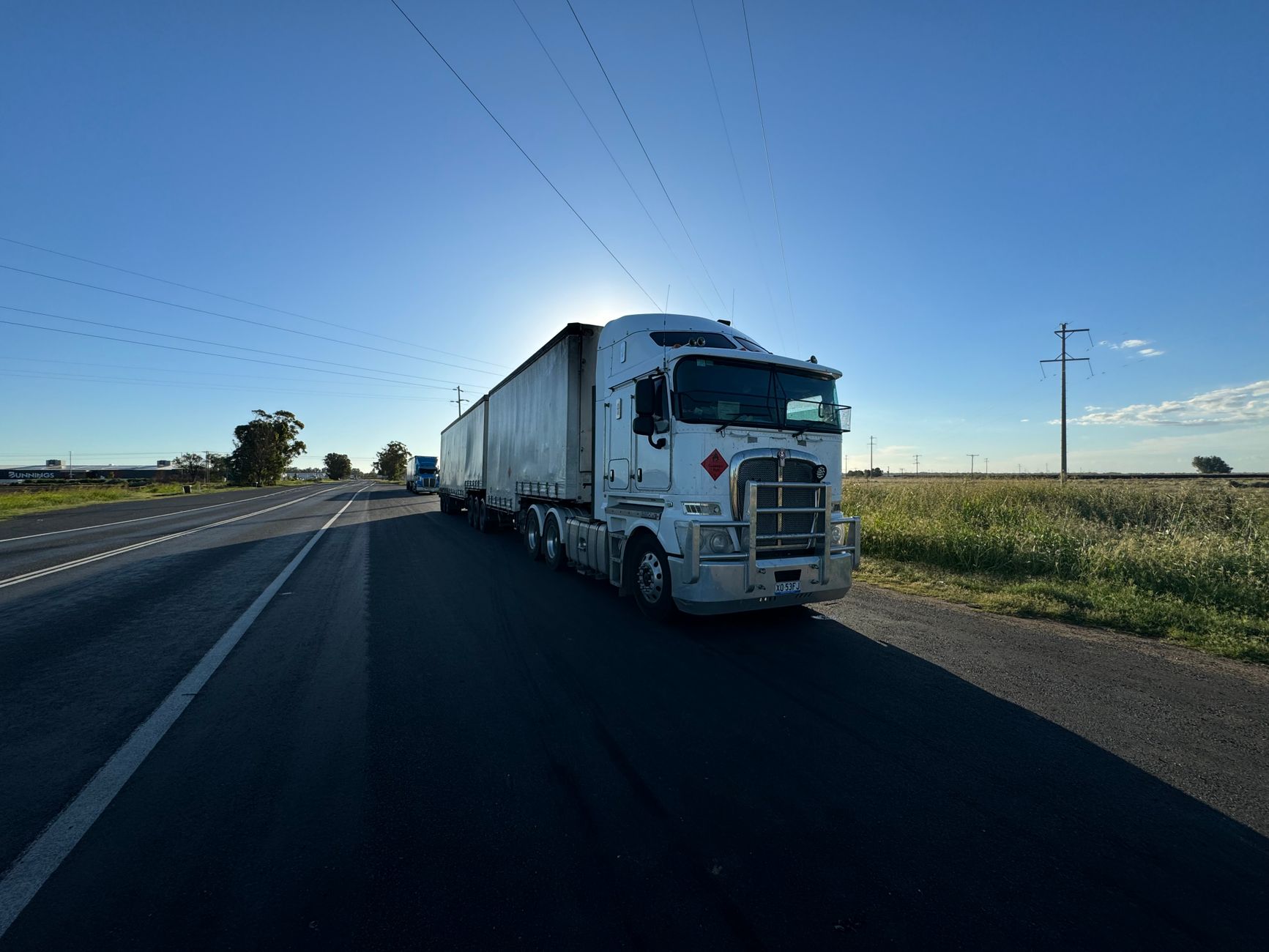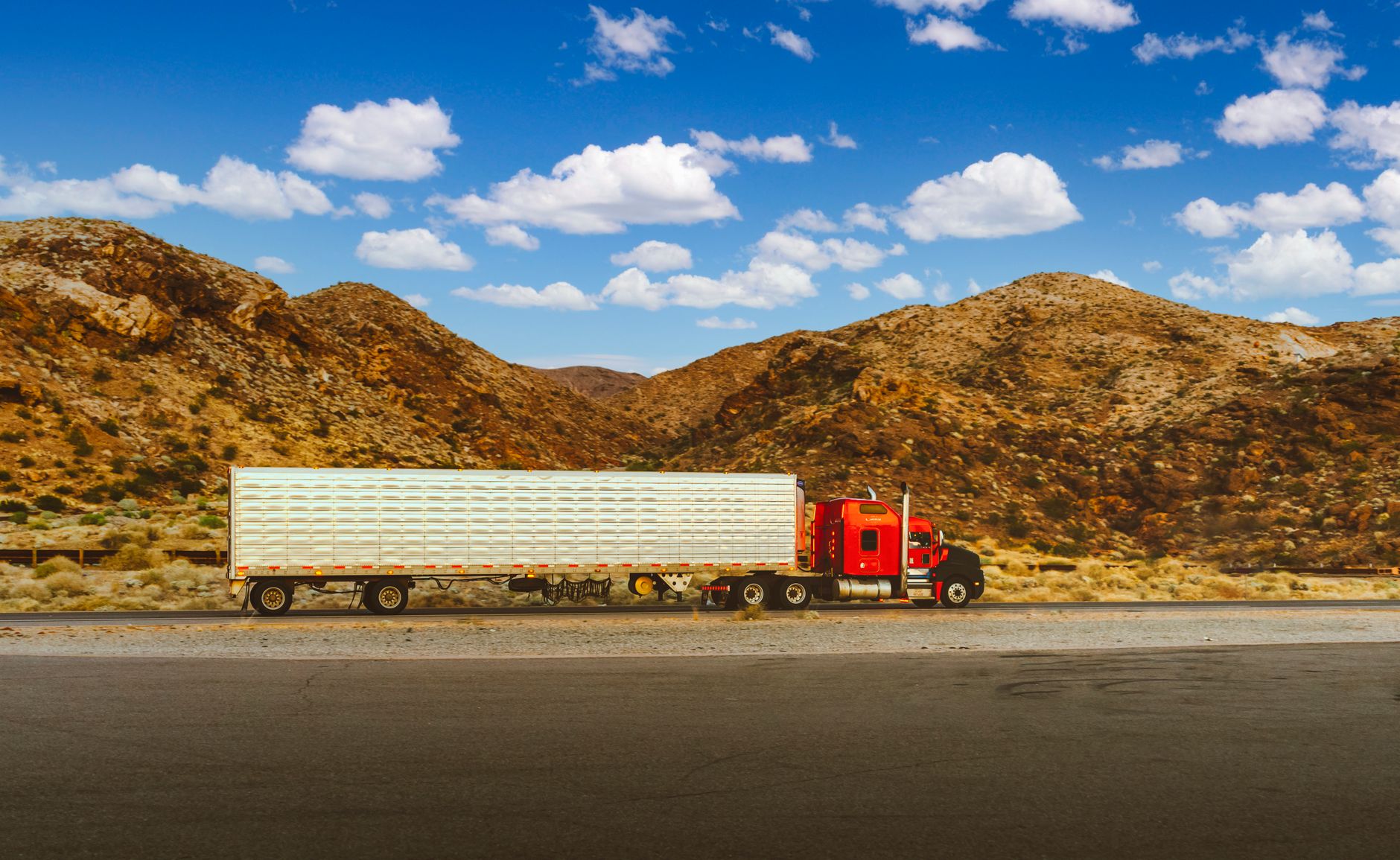
Whether a driver needs a commercial driver's license, and which group, depends on the vehicle, not the job title. The federal definitions in 49 CFR part 383 turn on weight ratings, towed weight, passenger capacity and hazardous materials. The sections below sort vehicles into groups, list the endorsements and the restriction codes, and separate the three age and training rules that are often run together.
Which Group Does a Vehicle Fall Into?
| Group | Definition (383.5, 383.91) |
|---|---|
| A, combination vehicle | Gross combination weight rating (or weight) of 26,001 lb or more, whichever is greater, where the towed unit is rated (or weighs) more than 10,000 lb |
| B, heavy straight vehicle | A single vehicle rated or weighing 26,001 lb or more, or such a vehicle towing a unit of 10,000 lb or less |
| C, small vehicle | Meets neither A nor B, and is designed to transport 16 or more passengers including the driver, or is of any size and is used to transport hazardous materials |
The word "hazardous materials" in Group C has a specific meaning in 383.5: material required to be placarded under subpart F of 49 CFR part 172, or any quantity of a listed select agent or toxin. A small van carrying a few labelled packages that need no placard does not fall in Group C. For when placards are required, see Hazmat Placarding. The CDL rules apply in interstate and intrastate commerce (49 CFR 390.3(b)).
Find the Group
Rules used: the greater of rating and actual weight; a combination's rating is the sum of the unit ratings; A is tested before B, and B before C. Common mistakes: treating a 26,000 lb truck and a 10,000 lb trailer as Group A (the towed unit must be over 10,000 lb), and forgetting that a heavy truck towing a small trailer is still Group B.
Eight Vehicles
| Vehicle (made up) | Group | Why |
|---|---|---|
| Box truck, 16,000 lb GVWR | None | Under 26,001 lb, no passengers or hazmat trigger |
| Straight truck, 26,001 lb GVWR | B | Single vehicle at 26,001 lb |
| Truck 26,001 lb towing a 10,000 lb trailer | B | The towed unit is not over 10,000 lb |
| Truck 26,000 lb towing a 10,001 lb trailer | A | 36,001 lb combined, towed unit over 10,000 lb |
| Truck 15,000 lb towing an 11,000 lb trailer | None | 26,000 lb combined is below 26,001 lb |
| Truck 15,000 lb towing an 11,001 lb trailer | A | 26,001 lb combined, towed unit over 10,000 lb |
| Bus built for 16 seats including the driver, 12,000 lb GVWR | C | 16 or more passengers |
| Cargo van, 9,500 lb GVWR, carrying placarded hazmat | C | Any size, placarded hazmat |
A driver who has passed the tests for Group A may operate B and C vehicles, and one who passed B may operate C, with any needed endorsements. Going the other way means retaking the related tests (383.91(c)).
Endorsements
| Code | Needed to operate | Test (383.93) |
|---|---|---|
| T | Double or triple trailers | Knowledge |
| P | Passenger vehicles | Knowledge and skills |
| N | Tank vehicles | Knowledge |
| H | Vehicles used to transport hazardous materials as defined in 383.5 | Knowledge |
| X | A record that the driver holds both N and H (383.153) | The N and H tests |
| S | School buses | Knowledge and skills |
On a commercial learner's permit (CLP) only passenger, school bus and tank vehicle endorsements are allowed. A CLP holder with an N endorsement may operate only an empty tank vehicle, and not one that previously held hazardous materials and has not been purged (383.25). A CLP holder may not drive a commercial motor vehicle carrying hazardous materials. The hazmat endorsement has an extra federal gate: a State may not issue, renew or transfer it unless the Transportation Security Administration has determined that the individual poses no security risk warranting denial, or the individual holds a valid TWIC (383.141).
Restrictions and How to Avoid Them
| Code | Meaning | Triggered by (383.95) | How to avoid it |
|---|---|---|---|
| L | No air-brake equipped CMV | Failing the air brake knowledge test, or taking the skills test in a vehicle without air brakes | Pass the air brake test and test in an air-braked vehicle |
| Z | No full air-brake equipped CMV | Skills test in a vehicle with air-over-hydraulic brakes | Test in a full air-brake vehicle |
| E | No manual transmission CMV | Skills test in a vehicle with an automatic transmission | Test in a manual |
| O | No tractor-trailer CMV (fifth-wheel combination) | Group A skills test with a pintle hook or other non-fifth-wheel connection | Test with a fifth-wheel tractor-trailer |
| M, N | No Class A passenger vehicle; no Class A or B passenger vehicle | Passenger-endorsement skills test in a Group B or Group C vehicle | Test in the larger passenger vehicle |
| K | Intrastate only | Listed as a code in 383.153 | This guide did not check when a State applies it |
| V | Medical variance on the driver record | A medical variance reported to the State (383.95(g)) | Not avoidable by testing |
383.153 also lets a State add its own codes, provided each is explained on the license. The list above is the federal set, not every code a State may print.
Training, Permit Age and Driving Age
- Entry-level driver training (49 CFR 380.603, 380.605). It applies to an entry-level driver: someone who must take the CDL skills test to get a CDL for the first time, to upgrade to Class A or B, or to get a passenger or school bus endorsement for the first time. The hazmat endorsement is included for the knowledge test. The training must come from an entity on FMCSA's Training Provider Registry. Credentials issued before 7 February 2022 are not covered for that credential, and a CLP obtained on or after that date brings the training requirement. Except for the H endorsement, the theory and behind-the-wheel parts must be completed within one year of completing the first part.
- CLP age (383.71). A person must be 18 or older, and provide proof of age, before obtaining a CLP.
- Driving age for qualified drivers (391.11(b)(1)). To be qualified to drive a commercial motor vehicle under part 391, a person must be at least 21, except as subpart G allows. Part 391 qualifications apply to interstate commercial motor vehicle operations (390.3(a)). The part 383 text read for this guide gives no separate minimum age for driving intrastate, so a driver under 21 should check the State's rules.
Frequently Asked Questions
Do I need a CDL for a vehicle under 26,001 lb?
Possibly: if it is designed for 16 or more passengers including the driver, or carries hazardous materials that require placards.
Why does my license say E?
Because the skills test was taken in an automatic. The E restriction bars manual-transmission commercial vehicles until the restriction is removed.
Is 21 the minimum age for a CDL?
Not as a single federal number. A CLP requires age 18 (383.71), and the 21-year minimum in 391.11 is a qualification for driving a commercial motor vehicle under part 391, tied to interstate operations. State rules apply to the rest.
What is the X on a license?
The code for holding both the tank vehicle and hazardous materials endorsements (383.153).
Scope: this guide covers the federal definitions. State fees, test scheduling, the exceptions in 383.3 (certain farm, military and emergency uses) and medical certification are outside it, and none of it is legal advice. Related: Box Trucks, Cargo Vans and Pickups, and Driver Qualification Files.
Sources
- 49 CFR § 383.5 and § 383.91: Commercial motor vehicle groups
- 49 CFR § 383.93: Endorsements and § 383.95: Restrictions
- 49 CFR § 383.153: Information on the CLP and CDL
- 49 CFR § 383.71, § 383.25 and § 383.141
- 49 CFR § 380.603 and § 380.605: Entry-level driver training
- 49 CFR § 391.11 and § 390.3
Last Verified and Change Log
Last verified: 2026-11-04, against the eCFR text of the sections above (current to 2 November 2026). Not verified: State practice on the K restriction and State minimum ages, and the 383.3 exceptions.
- Updated 2026-11-04: verified against 49 CFR 383.5, 383.71, 383.91, 383.93, 383.95, 383.141, 383.153, 380.603, 380.605 and 391.11.
- 2026-10-11: Original guide published.