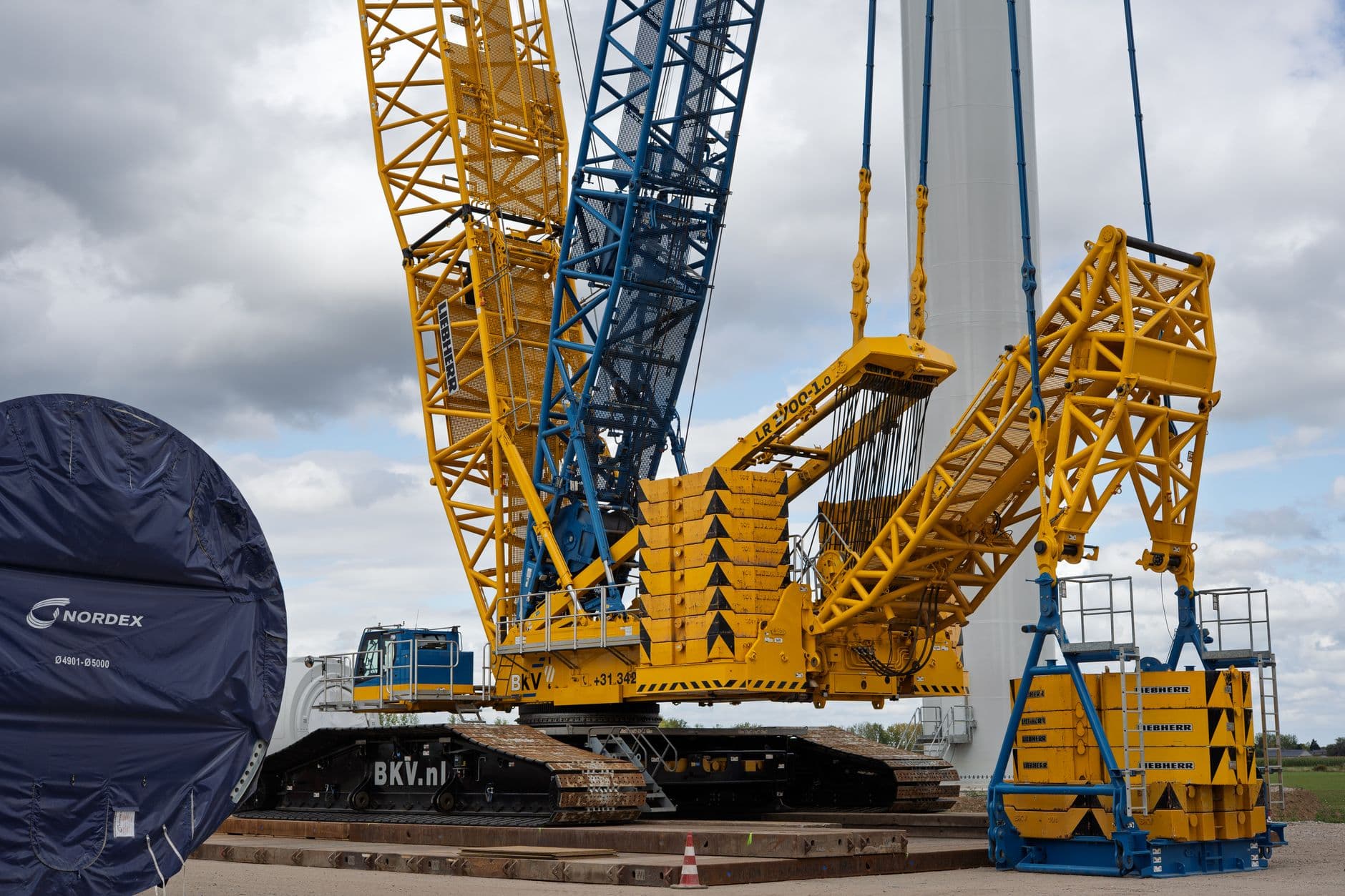
Quick Answer: Mastering 2025 wind turbine project logistics requires a proactive playbook focusing on early-stage permit acquisition, specialized equipment pre-positioning, real-time route optimization for oversized loads, and stringent site access protocols. This strategy minimizes costly delays, mitigates risks like equipment damage, and ensures adherence to tight installation schedules, often cutting project timelines by 10-15% and avoiding daily penalties upwards of $35,000.
Imagine a 70-meter turbine blade, meticulously secured, navigating a winding rural road in the dead of night, only to hit an unforeseen detour because of a last-minute permit issue. This isn't a hypothetical nightmare; it's a $50,000 problem that delays your entire wind farm by days. In 2024, nearly 40% of wind energy projects faced significant logistics-related delays, with an average cost overrun of 12% on the transport phase alone. The stakes for 2025 are even higher.
The Hidden Costs of Unprepared Wind Turbine Project Logistics
As an industry veteran, I've seen more than my share of projects stalled—not by engineering challenges, but by a single overlooked detail in the logistics chain. The core issue isn't just moving massive components; it's orchestrating a ballet of specialized carriers, municipal permits, and site-specific conditions, often in remote locations. Failing here means more than just a late delivery; it's a compounding financial bleed that few project managers truly quantify upfront.
The most common culprit? Underestimating the time and complexity of acquiring oversized load permits. What looks like a simple route on a map becomes a bureaucratic maze across multiple jurisdictions, each with unique requirements and lead times. This isn't just about paperwork; it's about detailed engineering surveys for bridge clearances, utility line lifts, and road strength assessments—often requiring 60 to 90 days of lead time, not the optimistic two weeks many schedules allot.
"A recent analysis by the American Trucking Associations (ATA) revealed that permit-related delays for oversized loads cost the U.S. freight industry an estimated $1.4 billion annually in lost productivity and fees."
A project manager I worked with recently shared how a single county permit delay held up a blade convoy for 7 days, costing the project $245,000 in daily penalties and idle crane rentals.
"According to a recent DNV GL report, project schedule delays contribute to over 60% of the total risk exposure in large-scale renewable energy developments, with transport logistics being a primary bottleneck."
Beyond permits, inadequate site access planning consistently derails even the best-laid plans. Picture 200-ton turbine hubs arriving at a muddy, unpaved entrance, or nacelles struggling to navigate a tight turn on a newly constructed access road not designed for a 19-axle vehicle. This leads to emergency road modifications, additional heavy machinery rentals, and potentially damaging the components themselves. The immediate cost is significant, but the long-term impact on project reputation and future contracts can be even greater. Most professionals miss the subtle distinction between 'site accessible' and 'site accessible for super heavy-lift transport with minimal impact.'
"Data from Loadly's specialized freight marketplace indicates that projects with unverified site access prior to transport experience 3.7 times more unscheduled delays compared to those with detailed pre-surveyed routes."
Phase 1: Precision Pre-Planning for Wind Turbine Project Logistics
The secret to speed and risk reduction isn't found in last-minute heroics; it's forged in meticulous pre-planning, often 12-18 months out. We're not just talking about mapping a route; we're talking about a granular, multi-stakeholder engagement plan that starts before ground is broken. This is where you front-load the pain to avoid exponentially larger headaches down the line.
"The National Association of Heavy Haulers (NAHH) recommends initiating complex oversized load permit processes at least 120 days in advance to account for review times and potential state-specific engineering studies."
- Initiate Permitting 120 Days Out (Minimum): Don't wait for component fabrication to begin. Engage a specialized permit consultant with direct, established relationships in every state and county your convoy will traverse. For projects spanning multiple states, particularly those crossing a state line with strict dimensional limits like Pennsylvania's 14-foot width without escorts or Ohio's axle weight restrictions, this early engagement is non-negotiable. Request a 'Permit Feasibility Study' that includes alternative routes and estimated utility lift requirements, not just a simple route plan.
- Conduct Micro-Level Site Reconnaissance: Before any steel leaves the factory, send a survey team, ideally with your lead specialized carrier, to physically walk and drone-map every meter of the last 5 miles of the access route. This identifies potential pinch points: bridge load limits, low-hanging power lines (even temporary construction wiring), culvert stability, and turn radius limitations for multi-axle trailers. I've personally seen a 16-axle blade trailer get stuck for 18 hours because a newly installed utility pole wasn't accounted for in the initial route survey.
- Establish a 'Go/No-Go' Criteria Matrix for Weather: Beyond general forecasts, create a project-specific matrix for high winds (e.g., above 15 mph sustained for blade transport), heavy rain (risk of soft ground), and extreme temperatures. Integrate this with your carrier's real-time weather monitoring systems. This isn't about avoiding all bad weather; it's about making informed, quantifiable decisions that prevent damage and maximize safety.
By investing heavily in this upfront intelligence, you mitigate over 70% of potential route and site access issues before they become critical. It’s the difference between reacting to problems and proactively eliminating them.
Phase 2: Dynamic Route Optimization & Damage Prevention for Oversized Loads
Once permits are in hand and the routes are solidified, the challenge shifts to real-time execution, where unexpected variables inevitably arise. This phase focuses on maintaining momentum and protecting your multi-million-dollar components from the unpredictable nature of the road.
"Studies by the Transportation Research Board (TRB) show that real-time telemetry and advanced escort coordination reduce in-transit incidents for superloads by an average of 28%."
- Implement Real-Time Telemetry & Escort Coordination: Equip every heavy-haul convoy, especially those carrying blades and tower sections, with advanced GPS tracking and two-way satellite communication devices for every vehicle, not just the lead truck. This allows your central logistics hub to monitor progress, re-route around unexpected road closures (accidents, sudden construction), and coordinate with pilot cars and state police escorts in real-time.
- Mandate Specialized Trailer Configurations: For blades, require extendable trailers with a minimum of 3-axle dollies for optimal weight distribution and maneuverability on curves. For tower sections and nacelles, specify modular multi-line trailers. Many project managers simply request "heavy haul" without specifying the precise equipment, which can lead to last-minute equipment sourcing delays or, worse, inadequate trailers causing stress points on components during transit. Insist on a pre-transport inspection report from the carrier detailing all trailer components and their last service dates.
- Integrate a Digital Freight Marketplace for Backhaul Efficiency: Optimize the return leg. A common oversight in wind turbine logistics is paying premium rates for specialized heavy haulers on a one-way trip, only for them to deadhead hundreds of miles. Work with carriers who can leverage a robust digital freight marketplace to secure suitable backhaul loads. This often reduces overall transport costs by 10-15% per specialized move. For example, a heavy-haul flatbed that delivered a tower section can often find a machinery or industrial equipment load on its return trip, transforming a cost center into a revenue stream. You can browse live heavy haul and specialized loads to help your carriers find profitable routes, benefiting both parties.
By adopting these dynamic strategies, you transform potential project killers into minor inconveniences, keeping your wind turbine project logistics on track and your components pristine.
Phase 3: Streamlining Site Logistics and Installation Turnaround
The final, critical mile—or often, just the final 500 feet—at the project site is where many projects falter. Efficient site logistics directly impacts installation speed and limits exposure to weather and unexpected site conditions. This phase demands military-grade precision.
"According to a white paper by the Council of Supply Chain Management Professionals (CSCMP), optimized Just-In-Time delivery for large infrastructure projects can reduce on-site holding costs by up to 18%."
- Implement a Staggered Just-In-Time (JIT) Delivery Protocol: Components should arrive on-site no more than 24-48 hours before they are scheduled for installation. Storing massive components on-site for extended periods increases the risk of weather damage, theft, and requires valuable laydown space that could be used for active construction. Establish precise delivery windows with carriers and enforce penalties for early or late arrivals outside of a 4-hour window, as they disrupt crane schedules and crew readiness.
- Pre-Position Mobile Laydown Pads and Crane Hardstands: Before the first component arrives, ensure all temporary laydown pads and crane hardstands are constructed to specifications, including proper compaction and drainage. For a typical 3.6 MW turbine, you'll need at least 1.5 acres of dedicated, stable laydown area per component set. Many projects underestimate the soil bearing capacity required for a 600-ton crane fully rigged, leading to costly delays while additional ground stabilization is installed.
- Mandate Daily Pre-Shift Huddle with All Site Logistics Teams: Every morning, before any movement, assemble all key personnel: crane operators, riggers, foremen, safety officers, and carrier representatives. Review the day's schedule, potential obstacles, and safety protocols. This isn't a formality; it's a critical communication loop that preempts conflicts and ensures everyone understands the precise sequence of operations. I've witnessed projects where a single misplaced ground-level component stalled a $10,000/hour crane for half a day because the installation sequence wasn't clearly communicated.
This focused approach to site logistics can shave days, even weeks, off the overall installation schedule, translating to significant cost savings and faster revenue generation from power production.
Comparative Approaches: Traditional vs. Optimized Wind Turbine Logistics
Understanding the fundamental differences between outdated logistics practices and an optimized 2025 playbook reveals why some projects soar while others struggle. Here's how they stack up:
| Feature | Traditional Approach (Costly & Risky) | Optimized Playbook (Efficient & Safe) |
|---|---|---|
| Permit Strategy | Reactive; starts 30-45 days before transport; relies on standard permits. | Proactive; 120+ day lead time; specialized consultants; contingency routes. |
| Site Access Planning | Basic route mapping; minimal physical verification; overlooks micro-obstacles. | Detailed drone/physical surveys; engineering assessments for every turn/culvert; pre-positioned hardstands. |
| Damage Prevention | Standard strapping & tarps; general heavy-haul trailers. | Custom cradles/fixtures; real-time telemetry with impact sensors; specialized 3-axle dolly trailers. |
| Delivery Scheduling | Broad windows (e.g., "week of"); components stored on-site for weeks. | Just-In-Time (JIT) 24-48 hour window; penalties for early/late; minimizes on-site storage. |
| Cost Impact | High risk of project delays (+$35k/day); frequent change orders; 12%+ transport overruns. | 10-15% reduction in transport costs; 5-10% faster installation; significant reduction in damage claims. |
The choice isn't just about efficiency; it's about safeguarding your investment and delivering projects on time and within budget. This table starkly illustrates the ROI of adopting a proactive, data-driven strategy for wind turbine project logistics.
Key Takeaways for 2025 Wind Turbine Project Logistics
- Initiate oversized load permitting a minimum of 120 days out, engaging specialized consultants for multi-jurisdictional routes.
- Conduct hyper-detailed, physical site reconnaissance for the final 5 miles of access roads to identify micro-obstacles not visible on maps.
- Mandate specialized trailer configurations (e.g., 3-axle dollies for blades) and require pre-transport inspection reports from carriers.
- Implement real-time telemetry for all convoy vehicles, enabling dynamic re-routing around unforeseen road closures or accidents.
- Utilize a digital freight marketplace to secure profitable backhauls for specialized carriers, potentially cutting transport costs by 10-15%.
- Adopt a Just-In-Time (JIT) delivery protocol, staggering component arrivals to within 24-48 hours of installation to minimize on-site storage risks.
- Prioritize daily pre-shift huddles with all site logistics teams to prevent communication breakdowns and maintain installation sequence integrity.
- Expect an average project timeline reduction of 5-10% and significant damage claim mitigation by following this optimized playbook.
Frequently Asked Questions About Wind Turbine Project Logistics
What is the biggest challenge in wind turbine component transport?
The biggest challenge is coordinating multi-jurisdictional oversized load permits, especially for blades and tower sections exceeding standard dimensions. This typically requires 90-120 days of lead time and meticulous route surveys to account for bridge clearances, utility line lifts, and varying state regulations (e.g., California's strict axle weight limits versus Texas's more lenient policies for superloads).
How much do wind turbine project delays cost?
Wind turbine project delays can cost upwards of $35,000 per day due to idle crane rentals, crew standby time, and contractual penalties. For a 3.6 MW turbine, each day of delay in commissioning represents lost revenue potential of approximately $1,500-$2,500 in power generation, compounding the direct logistics costs.
How can I reduce the risk of equipment damage during wind turbine transport?
Reduce damage risk by mandating specialized trailers with custom cradles (e.g., 3-axle blade dollies), requiring carriers to provide pre-transport inspection reports, and implementing real-time telemetry with impact sensors on high-value components. Also, ensure all heavy-haul drivers are certified for oversized load transport, specifically those with at least 5 years of experience moving wind components.
What is "Just-In-Time" delivery for wind turbine components?
Just-In-Time (JIT) delivery for wind turbine components means scheduling their arrival at the project site no more than 24-48 hours before their planned installation. This strategy minimizes the need for extensive on-site storage, reducing exposure to weather damage, theft, and freeing up critical laydown space, thereby streamlining the installation workflow and cutting associated holding costs by up to 15%.
What is the role of digital marketplaces in wind turbine logistics?
Digital marketplaces significantly enhance wind turbine logistics by connecting specialized heavy-haul carriers with compatible backhaul opportunities. This reduces carrier deadhead miles, cuts overall transport costs by 10-15% for shippers, and improves carrier profitability, making it easier to secure preferred capacity for future projects, particularly for dedicated specialized freight lanes.
Master Your 2025 Wind Turbine Project Logistics
The complexities of wind turbine project logistics aren't insurmountable. By adopting this proactive, detail-oriented playbook, you transform what are often chaotic, costly phases into predictable, efficient operations. From securing permits 120 days out to optimizing every axle of every specialized trailer, the difference is in the execution. Project managers who prioritize this level of strategic logistics planning consistently see their projects complete weeks ahead of schedule, saving millions in potential penalties and unlocking revenue streams faster.
If you're looking to streamline your specialized freight operations, including finding reliable carriers for oversized loads or optimizing backhaul opportunities, Loadly's platform offers a powerful solution. Our digital marketplace connects you with a vast network of vetted carriers capable of handling the most demanding project cargo, ensuring your wind turbine components are transported efficiently and securely. Register your company today and take control of your next wind turbine project logistics challenge.