Quick Answer: A standby letter of credit (SBLC) in 2025 acts as a crucial safety net in international trade, guaranteeing payment or performance if a buyer defaults on their obligations. It mitigates financial and performance risks for exporters, offering a bank-backed assurance of payment and enabling importers to secure favorable terms by providing robust collateral without tying up working capital.
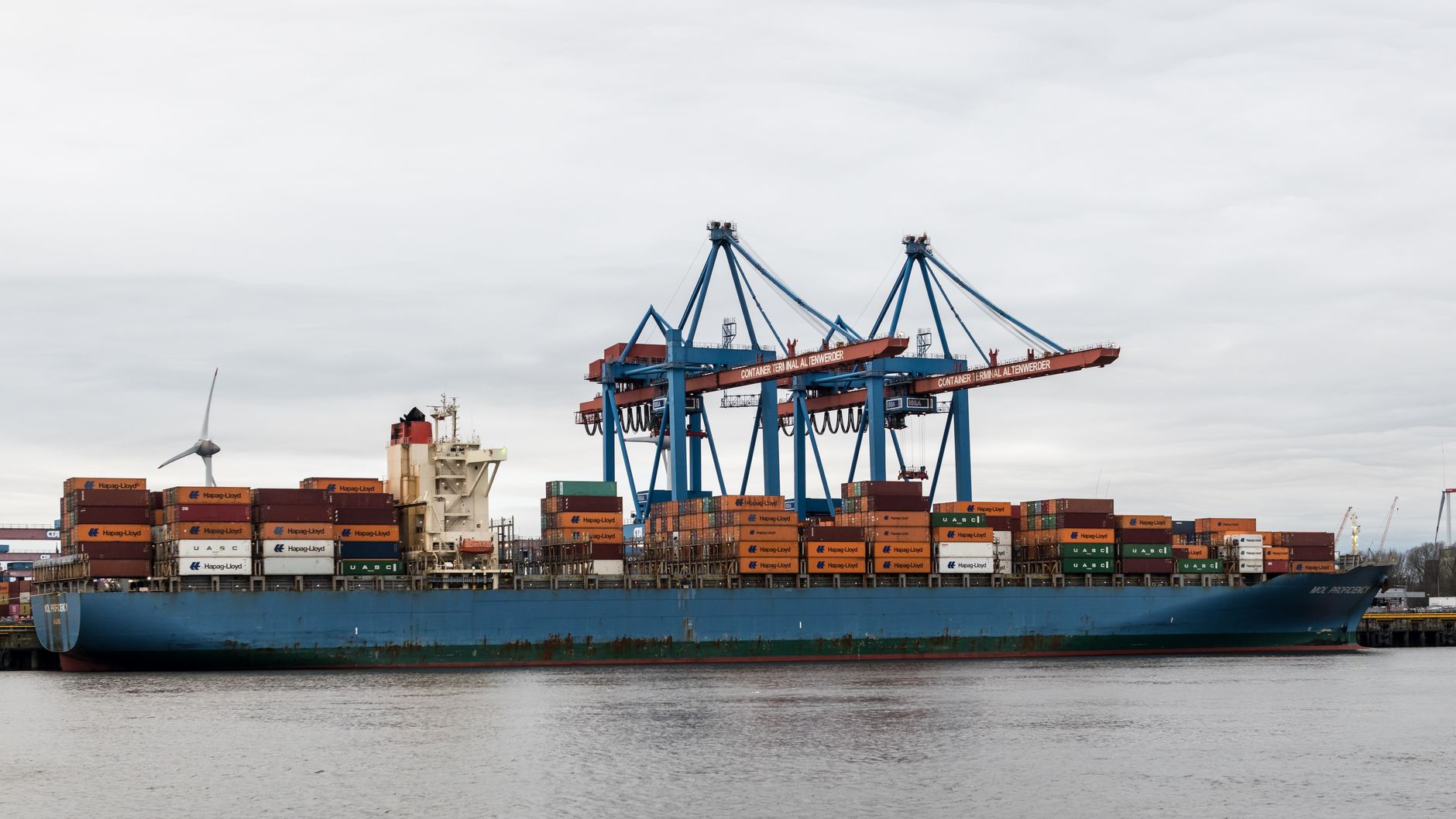
Imagine a container ship, packed with your critical components, sitting idle at the Port of Long Beach, racking up $1,500 in demurrage fees daily. The reason? Your international buyer, citing 'unforeseen economic shifts,' has delayed payment, and your bank simply states, 'that's a commercial risk.' This isn't a hypothetical nightmare; it's a cold reality costing global businesses billions annually. In 2023 alone, disputes over international trade payments led to an average delay of 28 days for 1 in 5 shipments, translating directly into lost revenue and damaged reputations for importers, exporters, and manufacturers caught in the crossfire. The conventional wisdom about 'trusting your partners' simply doesn't hold water when your cash flow is on the line.
The Silent Costs of International Trade Payment Risk
For too long, businesses engaged in global trade have underplayed the inherent risks of cross-border transactions. Relying solely on open accounts or even basic documentary collections in a volatile economic climate is akin to sending a high-value shipment across the country without cargo insurance. The consequences are far more profound than just a missed payment; they trigger a cascade of operational and financial penalties that can cripple a business, especially a mid-sized manufacturer working on tight margins.
The root causes of these risks are multifaceted: geopolitical instability, sudden currency fluctuations, differing legal frameworks, and simply, the occasional bad actor. What most professionals miss is that these aren't just 'macro' issues; they translate directly into micro-level pain points. For instance, a payment default of $100,000 might lead to:
- Port Demurrage and Detention Fines: If goods can't be cleared due to payment issues, containers become liabilities. I've seen clients hit with $300-$500 per day per container in demurrage, escalating rapidly. For a single 40-foot container delayed 15 days, that's an extra $4,500-$7,500 directly out of pocket before factoring in storage.
- Lost Sales and Contractual Penalties: Delayed or canceled orders due to payment disputes can result in immediate loss of revenue, but also breach of contract penalties with downstream customers, potentially costing 10-20% of the total contract value.
- Legal and Collection Costs: Pursuing international debt collection is notoriously expensive and time-consuming. Legal fees can easily consume 20-40% of the outstanding amount, with no guarantee of recovery.
- Supply Chain Disruptions: A single payment issue can sour a supplier relationship, leading to production delays, loss of preferential pricing, or even outright refusal to ship future orders, setting back your entire production schedule by weeks or months.
"According to a 2023 International Chamber of Commerce (ICC) report, global trade finance gaps, primarily driven by perceived payment risks, exceeded $2.5 trillion, disproportionately affecting small and medium-sized enterprises (SMEs) struggling to access reliable trade financing instruments."
The real kicker? Many companies only realize the true cost of these risks when they're already in deep trouble. They perceive complex financial instruments like standby letters of credit as 'too expensive' or 'only for the big players,' failing to calculate the exponentially higher cost of doing nothing. Without a robust financial safety net, a single unforeseen payment default can erode years of profit, making robust risk mitigation, not just growth, your top priority.
Demystifying Standby Letters of Credit (SBLCs) for Global Trade
Let's cut through the jargon: a standby letter of credit (SBLC) isn't how you get paid for a shipment. Think of it as a meticulously crafted emergency parachute. It's a bank's solemn promise to pay a beneficiary (the exporter) if the applicant (the importer) fails to meet a specific contractual obligation, usually payment, and the beneficiary presents the required non-performance documents. Unlike a commercial letter of credit, which is the primary payment mechanism, the SBLC is designed to be called upon only as a last resort – it 'stands by,' ready to act when things go south.
Here's how this critical safety net functions:
- The Agreement: An importer and exporter agree on trade terms, often specifying an SBLC as security.
- Importer's Bank Issues SBLC: The importer (applicant) applies to their bank (issuing bank) for an SBLC in favor of the exporter (beneficiary). The bank assesses the importer's creditworthiness.
- SBLC Transmitted: The issuing bank sends the SBLC to the exporter's bank (advising bank), which verifies its authenticity and informs the exporter.
- Goods Shipped, Services Rendered: The exporter ships the goods or provides services as per the primary contract. The SBLC remains dormant as long as the importer fulfills their obligations.
- Default & Demand: If the importer defaults (e.g., fails to pay on time), the exporter presents specific documents (as stipulated in the SBLC) to the advising bank, demonstrating the importer's non-performance. These might include an unpaid invoice, a declaration of default, or proof of shipment.
- Payment: If the documents comply with the SBLC terms, the advising bank (or directly the issuing bank) pays the exporter, and then seeks reimbursement from the importer.
There are two primary types you'll encounter:
- Financial SBLC: Guarantees payment for goods or services. This is the most common and directly addresses payment risk.
- Performance SBLC: Guarantees performance of a non-financial obligation, such as completing a project by a deadline or adhering to quality standards. If the applicant fails to perform, the beneficiary can claim compensation.
Insider Insight: What most people overlook is that the true power of an SBLC isn't just getting paid if something goes wrong; it's the leverage it gives you *before* anything goes wrong. Knowing an SBLC is in place can streamline negotiations, reduce upfront cash requirements for importers, and significantly enhance trust in new trading relationships. I've seen exporters secure 30-day payment terms with brand-new clients simply because an SBLC provided an ironclad guarantee, whereas without it, they'd demand 50% upfront. This can reduce a buyer's cash conversion cycle by 15-20 days, a huge competitive advantage.
Crafting Airtight SBLC Agreements: Beyond the Boilerplate
A standby letter of credit is only as good as the precision of its wording. Many businesses assume their bank's standard SBLC template is sufficient. This is a critical error. Generic templates are a recipe for disputes, especially when you're dealing with different legal systems and commercial practices. The cost of a rejected claim due to a minor discrepancy can easily exceed the SBLC's value, leaving you back at square one, but with a mountain of legal bills.
To truly safeguard your deals, you need to understand and meticulously review every clause. Here are the crucial elements:
- Expiry Date: This isn't just a date; it's your deadline for presenting documents. Ensure it aligns with your payment terms, potential grace periods, and allows for reasonable time to gather default evidence. A common mistake is setting it too close to your final payment due date, leaving no buffer if payment is late.
- Governing Law: Explicitly state the jurisdiction whose laws will govern the SBLC. This prevents costly international legal battles over which country's laws apply. The Uniform Customs and Practice for Documentary Credits (UCP 600) and the International Standby Practices (ISP98) are global standards that mitigate this, but always specify.
- Presentment Period: This is the number of days after the expiry date that documents can be presented to the bank. A typical period is 21 days, but tailor it to the complexity of the documents you'd need to gather in a default scenario.
- Required Documents for Claim: This is paramount. Specify *exactly* what documents the beneficiary must present to claim payment. Vague language like 'proof of default' is useless. Instead, detail: 'Original unpaid invoice number XXX, dated YYYY-MM-DD, a signed declaration by the beneficiary stating non-payment by the applicant, and a copy of the bill of lading for shipment ZZZ.'
- Amount and Currency: Obvious, but ensure the SBLC covers the full value of the goods/services, plus any potential penalties or interest. Specify the currency to avoid exchange rate losses.
Specific Action: Never rely on your sales or procurement team alone to review SBLC drafts. Engage a trade finance attorney or a specialized consultant with direct experience in international banking regulations (like UCP 600 and ISP98). These experts can spot critical omissions or ambiguities that an untrained eye will miss. A review might cost $500-$1,500, but it can save you hundreds of thousands in litigation or unrecoverable funds.
Insider Insight: Many SBLCs fail because they demand *too many* documents, or documents that are difficult to obtain in a default situation (e.g., requiring the defaulting party's signature). Keep the required documentation clear, concise, and focused on what you *can* control. A crucial detail often missed: the SBLC must explicitly state that the issuing bank’s obligation is independent of the underlying commercial contract. This 'independence principle' is what makes an SBLC reliable. Without it, the bank could argue about the commercial dispute rather than simply paying against conforming documents. When a performance SBLC is in play, ensuring your carrier meets agreed-upon timelines is paramount. Platforms like Loadly allow you to browse live LTL loads and secure carriers with verified performance ratings, directly supporting your SBLC's objectives by reducing potential claims.
Strategic SBLC Deployment: When and How to Leverage Your Edge
The strategic use of a standby letter of credit isn't about blind application; it's about calculated risk mitigation that opens up new opportunities. Many businesses only consider an SBLC when a buyer outright demands it or when a supplier insists. This reactive approach leaves money on the table. A proactive approach to SBLC deployment can be a competitive advantage, securing better terms, fostering new relationships, and protecting against market volatility.
Consider these scenarios for optimal SBLC deployment:
- New Supplier/Buyer Relationships: When trading with a new, unproven partner, an SBLC provides a critical layer of trust. For an exporter, it guarantees payment from an unknown buyer. For an importer, it can act as a performance bond, ensuring a new supplier delivers on their promises. This can reduce perceived risk by 80% for both parties.
- Volatile Markets or Geopolitical Risk: If you're trading with regions experiencing economic instability, political unrest, or significant currency fluctuations, an SBLC insulates you from sudden payment defaults caused by external factors. A well-placed SBLC can reduce your exposure to uncollectible receivables by up to 95% in high-risk zones.
- Large or Long-Term Projects: For multi-year contracts, infrastructure projects, or high-value capital goods, performance SBLCs are indispensable. They assure the buyer that the supplier will complete the project as agreed, or the supplier that the buyer will make progress payments.
- Securing Favorable Payment Terms: As an importer, offering an SBLC can convince a supplier to extend open account terms (e.g., Net 60 instead of Net 30 or upfront payment). This can significantly improve your cash flow, freeing up working capital that would otherwise be tied up. The cost of an SBLC (typically 0.5-2% of the value per year) is often far less than the opportunity cost of restricted cash flow or the cost of alternative short-term financing.
Controversial Take: The conventional wisdom that 'low-risk' markets don't need SBLCs is costing businesses dearly. I've witnessed more payment defaults from seemingly stable EU-to-US trade lanes due to minor operational errors or unexpected bankruptcies than from 'high-risk' emerging markets where SBLCs are standard. Risk isn't just about country stability; it's about the counterparty's specific financial health and operational integrity, which can change overnight. Assuming a market is 'safe' without a payment guarantee is a dangerous gamble.
Actionable Steps for Choosing Issuing/Advising Banks:
- Network and Reputation: Choose banks with extensive global networks and a strong reputation in trade finance. This ensures swift and reliable communication, and that your SBLC will be recognized and accepted worldwide.
- Expertise in Your Trade Lane: Some banks specialize in certain regions or industries. Their familiarity can be invaluable in navigating local customs and regulations.
- Cost Transparency: Compare fees. Look beyond the headline issuance fee to include amendment fees, advising fees, and any processing charges. A 0.25% difference on a $1 million SBLC is $2,500 annually.
- Digital Capabilities: A bank with robust digital platforms for SBLC management can significantly reduce processing times and administrative burden, potentially shaving 2-3 days off issuance time.
Implementing an SBLC strategy effectively requires collaboration between your finance, legal, and procurement teams. It's not a one-off transaction but an integrated part of your global trade strategy that, when executed correctly, becomes a powerful enabler of growth and stability.
Comparison: Choosing Your Financial Safety Net
| Criteria | Standby Letter of Credit (SBLC) | Commercial Letter of Credit (CLC) | Bank Guarantee (BG) |
|---|---|---|---|
| Purpose | Secondary payment mechanism, contingency if applicant defaults on payment or performance. | Primary payment mechanism for goods/services. Payment is expected upon presentation of conforming documents. | Guarantees a specific obligation (payment, performance) to a beneficiary on behalf of the applicant. Similar to SBLC but often governed by national laws. |
| Risk Mitigation | Mitigates payment/performance risk for beneficiary. Does not tie up applicant's working capital unless default occurs. | Mitigates payment risk for exporter and delivery risk for importer. High security, but requires stricter adherence to documents. | Mitigates financial/performance risk. Can be more flexible than SBLC in terms of documents required for claim, but depends on local laws. |
| Complexity | Relatively less complex to administer than CLC as it's not expected to be drawn upon. | Highly complex, requiring precise document presentation to ensure payment. Strict adherence to UCP 600. | Varies; can be simpler than SBLC if governed by local law or specific agreements, but still requires careful drafting. |
| Cost (Typical) | 0.5% - 2% of SBLC value per year. Fees are for the bank's commitment, not actual payment. | 1.5% - 5% of CLC value per transaction. Higher due to higher likelihood of payment execution. | 0.5% - 3% of BG value per year. Can vary widely based on risk and jurisdiction. |
| Documents Required for Claim | Documents proving non-performance (e.g., unpaid invoice, declaration of default). Focus on clear, concise, accessible documents. | Shipping documents (Bill of Lading, Commercial Invoice, Packing List, Insurance Certificate, etc.) that strictly comply with LC terms. | Documents proving breach of guaranteed obligation, as specified in the BG. |
| Governing Rules | ISP98 (International Standby Practices), UCP 600 (Uniform Customs and Practice for Documentary Credits). | UCP 600 (Uniform Customs and Practice for Documentary Credits). | Often national law (e.g., civil code) and/or URDG 758 (Uniform Rules for Demand Guarantees). |
Key Takeaways
- A standby letter of credit (SBLC) acts as a critical, bank-backed safety net, guaranteeing payment or performance if your trade partner defaults, mitigating up to 95% of payment risk in high-stakes scenarios.
- Most businesses underestimate the indirect costs of payment defaults, which can include $300-$500 daily in port demurrage, 10-20% in contractual penalties, and up to 40% in legal fees.
- The core advantage of an SBLC is not just getting paid in default but leveraging it to secure better payment terms (e.g., Net 60 instead of upfront cash) and foster trust in new trading relationships.
- Meticulously review SBLC clauses with a trade finance attorney, specifically focusing on the expiry date, governing law, presentment period, and the exact documents required for a claim, to avoid the 'no-document' trap.
- Strategically deploy SBLCs for new trading partners, in volatile markets, or for large projects; their cost (0.5-2% of value) is a fraction of potential losses from unmitigated risk.
- Understand the distinct roles of SBLCs, Commercial LCs, and Bank Guarantees to choose the right financial instrument for your specific transaction and risk profile.
- Never assume 'low-risk' markets are immune to defaults; counterparty financial health and operational integrity can change rapidly, necessitating robust financial guarantees everywhere.
Frequently Asked Questions
What is the primary difference between a standby LC and a commercial LC?
A standby letter of credit (SBLC) is a secondary payment mechanism, only drawn upon if the buyer defaults on their primary payment obligation. A commercial letter of credit (CLC) is the primary payment mechanism, where the bank is expected to pay upon presentation of conforming shipping documents, assuming the underlying trade transaction proceeds as planned.
How much does a standby letter of credit cost?
The cost of a standby letter of credit typically ranges from 0.5% to 2% of the SBLC's value annually. This fee is charged by the issuing bank for its commitment and varies based on the applicant's creditworthiness, the SBLC's duration, the complexity of the transaction, and the bank's specific fee structure.
When should an importer request a standby letter of credit?
An importer should request a standby letter of credit when they need to provide a robust payment or performance guarantee to an exporter without tying up their working capital upfront. This is particularly useful for new supplier relationships, large or long-term contracts, or when seeking more favorable credit terms from a supplier, as it assures the supplier of payment in case of default.
Who regulates standby letters of credit?
Standby letters of credit are primarily regulated by international rules published by the International Chamber of Commerce (ICC), specifically the Uniform Customs and Practice for Documentary Credits (UCP 600) and the International Standby Practices (ISP98). These rules provide a standardized framework for drafting, issuing, and handling SBLCs, ensuring global consistency.
Can a standby letter of credit be cancelled?
Generally, a standby letter of credit is irrevocable, meaning it cannot be amended or cancelled without the consent of the issuing bank, the applicant, and the beneficiary. This irrevocability is a core feature that provides security to the beneficiary, ensuring the bank's commitment stands firm for the duration of the SBLC.
Secure Your Next Shipment with Confidence
Navigating the complexities of international trade finance, especially understanding nuances like the standby letter of credit, is no longer optional—it's essential for survival and growth in 2025. The insights shared here are born from years in the trenches, witnessing firsthand the crippling effects of unmitigated payment and performance risks. By proactively implementing these strategies, you're not just protecting your bottom line; you're building a more resilient, predictable, and ultimately more profitable global supply chain. Ready to implement these robust trade finance strategies and streamline your logistics? Join Loadly today and connect with trusted partners who understand the critical role of secure transactions in global trade.