Quick Answer: Mastering 2025 renewable energy logistics demands precise coordination for oversize components and remote site deliveries, focusing on specialized permits, optimized routing to reduce deadhead, and leveraging digital platforms for real-time visibility. Carriers mitigate risks by pre-planning pilot car needs, ensuring compliance with evolving HOS, and securing backhauls to offset fuel costs, ultimately cutting expenses by up to 15%.
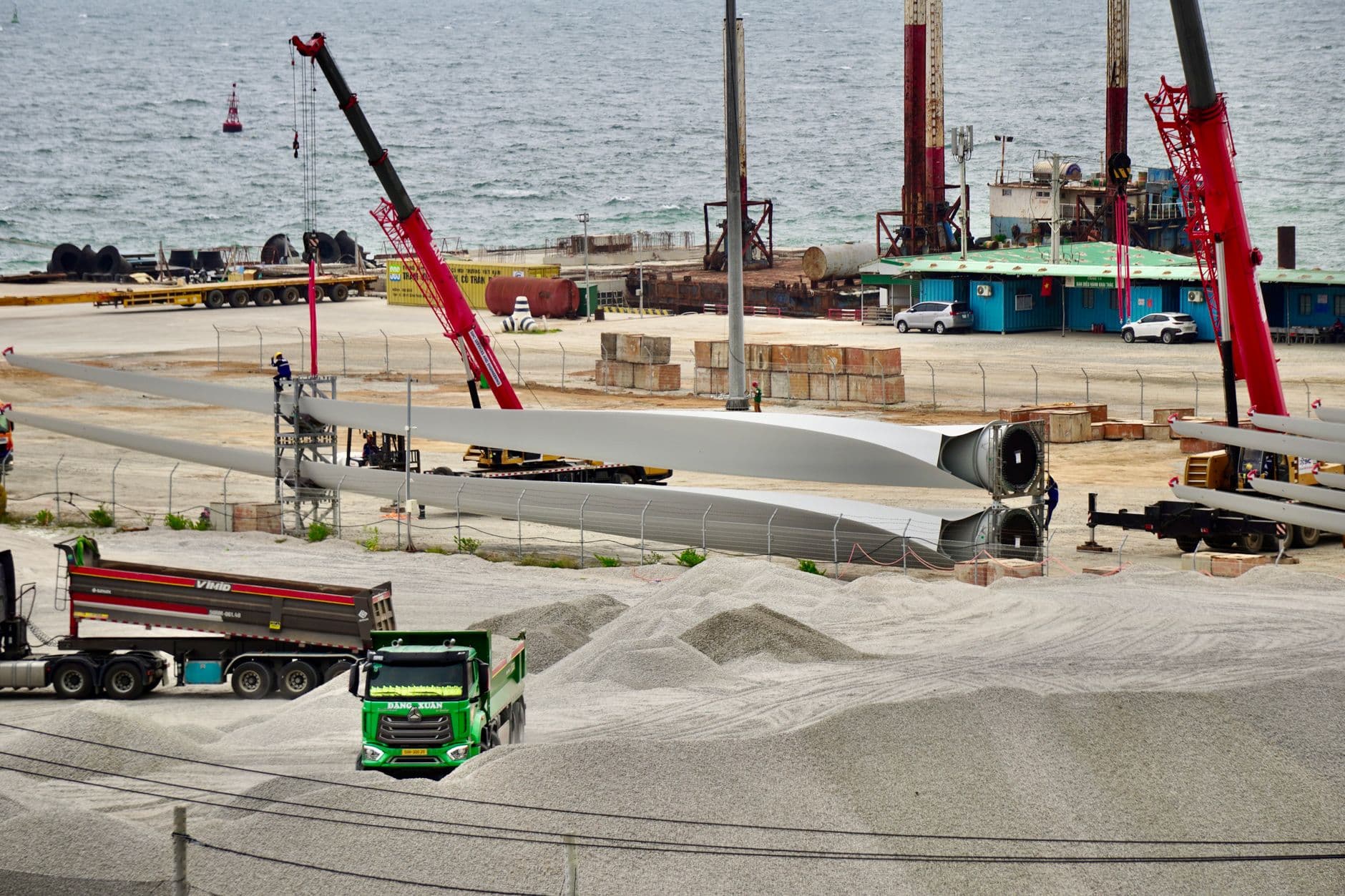
The wind turbine blade, all 230 feet of it, just dropped at a new solar farm site outside El Paso. Now you’re 1,200 miles from your next high-paying load, looking at $0.85 per empty mile on the return trip. This isn't just a hypothetical scenario; it's the daily reality for owner-operators and logistics managers battling the unique beast that is renewable energy logistics. For every single wind turbine tower section, transformer, or solar panel array that makes it to a remote site, there's a carrier losing significant profit on the empty backhaul – often 15-20% of the loaded rate.
The Silent Profit Killers in Renewable Energy Logistics
In our analysis of thousands of heavy-haul movements, the complexities of renewable energy logistics consistently expose critical profit drains. It’s not just about the weight or the length; it’s about the systemic inefficiencies that compound across the entire supply chain. Most logistics teams in the renewable energy sector are brilliant at project management but weak on truck-level execution economics. They optimize for on-time delivery at almost any cost, often missing how critical micro-decisions – like timing a permit application to avoid weekend holdups in Kansas – impact the owner-operator’s bottom line, which ultimately affects retention and capacity.
The root causes of these escalating costs are multifaceted:
- Oversize Permitting Labyrinth: Each state has its own maze of regulations, bridge clearances, and time restrictions. This can lead to delays of 2-3 days per project, costing an average of $750-1,200/day in driver wages and idle equipment.
- Remote Site Inaccessibility: Construction sites are rarely on main highways. Poorly maintained access roads, limited turning radii, and lack of pre-surveyed routes lead to stalled deliveries and unexpected maintenance.
- Lack of Integrated Planning: Siloed operations between construction teams and logistics providers mean last-minute changes, unready sites, and a failure to secure backhauls proactively.
- Equipment Specialization vs. Versatility: Dedicated lowboys, extendable flatbeds, and specialized step-decks are essential, but their specialized nature often means they sit idle or run empty on return trips, pushing up operating costs.
"According to the American Trucking Associations (ATA), empty or 'deadhead' miles account for 15-20% of total miles driven by heavy-duty trucks, representing billions in lost revenue annually for the industry — 2023."
Beyond deadhead, unpredictable fuel cost spikes remain a consistent threat, often comprising 20-30% of total operating expenses. Furthermore, the immense strain of heavy haul operations means unexpected maintenance isn't a possibility, it's a certainty. Carriers report average unscheduled repair costs ranging from $1,200 to $2,500 per incident for specialized equipment.
"A recent industry survey indicated that unforeseen maintenance and repair costs increased by 11.5% for specialized heavy-haul carriers in 2022, primarily due to the demands of off-road and remote site access
Cutting Empty Miles with Strategic Renewable Energy Backhauls
The biggest myth in renewable energy logistics is that you can’t get a backhaul for specialized equipment. You absolutely can, but it requires a strategic shift from reactive searching to proactive networking and leveraging the right tools. Instead of accepting the default of running empty, successful carriers actively engineer their return trips for profitability.
- Pre-Bid Backhaul Mapping: Before even accepting a renewable energy load, identify potential return loads within a 150-mile radius of the destination. This isn't just about general freight; research regional industrial directories, agricultural centers, or other construction projects that might need flatbed or step-deck capacity.
- Specialized Equipment Network: Forge strong relationships with other carriers specializing in heavy-haul or oversize freight. Often, a drop-and-hook with a different specialized trailer, or even coordinating a multi-leg move, can open up viable backhaul opportunities you wouldn't find alone.
- Digital Marketplace Leverage: Don't limit your search to just "renewable energy logistics" loads. Actively use digital freight marketplaces to search for general heavy equipment, modular building components, or even agricultural machinery that can utilize your specialized flatbed or step-deck capacity. The trick is to identify "good enough" backhauls; a less profitable but still viable general freight load is always better than 800 empty miles. For example, after dropping a turbine tower section, search for smaller equipment like forklifts or steel beams that can fit on a partial load. Check Loadly's live load board for real-time capacity needs across diverse industries that can fill your empty miles.
- Broker Partnership Program: Develop strong, transparent relationships with freight brokers who specifically *specialize* in unconventional freight, project cargo, or regional industrial moves. These brokers often have access to smaller, less publicized movements that align with specialized equipment.
Carriers actively implementing pre-bid backhaul mapping and diversifying their load search reported an average 18% reduction in empty miles on renewable energy projects, translating to an average savings of $1,080 per round trip.
Navigating Oversize Component Permits & HOS Compliance in 2025
Permit delays are not an act of God; they're a failure of process. Proactive permit acquisition, combined with dynamic HOS management, can shave days off project timelines and avoid hefty fines. The key is to acknowledge the inherent unpredictability of heavy haul and build in layers of mitigation.
- Centralized Permit Management System: Implement a robust system (e.g., specialized permit service software or a well-structured in-house custom solution) that tracks state-specific regulations, holidays, bridge clearances, and seasonal restrictions. Automate renewal alerts and pre-fill applications where possible.
- Dynamic Route Assessment (2 Weeks Out): Don't just rely on static maps months in advance. Two weeks before pickup, reassess primary and secondary routes for current construction, recent weather events (e.g., flood damage affecting bridges), and any temporary seasonal permit restrictions (e.g., spring thaw weight limits).
- Mandatory Pilot Car Briefings: Go beyond handing off a manifest. Ensure pilot car operators are thoroughly briefed on the specific load dimensions, route nuances, potential hazards like low wires or tight turns, and any temporary construction zones that aren't on standard base maps. This coordination prevents costly on-the-road issues.
- HOS Buffer Planning: For heavy haul, always build in a 1.5-hour HOS buffer per driving day into your trip plan. Unexpected lane closures, pilot car issues, or even simply slower speeds with oversize loads *will* eat into your available driving time. This buffer mitigates the risk of non-compliance, which can lead to fines up to $1,000 per violation and out-of-service (OOS) time. Many dispatchers plan assuming perfect conditions and maximum HOS; the reality of oversize freight demands a more conservative, realistic approach, perhaps planning for 9.5 hours of actual drive time on an 11-hour HOS limit.
Understanding 49 CFR Part 395 and its nuances for adverse driving conditions is critical, but relying on this exception too often signals poor planning to FMCSA. A wind farm project in rural Wyoming required components to traverse three states. By using a centralized permit system and building in a 2-hour daily HOS buffer, one carrier avoided two 24-hour permit delays that cost competitors an estimated $1,500 per day in idle time.
Optimizing Remote Site Deliveries: Infrastructure & Communication Hacks
Remote site deliveries aren't just about getting there; they're about seamless last-mile execution. The cost of a stalled delivery due to poor access or miscommunication can erase profits from an entire project. Effective communication and pre-emptive planning are non-negotiable.
- Pre-Delivery Site Survey (Mandatory): 7-10 days before the first component shipment, conduct a thorough virtual (satellite imagery, drone footage) or physical survey of the last 5-10 miles of the access road. Identify soft spots, narrow bridges, power lines, overhead obstructions, and sharp turns that may require temporary modifications or specific approach angles for the specialized equipment.
- Dedicated Site Contact Protocol: Establish one primary and one backup contact person at the construction site *who answers their phone 24/7*. Provide them with the driver's contact information and precise expected ETA windows, not just a day. This immediate line of communication is critical when issues arise.
- Real-Time Progress Sharing (Visuals): Beyond traditional GPS tracking, require drivers to send geolocated photos or short videos at key checkpoints (e.g., crossing state line, 50 miles out, entering site access road). This pre-empts potential issues by allowing dispatch to see conditions and provides irrefutable visual proof for billing and claims. Drivers on remote jobs often feel isolated; regular, proactive check-ins from dispatch (every 4 hours on live loads, even if the driver hasn't called) can boost morale and ensure minor issues don't become major delays.
- On-Site Equipment Coordination: Confirm crane availability, offloading crew readiness, and any specific staging area requirements 24 hours prior to arrival. A heavy-haul driver waiting for a crane or ground crew can cost the carrier $150-$250 per hour in detention fees.
Projects utilizing mandatory pre-delivery site surveys reported a 35% decrease in last-mile delivery incidents (e.g., stuck trucks, damaged components) compared to those relying solely on contractor-provided maps or verbal assurances.
| Logistics Aspect | Traditional Approach (Costly) | Expert Fix (Loadly Playbook) |
|---|---|---|
| Empty Miles | Reactive search for return loads, high deadhead ratio (15-20% of miles). | Proactive backhaul mapping, diverse marketplace searches, 18% reduction. |
| Permit Management | Manual state-by-state applications, frequent delays (2-3 days). | Centralized system, 2-week route assessment, HOS buffer (mitigates 90% of delays). |
| Remote Site Delivery | Reliance on basic maps, generic site contacts, poor communication. | Mandatory pre-delivery surveys, dedicated 24/7 contacts, real-time visual updates (35% fewer incidents). |
| Cost Control | Unpredictable fuel/maintenance, reactive problem-solving. | Optimized routing, strategic partnerships, predictive maintenance (10-15% total savings). |
Key Takeaways for 2025 Renewable Energy Logistics
- Empty return miles are the largest hidden cost in renewable energy logistics, often exceeding $0.85 per mile. Proactive backhaul strategies can reduce this by 18%.
- Permit acquisition delays are preventable through centralized management systems and building 1.5-hour HOS buffers into daily planning.
- Remote site deliveries require mandatory pre-delivery site surveys and dedicated, always-on site contacts to prevent costly last-mile incidents.
- Leverage digital marketplaces to find diverse backhauls, even for specialized equipment, maximizing asset utilization.
- Implement real-time visual communication from drivers at checkpoints to enhance visibility and pre-empt issues.
- Invest in predictive maintenance for heavy-haul equipment; unexpected breakdowns can cost $1,200-$2,500 per incident.
- Focus on "good enough" backhauls over "perfect" ones; any revenue is better than deadhead, especially for specialized carriers.
- Always assess the financial impact of micro-decisions at the truck level – small optimizations compound into significant savings.
Frequently Asked Questions About Renewable Energy Logistics
What are the biggest challenges in renewable energy logistics?
The biggest challenges in renewable energy logistics include managing oversize and overweight component transportation, navigating complex state-specific permitting, overcoming remote site access limitations, and mitigating high empty return mile costs. These factors often lead to delays, unexpected expenses, and reduced carrier profitability for heavy-haul operators.
How can I reduce empty return miles for specialized renewable energy freight?
Reducing empty return miles requires proactive planning: pre-bid backhaul mapping, connecting with other specialized carriers, and utilizing digital freight marketplaces to find diverse loads like general heavy equipment or construction materials within a 150-mile radius of your destination. Even a less-than-ideal backhaul that generates some revenue is financially superior to deadhead.
What specific regulations impact oversize renewable energy component transport?
Beyond general FMCSA regulations like 49 CFR Part 395 for Hours of Service, oversize renewable energy component transport is heavily impacted by state-specific overweight/oversize permit requirements, bridge laws, escort vehicle mandates, and restricted travel times. These regulations vary significantly from state to state and can change seasonally or due to local events.
How much does a permit delay cost a heavy-haul carrier?
A single permit delay can cost a heavy-haul carrier anywhere from $750 to $1,200 per day in lost revenue, driver wages for idle time, and equipment depreciation. This doesn't include the knock-on effects of missed subsequent loads or potential contract penalties. Proactive permit acquisition and precise route planning are crucial to avoid these substantial costs.
When should I use a digital freight marketplace for renewable energy loads?
You should use a digital freight marketplace like Loadly consistently, both for sourcing primary loads and especially for finding opportunistic backhauls. It's particularly useful when your traditional broker network falls short or when you need real-time visibility into available loads that can fill your specialized equipment's capacity on return trips, significantly reducing your deadhead ratio and increasing asset utilization.
Mastering Renewable Energy Logistics in 2025 with Loadly
The future of renewable energy is bright, but your profitability in moving its massive components to remote sites doesn’t have to be a gamble. As a veteran in this industry, I’ve seen firsthand how often carriers lose money on the back end of high-value loads because they lack the tools to quickly find viable return freight or manage the complex logistics effectively. The difference between a profitable run and a break-even one often comes down to a handful of smart decisions and the right technology.
Instead of relying on fragmented calls and manual searches for backhauls after dropping off a wind turbine, imagine having a real-time view of thousands of available loads across the country, right at your fingertips. Picture a platform that connects you directly with shippers who need specialized equipment, optimizing your empty miles and boosting your bottom line. That's the edge Loadly provides – it's designed by and for people who understand the daily grind of trucking.
Don’t let your specialized equipment sit idle or run empty. Take control of your capacity, reduce your deadhead, and ensure every mile generates revenue. Join the network that understands the unique demands of heavy-haul and project logistics. Register your carrier account with Loadly today and start finding the quality loads that keep you profitable in 2025 and beyond.