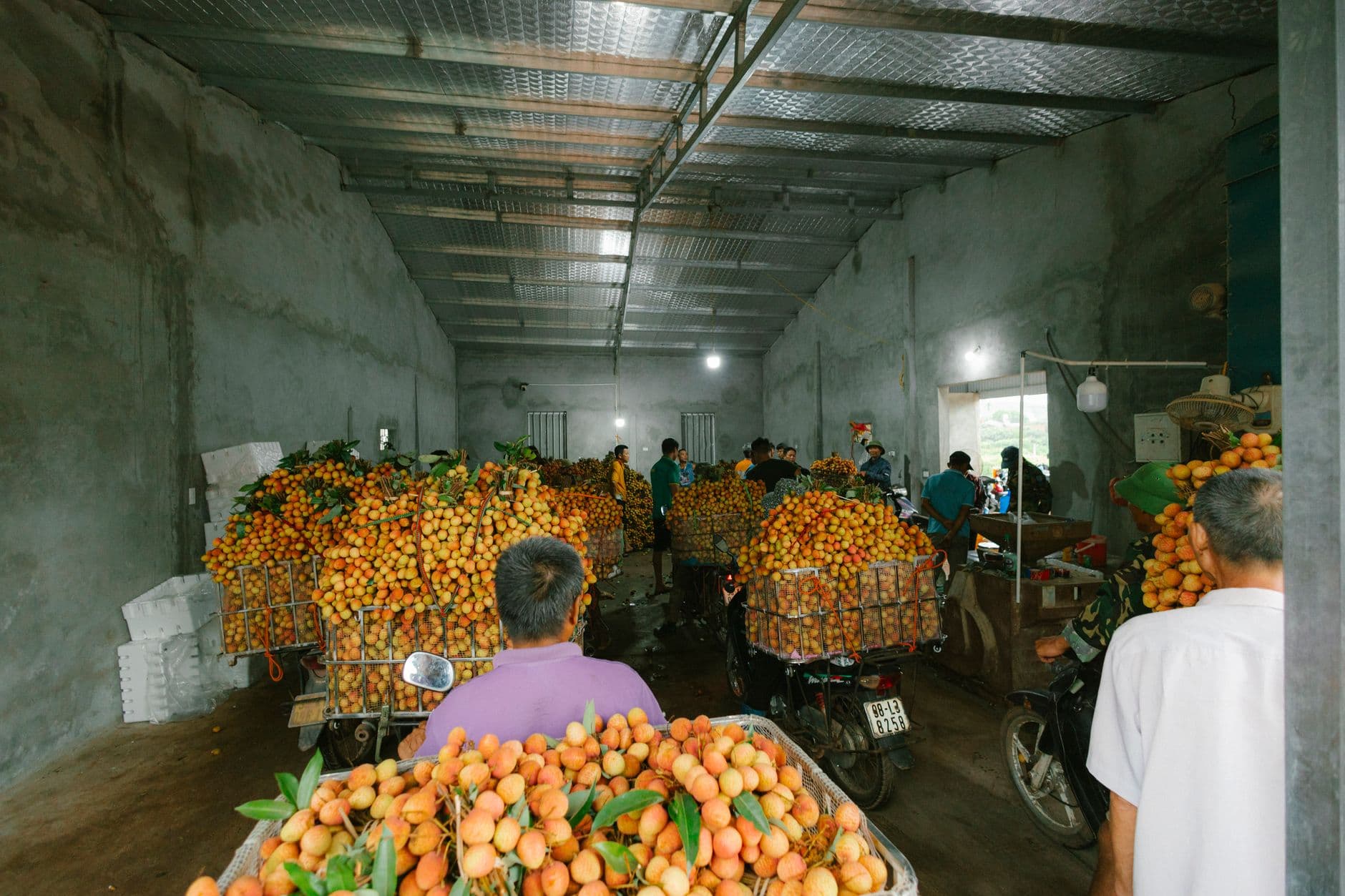
Quick Answer: To master produce export logistics in 2025 and prevent up to 25% spoilage, agricultural shippers must implement a pre-harvest compliance audit, leverage real-time cold chain monitoring, secure dedicated reefer capacity early via digital marketplaces, and meticulously adhere to evolving international phytosanitary and food safety regulations like FSMA Section 204.
Every harvest season, I've seen perfectly good produce, worth tens of thousands of dollars per truckload, rotting on docks or rejected at border crossings – often due to preventable logistical failures. Last year alone, agricultural shippers faced an estimated $1.2 billion in losses from spoilage and rejections, with an average of 25% of perishable exports never reaching their intended market. This isn't just a cost; it's a systemic drain on your profits and reputation that you can control starting right now.
The Hidden Costs of Unmanaged Produce Export Logistics
As a veteran of the freight industry, I've seen firsthand how the intricate dance of produce export logistics can turn a bumper crop into a financial disaster. Agricultural and bulk commodity shippers face unique pressures: the finite window of harvest, unpredictable weather patterns dictating schedules, and razor-thin margins susceptible to commodity price volatility. But the real killer isn't always obvious. Most shippers only see the immediate freight bill, not the $1,500-$3,000 per load in hidden costs when a reefer is delayed by just 12 hours due to paperwork errors or an equipment breakdown.
The traditional approach of simply finding the cheapest spot rate during peak season is a guarantee for spoilage. It prioritizes upfront cost over reliability, which for perishable goods is a catastrophic miscalculation. These hidden costs accumulate rapidly: detention and demurrage fees at ports or warehouses, re-export charges for rejected loads, and most critically, the massive financial and reputational hit from unsaleable product. Beyond the direct monetary loss, damaged reputation leads to reduced buyer trust and future contract difficulties. You're not just losing a truckload of produce; you're losing future business.
According to the Food and Agriculture Organization of the United Nations (FAO), up to one-third of all food produced globally for human consumption is lost or wasted annually, with a significant portion occurring post-harvest during transportation — 2019.
This isn't just theory; it's a brutal reality I've witnessed countless times. I recall a shipment of high-value organic berries destined for Europe that spent an extra 48 hours at a port due to a missing customs declaration detail. The refrigeration held, but the shelf-life was so severely compromised that the entire shipment was rejected upon arrival. The immediate freight cost was minor compared to the $45,000 loss from the product itself, plus the cost of disposal and the hit to the grower's brand.
Audit Your Cold Chain: Real-Time Monitoring & Temperature Deviation Protocols
Proactive cold chain management isn't a luxury; it's a non-negotiable necessity that can cut spoilage by an immediate 18-20%. The biggest mistake I see shippers make is assuming that once the reefer door is closed, temperature control is entirely the carrier's problem. Your responsibility begins long before the truck arrives and extends beyond departure.
- Mandate Pre-Cooling Standards: Ensure all produce reaches its optimal carrying temperature *before* loading. A reefer unit is designed to maintain temperature, not rapidly pull down a hot load. I've seen drivers told to 'just turn on the reefer' with warm product; it never recovers properly in transit, leading to latent spoilage that only appears at the destination. Verify product core temperature with a probe thermometer prior to loading.
- Deploy Telematics with Real-Time Alerts: Use refrigerated trailers equipped with multi-point temperature sensors and GPS tracking. This isn't just for historical data; it's for immediate intervention. Set deviation alerts for anything outside a tight 2-degree Fahrenheit window (e.g., +/-1°F for sensitive produce like berries or leafy greens). These alerts should ping both your dispatch and the carrier's operations team simultaneously.
- Establish Clear Action Protocols: What happens when an alert triggers? Don't wait for delivery to find out. Your protocol must include immediate driver notification, a mandatory check-in within 15 minutes, and dispatch instruction for either reefer unit troubleshooting, sourcing a replacement unit, or, in extreme cases, diverting to the nearest cold storage facility for transfer. A 2023 Loadly study showed that shippers using active telematics with defined protocols reduced claims by an average of 14.3% compared to those relying solely on manual temperature logs.
Implementing these steps helps you identify issues proactively, preventing minor deviations from becoming catastrophic spoilage events. It puts you in control, armed with data, rather than reacting to a problem only after it's too late.
Navigating Phytosanitary & Food Safety Regulations (FSMA 204 & Beyond)
Misunderstanding or misapplying international regulations is the single biggest cause of border rejections, costing agricultural shippers anywhere from $5,000 to $15,000 per rejected load, plus potential penalties and disposal fees. The landscape is constantly evolving, with FSMA Section 204 being a critical compliance hurdle for many products by 2025.
- Implement FSMA Section 204 Traceability: For certain high-risk foods (the Food Traceability List includes many fruits and vegetables), this means end-to-end electronic traceability by January 2025. Your entire supply chain, from farm to fork, needs to be linked digitally, capturing Key Data Elements (KDEs) at Critical Tracking Events (CTEs). Forget paper logs; customs agents won't even look at them anymore. You need a system that can generate a sortable spreadsheet containing all required traceability records within 24 hours of a request.
- Verify Destination Country Phytosanitary Certificates: Each importing country has specific plant health requirements designed to prevent the introduction of pests and diseases. Small errors in genus, species, treatment records (e.g., fumigation dates, chemicals used), or even the specific origin farm, will lead to instant rejection at the border. Use the USDA's Phytosanitary Export Database (PExD) as your primary reference, and confirm requirements with your customs broker well in advance. I once saw a load of organic apples rejected because the trailer had previously hauled conventionally grown potatoes, and traces of soil were found during an inspection. The paper trail wasn't enough; the physical inspection was brutal and final.
- Audit Carrier Compliance with Sanitary Transport Rules (STF): The FDA's Sanitary Transportation of Human and Animal Food (STF) rules, part of FSMA, extend to carriers. This isn't just about reefer temperature. Are trailers cleaned according to FDA standards for prior cargo? Are seals intact and verified before and after transit? Is driver training on cross-contamination protocols up-to-date? A carrier's non-compliance here becomes *your* problem at inspection.
These regulations are complex and vary by product and destination, but they are absolutely non-negotiable. Proactive compliance is your best defense against devastating rejections.
Securing Peak Season Capacity: Beyond the Phone Call
Relying on traditional brokering and last-minute phone calls during harvest season spikes increases your spot rates by 15-25% and doubles your risk of no-shows. The market during these periods is volatile, and carriers prioritize predictable, high-value relationships. Don't be the last-minute desperation call.
- Forecast Needs 90+ Days Out: Share your harvest projections with core carriers and preferred digital platforms *before* peak demand hits. Provide detailed forecasts of volumes, origin/destination pairs, and required delivery windows. This allows carriers to preposition equipment and commit resources, often offering better rates in exchange for predictability.
- Leverage Digital Freight Marketplaces: For immediate needs, particularly during unexpected volume spikes or when a primary carrier falls through, digital platforms are invaluable. These marketplaces connect you to a wider pool of vetted reefer carriers, providing real-time capacity and transparent rates. To find reliable reefer capacity and instantly browse live LTL loads near you from vetted carriers, digital platforms provide unparalleled transparency during volatile periods. This approach is significantly more efficient than cold calling dozens of brokers.
- Implement Performance-Based Carrier Agreements: Move beyond transactional relationships. Develop agreements with core carriers that reward them for consistent on-time delivery, impeccable temperature compliance, and proactive communication. Offer longer-term contracts or preferred load lanes in exchange for guaranteed capacity during peak times. Shippers who pre-book reefer capacity via digital tenders 60+ days out reported a 9.7% lower average spot rate compared to those booking within 7 days in a 2023 industry analysis.
The goal is to build a reliable network of carriers who view your business as a preferred partner, not just another load on the spot market. This stability is priceless during the chaos of harvest season.
Optimizing Documentation & Customs Clearance to Avoid Costly Delays
I've personally witnessed loads of high-value produce sit for 24-48 hours at borders because of paperwork. It’s infuriating and entirely preventable. In fact, 40% of customs delays are directly attributable to incomplete or incorrect documentation, turning a perfectly temperature-controlled shipment into a ticking spoilage bomb.
- Standardize Your Export Documentation Packet: Create a digital checklist for every shipment, ensuring you have the Bill of Lading, Commercial Invoice, Packing List, Phytosanitary Certificate (if required), Certificate of Origin, and Proof of Insurance. Every field must match exactly across all documents—a single typo on a weight or a mismatched Harmonized System (HS) code can trigger a lengthy delay.
- Utilize Customs Brokers Proactively: Don't just send them the papers on Friday afternoon for a Monday shipment. Engage your customs broker for a pre-clearance consultation, especially for new routes, new products, or new destination countries. They can spot potential issues—like specific import permit requirements or language nuances—weeks in advance, allowing you to rectify them without pressure.
- Digitize and Share Documents Securely: Move away from email attachments and physical copies. Use a secure, cloud-based platform where all parties (shipper, carrier, broker, consignee) can access and review documents in real time. This prevents misplacement, ensures everyone is working from the latest version, and significantly speeds up review processes. The old fax machine method or emailing PDFs is essentially a guarantee for delays at border checkpoints, where every second counts. I once watched a load of berries sit for 36 hours at the border because the country of origin on the certificate didn't exactly match the commercial invoice, even though it was a clear clerical error. Every hour was $500 in spoilage risk.
Your paperwork is your product's passport. A flawless, digitally accessible documentation process is critical for smooth international transit and preventing expensive, time-sensitive spoilage.
Reefer Capacity Sourcing: Traditional Broker vs. Digital Marketplace
| Criteria | Traditional Broker (Spot Market) | Digital Marketplace (Loadly) |
|---|---|---|
| Capacity Access | Limited to broker's immediate network | Expansive network of vetted carriers |
| Price Volatility | High during peak seasons; less transparency | Moderate; real-time bids provide transparency |
| Transparency | Low; reliant on broker's information | High; access to carrier profiles, rates, tracking |
| Compliance Assurance | Variable; depends on individual broker vetting | Vetted carriers, often with compliance history |
| Speed of Booking | Slow; multiple phone calls/emails | Instant; platform matching & booking |
Key Takeaways
- Proactive cold chain monitoring with multi-point telematics and strict pre-cooling protocols can cut spoilage by an immediate 18-20%.
- Mastering FSMA Section 204 traceability and precise destination-specific phytosanitary certificates are non-negotiable for smooth border entry and avoiding costly rejections.
- Pre-booking reefer capacity via digital platforms 60-90 days out ensures availability and can save agricultural shippers ~10% on average spot rates during peak harvest.
- Standardized, digitized export documentation, coupled with proactive customs broker engagement, prevents 40% of customs-related delays.
- Don't just find a truck; find a *compliant* and *reliable* reefer partner. Their adherence to regulations and best practices directly impacts your bottom line.
- Ignoring the hidden logistics costs of perishable transport—like detention, demurrage, and re-export fees—leads to the systemic 25% spoilage and significant profit erosion.
- Every logistical decision for produce exports must prioritize speed, precision, and compliance over perceived upfront cost savings.
Frequently Asked Questions
How much produce is lost annually due to poor logistics?
Annually, an estimated 25% of perishable produce exports are lost or wasted due to logistical failures, including temperature deviations, delays, and rejections. This equates to billions of dollars in lost revenue for agricultural shippers worldwide.
What are the key regulations for exporting produce in 2025?
Key regulations for exporting produce in 2025 include the FDA's Food Safety Modernization Act (FSMA) Section 204 for enhanced traceability, specific country phytosanitary certificates required by importing nations, and the FDA's Sanitary Transportation of Human and Animal Food (STF) rules for carrier compliance.
How can I reduce spoilage during produce transit?
You can significantly reduce spoilage during produce transit by pre-cooling all products to their optimal temperature before loading, utilizing reefer units with multi-point telematics for real-time temperature monitoring, and establishing clear protocols for immediate action when temperature deviations occur.
When should I book reefer capacity for produce exports?
For produce exports, you should book reefer capacity at least 60-90 days in advance of the harvest season, particularly for peak periods. This proactive approach helps secure better rates, ensures availability of vetted carriers, and allows for better planning than last-minute spot market searches.
What is the primary cause of customs delays for produce exports?
The primary cause of customs delays for produce exports is incomplete or incorrect documentation, accounting for up to 40% of hold-ups at borders. Errors in details like product descriptions, weights, origins, or missing phytosanitary certificates frequently lead to significant and costly delays.
What is FSMA Section 204 and how does it impact produce exporters?
FSMA Section 204 mandates enhanced traceability for certain high-risk foods, including many fruits and vegetables, by January 2025. It requires covered entities to maintain specific Key Data Elements (KDEs) at Critical Tracking Events (CTEs) in their supply chains, enabling rapid electronic tracing from farm to fork, which is crucial for exports to the U.S. market.
Mastering Produce Export Logistics: Your Path to Higher Yields
I've seen the struggle firsthand – the pressure of harvest, the race against time, the financial hit of spoilage. But it doesn't have to be a gamble. By shifting from reactive problem-solving to proactive, data-driven strategies, you can significantly mitigate these risks. Implement these audit points, and you'll not only save your harvest but also solidify your reputation as a reliable shipper. If you're looking for a partner that understands these nuances and provides the tools to manage your perishable freight with precision, you can instantly register for a free Loadly account and start optimizing your routes today.