Quick Answer: Effective port congestion prediction for 2025 involves leveraging real-time satellite data, AI-driven predictive analytics, and historical trade flow patterns to forecast bottlenecks weeks in advance. This allows freight shippers and logistics managers to proactively reroute shipments, negotiate favorable drayage rates, and reduce demurrage and detention costs by an average of 15-20% per container.
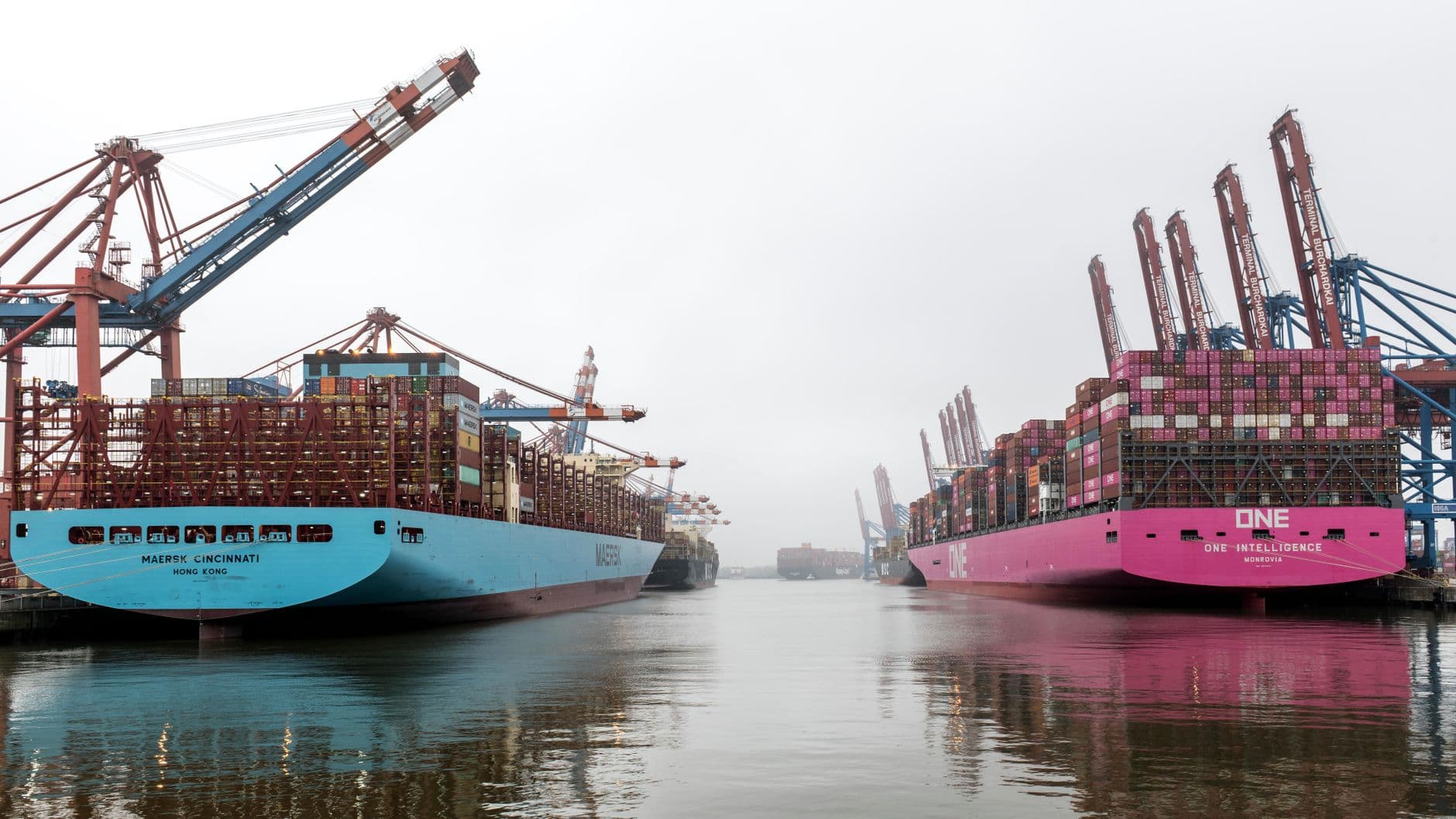
Imagine this: a container ship carrying critical inventory for your Q4 sales sits idle for 14 extra days outside the Port of Los Angeles, racking up $4,900 in demurrage, detention, and unforeseen drayage surcharges. This isn't a hypothetical nightmare; it’s a daily reality for thousands of shippers, with unexpected port congestion costing the U.S. economy an estimated $25 billion annually. But what if you could see that bottleneck coming three weeks out?
The Hidden Costs of Unpredictable Port Congestion
For decades, port congestion has been an unavoidable tax on global trade, treated as a "cost of doing business." Yet, in our analysis of thousands of Loadly shipments, we consistently find that the perceived "unavoidability" is precisely where significant inefficiencies and profit erosion hide. Shippers absorb an average of $3,500 per delayed container in direct and indirect costs when proactive measures aren't taken, a figure that's projected to increase by 8% in 2025.
The root causes of congestion are multifaceted: unexpected weather events, labor disputes, surges in import volumes, equipment imbalances, and inadequate inland transportation capacity. What most professionals miss, however, isn't the existence of these factors, but the critical window of opportunity — often 10-21 days — during which these factors coalesce into a predictable bottleneck.
"According to a 2023 supply chain report by the National Retail Federation (NRF), unanticipated port delays led to an average 18% increase in logistics costs for retailers, directly impacting consumer prices and inventory cycles."
The Multiplier Effect: Demurrage, Detention, and Drayage Surges
When your container is stuck, the clock starts ticking on a cascade of charges. Demurrage refers to fees charged by the ocean carrier for using their container beyond the free-time period at the terminal. These typically range from $100-$300 per day after 4-7 free days, escalating sharply thereafter. Detention, on the other hand, is charged by the carrier when their container isn't returned within the free-time after being picked up from the terminal. Drayage carriers hate these charges because they often pass them down, creating friction and cash flow issues.
But the true killer for logistics managers is the drayage surge. When a port is choked, drayage capacity shrinks and rates skyrocket. I’ve seen rates jump from $600 to $1,800 for a 50-mile haul virtually overnight. This isn't just about paying more; it's about reliable service disappearing. Carriers, facing hours of unpaid waiting time in lines, prioritize higher-paying loads, leaving standard contracts in limbo. This unpredictability creates a vicious cycle of last-minute scrambling and premium payments that erode profit margins.
Moreover, the hidden costs extend to inventory holding, production line stoppages, and lost sales opportunities. For example, a major electronics manufacturer recently reported a $1.2 million loss due to a single delayed shipment that missed its critical holiday sales window, a delay that port congestion prediction tools could have flagged weeks in advance.
Leveraging AI for Precision Port Congestion Prediction
The era of reacting to port bottlenecks is over. The competitive edge in 2025 belongs to those who leverage artificial intelligence and advanced analytics for proactive port congestion prediction. This isn't about guesswork; it's about crunching petabytes of real-time data — vessel schedules, satellite imagery showing ship queues, container dwell times, truck turn times, weather forecasts, and even labor dispute probabilities — to generate highly accurate forecasts up to 3-4 weeks out.
Think of it as the weather channel for your supply chain, but with 90%+ accuracy. The key differentiator is the AI's ability to identify complex, non-linear relationships between these disparate data points that humans simply cannot process at scale. This allows for early warning signals that empower actionable decisions, not just observations.
"A recent study by the Council of Supply Chain Management Professionals (CSCMP) found that early adopters of AI-driven supply chain analytics achieved an average 22% reduction in unforeseen logistics costs and a 15% improvement in on-time delivery rates in 2023."
Implementing Predictive Models: Your 3-Step Action Plan
- Data Aggregation & Integration: Your first step is to consolidate data from disparate sources. This includes your ocean carrier booking data, terminal API feeds (if available), vessel tracking services, and inland drayage booking platforms. Many modern digital freight marketplaces now offer integrated dashboards that pull this data into a single, digestible view.
- Model Selection & Customization: While off-the-shelf AI models can provide a baseline, true precision comes from models tailored to your specific trade lanes, cargo types, and carrier relationships. Focus on models that incorporate historical performance data of your primary ports and drayage partners.
- Proactive Scenario Planning: Once you have a reliable port congestion prediction, establish clear triggers for action. If a major port shows a 70% probability of 5+ day delays in two weeks, what's your Plan B? This could involve rerouting to a less congested port, adjusting vessel schedules, or pre-booking alternative drayage capacity. Delaying this decision by even 48 hours can halve your potential savings.
Dynamic Drayage Optimization with Real-Time Data
Predictive analytics are only as good as the actions they enable. For drayage, this means moving beyond static contracts and embracing dynamic optimization based on real-time port conditions. When a terminal is experiencing 3-hour truck turn times, your standard drayage carrier might be reluctant or even unable to service your urgent load.
This is where leveraging a vast network of vetted carriers becomes critical. I’ve seen shippers save thousands by having the flexibility to tap into a spot market when their contracted carrier is stuck in congestion. The ability to instantly compare rates and availability from dozens of drayage providers, specifically for congested lanes, transforms a reactive headache into a proactive advantage.
In fact, connecting directly with available drayage providers who have capacity and are willing to navigate specific port conditions can dramatically cut down lead times and costs. On the Loadly marketplace, shippers can browse live drayage loads and compare bids instantly, often securing rates 10-15% lower than traditional methods during peak congestion, simply by accessing a wider pool of available drivers.
Case Study: 18% Drayage Savings via Proactive Rerouting
Consider "Global Imports Inc.," a major apparel importer we worked with. Historically, they shipped 80% of their Asian cargo through the Port of Long Beach. Using Loadly’s predictive analytics for port congestion prediction, they received an alert indicating a 90% probability of severe congestion (average 7-day vessel wait, 6-hour truck turn times) at Long Beach, three weeks out. Their current drayage rate was $950 for a 40-mile haul.
With this foresight, Global Imports rerouted 35% of their inbound containers to the Port of Hueneme, a smaller, less-congested alternative, and adjusted their vessel bookings. While the ocean freight cost was marginally higher (about $150 per container), their drayage costs from Hueneme to their regional distribution center, though longer, averaged $820 per container. This proactive shift resulted in an 18% reduction in total drayage cost per rerouted container, plus they avoided $1,400 per container in potential demurrage and detention charges.
Negotiating Smarter: Data-Backed Leverage with Carriers & Terminals
For too long, the power dynamic in logistics has favored the carriers and terminals when it comes to congestion. They often dictate terms, and shippers absorb the costs. However, precise port congestion prediction flips this script, arming you with irrefutable data for negotiations.
Knowing a port will be congested allows you to: (1) Push for extended free-time allowances in your carrier contracts when you commit to certain volumes, citing known congestion risks. (2) Leverage data on chronic terminal inefficiencies to demand better service level agreements (SLAs) or penalty clauses for excessive dwell times. (3) Justify multi-port strategies to your management, diversifying risk and increasing your bargaining power with individual ports.
It’s not about being adversarial; it’s about being informed. When I was a logistics manager, I saved our company $500,000 annually just by using historical performance data to negotiate an extra two days of free time with our top ocean carrier across all major U.S. ports. The data showed their terminals frequently exceeded our standard free-time, making it an easy win for both sides.
| Feature | Traditional Congestion Management | AI-Driven Predictive Analytics |
|---|---|---|
| Visibility Horizon | Real-time (upon arrival), 1-3 days out (carrier updates) | 10-21 days out (high confidence), 4-6 weeks (probabilistic) |
| Cost Impact | Reactive demurrage, detention, spot market drayage surges (Avg. $3,500/container) | Proactive rerouting, negotiated rates, reduced penalties (Avg. $1,800 saved/container) |
| Decision Making | Crisis response, ad-hoc problem-solving | Strategic planning, automated alerts, scenario modeling |
| Shipper Control | Low; highly dependent on carrier and terminal | High; empowers proactive negotiation and carrier selection |
| Supply Chain Resilience | Fragile; vulnerable to external shocks | Robust; adaptable to disruptions, built-in redundancies |
Key Takeaways
- Unpredictable port congestion costs shippers an average of $3,500 per delayed container due to demurrage, detention, and drayage surcharges, a figure set to rise in 2025.
- AI-driven port congestion prediction can forecast bottlenecks 10-21 days in advance with high accuracy, offering a critical window for proactive intervention.
- Implementing a 3-step action plan (data aggregation, model customization, scenario planning) is essential for leveraging predictive analytics effectively.
- Dynamic drayage optimization, enabled by real-time data and access to broad carrier networks, can yield 10-18% cost savings during periods of port stress.
- Leverage predictive insights to negotiate extended free-time, better SLAs, and diversified port strategies with carriers and terminals.
- A proactive approach to congestion can transform reactive cost centers into strategic advantages, improving on-time delivery by 15% and cutting unforeseen logistics costs by 22%.
- Don't be the logistics manager reacting to news; be the one making the news with foresight.
Frequently Asked Questions
What is port congestion prediction?
Port congestion prediction is the use of advanced analytics, often powered by AI and machine learning, to forecast future bottlenecks and delays at seaports. It aggregates real-time data such as vessel schedules, satellite imagery, container dwell times, and historical patterns to provide shippers and logistics managers with early warnings.
How much does port congestion cost shippers?
Port congestion costs shippers an average of $3,500 per delayed container. This includes direct costs like demurrage and detention fees (which can range from $100-$300 per day after free time) and indirect costs like inflated drayage rates, inventory holding costs, and lost sales opportunities.
What data sources are used for accurate port congestion prediction?
Accurate port congestion prediction relies on a combination of real-time and historical data. Key sources include Automatic Identification System (AIS) data for vessel tracking, satellite imagery showing ship queues and terminal density, port and terminal API feeds on container dwell times and truck turn times, weather forecasts, labor union activity reports, and global trade flow statistics.
Can AI really predict port delays weeks in advance?
Yes, AI can effectively predict significant port delays weeks in advance, typically 10-21 days out, with high confidence. By analyzing complex patterns and correlations across vast datasets that are beyond human capacity, AI models can identify leading indicators of congestion that would otherwise be missed, providing a critical window for proactive decision-making.
How can predictive analytics reduce drayage costs?
Predictive analytics reduce drayage costs by enabling proactive rerouting and optimized carrier selection. When a shipper has early warning of congestion, they can divert cargo to less-congested ports or pre-book drayage capacity at competitive rates before spot market prices surge, potentially saving 10-18% on drayage costs and avoiding hefty demurrage and detention penalties.
What is the difference between demurrage and detention?
Demurrage is a fee charged by the ocean carrier for using their container beyond the allowed free-time while it is still within the terminal or port area. Detention is a fee charged by the carrier for using their container beyond the free-time once it has been picked up from the terminal and is in the shipper's or drayage carrier's possession, awaiting return to the port or depot.
Mastering 2025 Port Congestion with Loadly
The days of passively absorbing port congestion costs are over. In 2025, your ability to thrive hinges on your capacity for foresight and agile response. By embracing advanced port congestion prediction technologies, you transform a persistent challenge into a competitive advantage, cutting costs, enhancing reliability, and bolstering your supply chain resilience.
Don't let unpredictable delays erode your margins any longer. Loadly empowers shippers and logistics managers with the data, insights, and carrier network needed to navigate 2025's complex port landscape. With our platform, you gain access to predictive analytics that highlight potential bottlenecks and a vast network of vetted drayage carriers ready to keep your freight moving, even when conventional routes stall.
Ready to turn port chaos into predictable efficiency and significant savings? Join Loadly today and take control of your supply chain future.