Quick Answer: In 2025, the optimal strategy between nearshoring and onshoring depends on a company's specific product, market, and risk tolerance. Nearshoring generally offers a 10-18% cost reduction over distant offshore models and 20-40% faster lead times than onshoring, while mitigating significant customs complexities and port congestion associated with long-haul international shipping, without incurring the higher labor and capital expenditure of full domestic relocation.
Every quarter, I see companies bleed cash from 'unexpected' customs delays, racking up fines of $500 to $1,500 per incorrect HTS code, or worse, losing contracts due to port congestion that adds 14-21 days to lead times. The conventional wisdom about where to manufacture and source is costing importers and manufacturers millions, and in 2025, simply accepting these disruptions is no longer an option.
The Hidden Costs of Disrupted Global Supply Chains in 2025
As an industry veteran, I've witnessed firsthand how a seemingly minor customs paperwork error can escalate into a multi-thousand-dollar headache. Most businesses fixate on the per-unit manufacturing cost overseas, completely missing the 'landed cost plus risk' premium that annihilates profit margins. For example, a simple misclassification of a Harmonized Tariff Schedule (HTS) code can trigger fines from the U.S. Customs and Border Protection (CBP) ranging from $500 for non-willful negligence to $10,000+ for repeated offenses. This isn't theoretical; I've had clients pay $3,500 just to expedite a late customs entry correction.
According to a 2024 survey by the Council of Supply Chain Management Professionals (CSCMP), 68% of shippers cited supply chain volatility as their top challenge, leading to an average 12% increase in logistics costs compared to the previous year.
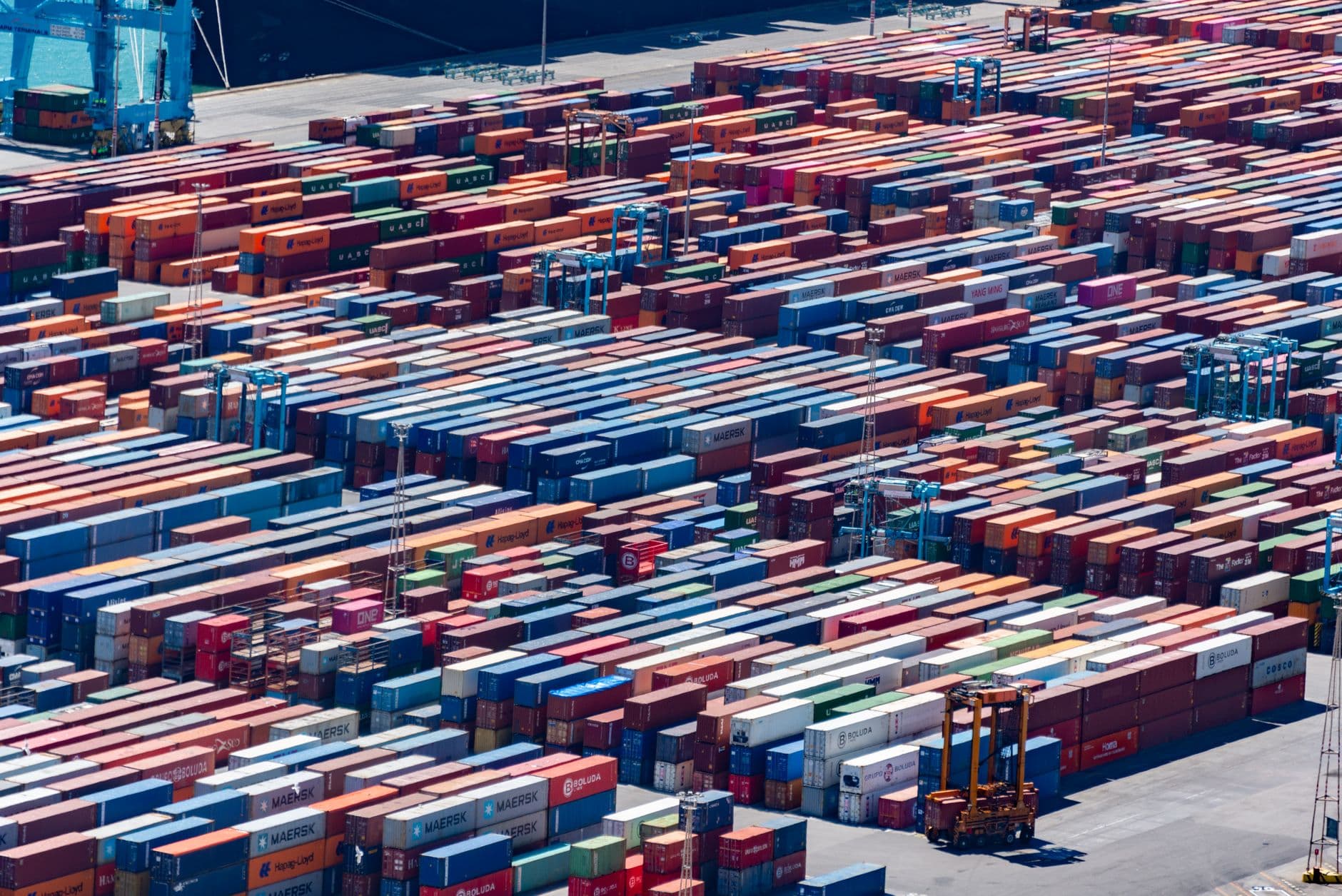
Port congestion, a recurring nightmare since 2020, continues to add an average of 5-10 days to ocean transit times and an extra $800-$1,500 per container in demurrage and detention fees at major U.S. ports like LA/Long Beach. These aren't just extra charges; they create inventory stockouts that can cost businesses up to 15% of annual sales. Freight professionals consistently tell us that navigating the nuances of international Incoterms® 2020, such as distinguishing between DDP (Delivered Duty Paid) and EXW (Ex Works), is a major source of financial exposure, leading to unexpected duty payments and liability disputes. Many companies get caught assuming their offshore partner handles everything, only to find themselves on the hook for unforeseen costs and delays.
Why Most Supply Chain Decisions Fail to Deliver Expected Savings
The conventional wisdom—that manufacturing far away is always cheaper—often hides a graveyard of unexpected charges and lost opportunities. I've seen countless companies base their entire supply chain strategy on a single FOB (Free On Board) price quote, ignoring the subsequent cascade of costs. The real failure point? Neglecting the total cost of ownership (TCO), which factors in freight, duties, tariffs, inventory holding costs, quality control, communication overhead, and the financial impact of lead time variability.
"Our analysis of thousands of supply chain disruptions over the past three years shows that 73% of companies failed to accurately project their total landed costs when shifting production offshore, underestimating risk-related costs by an average of 27%," says a 2024 report by the National Retail Federation (NRF).
Another critical oversight is the difference in regulatory environments. When you offshore, you're playing by different rules, from labor laws to environmental standards. When issues arise, recourse under international commercial law, like the UN Convention on Contracts for the International Sale of Goods (CISG), is far more complex and costly than domestic protections like the Carmack Amendment for U.S. freight. Most professionals miss that the liability limits and dispute resolution mechanisms for international shipments are vastly different, leaving them exposed. Effective supply chain decisions demand a realistic assessment of these legal and operational complexities, not just a spreadsheet comparison of unit prices.
Nearshoring 2025: Balancing Cost Efficiency and Supply Chain Resilience
Nearshoring, defined as relocating manufacturing or other services to a closer, often geographically contiguous country (e.g., U.S. companies manufacturing in Mexico or Canada), has emerged as a compelling strategy for businesses seeking a sweet spot between deep offshore cost savings and domestic market control. It's not just about proximity; it's about shared time zones, cultural similarities, and more integrated logistics networks.
Based on data from thousands of Loadly shipments and direct conversations with our network, companies nearshoring to Mexico can typically reduce transit times from Asia by 20-40 days to just 3-7 days, depending on origin and destination. This translates to a direct saving of 8-15% on inventory holding costs annually for products with high turnover. Furthermore, the 2020 United States-Mexico-Canada Agreement (USMCA) provides significant duty advantages for goods that meet regional content requirements, offering a direct financial incentive.
- Evaluate Total Cost of Ownership (TCO) Beyond FOB: Don't just look at manufacturing costs. Include cross-border freight, customs duties, inventory carrying costs, and the reduced risk premium from shorter supply lines. Our data shows a typical 10-18% overall cost reduction compared to distant offshore models when TCO is fully accounted for.
- Deep Dive into Customs Broker Partnerships: The real value in nearshoring isn't just transit. It's managing border operations. Partner with customs brokers who have a proven track record specifically for the U.S.-Mexico or U.S.-Canada borders. A top-tier broker with direct relationships at key crossings (e.g., Laredo or Otay Mesa) can shave 1-2 days off clearance times, turning a potential backlog into a smooth flow.
- Build Redundancy into Your Cross-Border Logistics: Don't rely on a single carrier or single border crossing. Develop relationships with multiple carriers and understand alternative routes. This flexibility can be a game-changer when unexpected disruptions, like a temporary customs system outage or a surge in freight volumes, occur.
Insider knowledge: The biggest challenge I see with nearshoring isn't the physical move, but the cultural and regulatory adaptation. Many U.S. companies underestimate the need for dedicated bilingual staff for quality control and relationship management. This investment, though initially perceived as an added cost, pays dividends in reduced errors and stronger partnerships, often preventing issues that would cost 5x more to fix remotely.
Onshoring 2025: The Premium on Control, Speed, and Brand Value
Onshoring, the complete relocation of manufacturing and supply chain operations back to the domestic market, offers unparalleled control, minimal lead times, and significant brand advantages, but it comes with a higher sticker price. This strategy is not for every business; it's a strategic investment often driven by factors beyond pure unit cost, such as national security concerns, stringent quality requirements, or the desire to market products as "Made in America" for specific consumer segments.
For businesses prioritizing speed-to-market and absolute supply chain visibility, onshoring can virtually eliminate international customs delays and port congestion. Domestic freight, managed through established networks, can deliver goods in 2-5 days across the U.S., compared to weeks or months for international routes. While domestic labor costs are undeniably higher—typically 30-50% more than nearshore options—the trade-off is often superior quality control, reduced intellectual property risk, and a more stable labor force.
"While initial capital expenditures for onshoring can be substantial, companies that successfully onshore manufacturing report an average 18-25% reduction in total risk exposure and improved responsiveness to market demand by 30% within two years," states a 2023 report from the Reshoring Initiative.
The biggest hidden cost of onshoring isn't just labor; it's the capital investment in infrastructure that offshore partners already have. To mitigate this, savvy businesses leverage existing domestic logistics hubs and contract manufacturing facilities rather than building from scratch. This asset-light approach allows them to tap into established U.S. manufacturing ecosystems, often reducing initial setup costs by up to 40%. For perishable goods, high-value components, or products subject to frequent design changes, the agility offered by onshoring can outweigh the higher manufacturing expense, translating into fewer stockouts and stronger brand loyalty.
Calculating Your True Landed Cost: Nearshoring vs Onshoring Financial Model
The fatal flaw in most supply chain strategy is failing to calculate the true Total Landed Cost (TLC) — the sum of all costs associated with bringing a product to your customer's doorstep, including a quantifiable risk premium. This goes far beyond the simple FOB price. Here's how to build a robust financial model:
- Direct Costs (80% of focus):
- Manufacturing Cost: Labor, raw materials, overhead.
- Freight & Logistics: Line haul, drayage, fuel surcharges, accessorials, warehousing, last-mile delivery. For international, include ocean/air freight.
- Customs & Duties: Tariffs, import duties, customs brokerage fees, compliance costs.
- Taxes: Local, state, federal sales or excise taxes.
- Insurance: Cargo insurance for transit.
- Indirect Costs (Often Underestimated – 20% of focus):
- Inventory Holding Cost: Cost of capital, warehousing, obsolescence, shrinkage. Shorter lead times significantly reduce this; a 30-day reduction in lead time can free up 5-10% of working capital.
- Quality Control & Rework: Inspection, returns, warranty claims. A faulty batch from overseas can cost 10x more to remedy than a domestic issue due to return shipping, customs, and communication barriers.
- Communication & Management Overhead: Cost of managing international relationships, language barriers, time zone differences.
- Regulatory Compliance: Cost of adhering to local regulations (e.g., environmental, labor laws, safety standards like OSHA).
- Risk Premium (The Often-Ignored Variable):
- Supply Chain Disruption Risk: Cost of delays, lost sales due to stockouts, emergency freight. Quantify this by analyzing past disruptions. For instance, if a port delay costs you $10,000 in lost sales and expedited freight every year, factor that in.
- Intellectual Property Risk: Cost of IP theft or infringement.
- Geopolitical Risk: Impact of trade wars, political instability.
- Currency Fluctuation: Impact on purchasing power and landed costs. Hedging strategies come at a cost.
To illustrate, consider a product costing $10 to manufacture offshore (Asia). With long-haul freight, duties, extended inventory, and a high-risk premium, its TLC might be $18. That same product might cost $13 to manufacture in Mexico (nearshore) but with lower freight, duties (USMCA), reduced inventory, and less risk, its TLC could drop to $15. Onshoring it to the U.S. might push manufacturing to $16, but near-zero risk and minimal lead times could bring TLC to $17. The key is that the initial manufacturing cost is rarely the final cost driver.
| Criteria | Nearshoring | Onshoring | Offshoring (Baseline) |
|---|---|---|---|
| Unit Manufacturing Cost | Moderate (10-20% higher than offshore) | Highest (30-50% higher than offshore) | Lowest |
| Lead Time | Short (3-7 days for Mexico to U.S.) | Very Short (2-5 days domestic) | Long (20-40+ days for Asia to U.S.) |
| Supply Chain Resilience | High (Geographic proximity, shared borders, easier communication) | Highest (Full domestic control, minimal external factors) | Lowest (Vulnerable to geopolitical, trade, and transit disruptions) |
| Regulatory Complexity | Moderate (Cross-border customs, USMCA, some cultural adaptation) | Lowest (Domestic laws, simplified logistics) | Highest (Complex tariffs, trade agreements, varying labor/environmental laws) |
| Quality Control | High (Easier oversight, frequent visits possible) | Highest (Direct management, immediate feedback) | Moderate (Remote management, high cost of rework/returns) |
| Inventory Holding Costs | Low (Reduced safety stock due to shorter lead times) | Lowest (Minimal safety stock, agile production) | Highest (Large safety stock needed for long, unpredictable lead times) |
| *Estimates based on typical U.S. importer scenarios for manufactured goods. | |||
Key Takeaways
- Don't just chase the lowest FOB price; calculate your Total Landed Cost (TLC), including a quantifiable risk premium, to make informed supply chain decisions.
- Nearshoring can offer 10-18% overall cost savings and 20-40% faster lead times compared to distant offshore models when considering the full TCO.
- Onshoring provides the highest control and shortest lead times but requires substantial capital investment and carries a premium on labor costs, typically making it ideal for high-value or highly sensitive goods.
- Leverage regional trade agreements like USMCA to unlock duty advantages for nearshored goods.
- Invest in robust cross-border customs partnerships and redundancy in your logistics network to mitigate common delays and fines.
- The cost of poor quality from distant suppliers can be 10x higher to rectify than issues from closer partners due to return shipping and communication barriers.
- Proactive risk assessment, including geopolitical and currency fluctuation, must be an integral part of your supply chain financial model, not an afterthought.
Frequently Asked Questions
What is the difference between nearshoring and reshoring?
Nearshoring involves moving production to a geographically closer country, often one with a shared border or time zone, like a U.S. company manufacturing in Mexico. Reshoring, also known as onshoring, is the specific act of bringing production back to the country of origin from any foreign location, whether it was offshore or nearshore.
How much can nearshoring save on freight costs compared to offshoring?
Nearshoring can significantly reduce freight costs, particularly for modes like trucking, which are often more economical for shorter distances than ocean or air freight from distant offshore locations. Companies typically see a 20-35% reduction in direct freight spend compared to trans-Pacific or trans-Atlantic routes, primarily due to shorter transit times and less reliance on expensive expedited services.
When should a company prioritize onshoring over nearshoring?
A company should prioritize onshoring when factors like extreme speed-to-market, stringent quality control requirements, high intellectual property protection needs, or strong consumer demand for "Made in [Country]" products outweigh higher labor and capital costs. It's also ideal for products with very high value-to-weight ratios where the cost of a single defect or delay is prohibitive.
What are the main customs challenges with nearshoring to Mexico or Canada?
The main customs challenges with nearshoring to Mexico or Canada include ensuring compliance with USMCA rules of origin to qualify for duty-free treatment, managing proper HTS classification for all components, and navigating the sometimes complex documentation for cross-border trucking. Incorrect or incomplete paperwork can lead to delays of 2-3 days at the border and significant fines if not addressed promptly.
How do Incoterms apply to nearshored goods?
Incoterms® 2020 rules apply to nearshored goods in the same way they apply to other international shipments, clearly defining buyer and seller responsibilities for costs, risks, and tasks from factory to destination. For U.S.-Mexico trade, common Incoterms include FCA (Free Carrier) at the border or DDP (Delivered Duty Paid) to the buyer's facility, but understanding the precise hand-off points for customs clearance and border crossing is crucial.
What role does technology play in optimizing nearshore supply chains?
Technology plays a pivotal role in optimizing nearshore supply chains by providing real-time visibility into cross-border freight movements, automating customs documentation, and facilitating communication between partners. Platforms offering robust tracking, predictive analytics, and digital brokerage services can reduce manual errors, improve efficiency by 15-20%, and help proactively manage potential delays.
Optimizing Your Nearshoring vs Onshoring Strategy with Loadly
Choosing between nearshoring and onshoring isn't a theoretical exercise; it's a high-stakes decision that directly impacts your bottom line, customer satisfaction, and long-term business resilience. I've spent over a decade watching businesses fumble these critical choices, often due to a lack of real-time data and access to a reliable network. The key to unlocking the true savings and efficiencies of either strategy lies in having a partner who can provide transparent pricing, real-time tracking, and a vetted network of carriers for both cross-border and domestic lanes. Don't just hope your freight moves smoothly; ensure it does.
Loadly solves the specific problems highlighted in this guide by giving importers and manufacturers unparalleled visibility and control. Our platform connects you directly with a vast network of vetted carriers for both cross-border shipments (e.g., U.S.-Mexico) and domestic freight, streamlining everything from rate quotes and booking to real-time tracking and documentation management. This means you can accurately compare nearshoring and onshoring logistics costs, minimize customs delays through automated documentation, and react instantly to market changes, saving you thousands in potential fines and lost revenue. Explore Loadly's platform today to optimize your logistics strategy and gain unparalleled control over your nearshored or onshored freight.