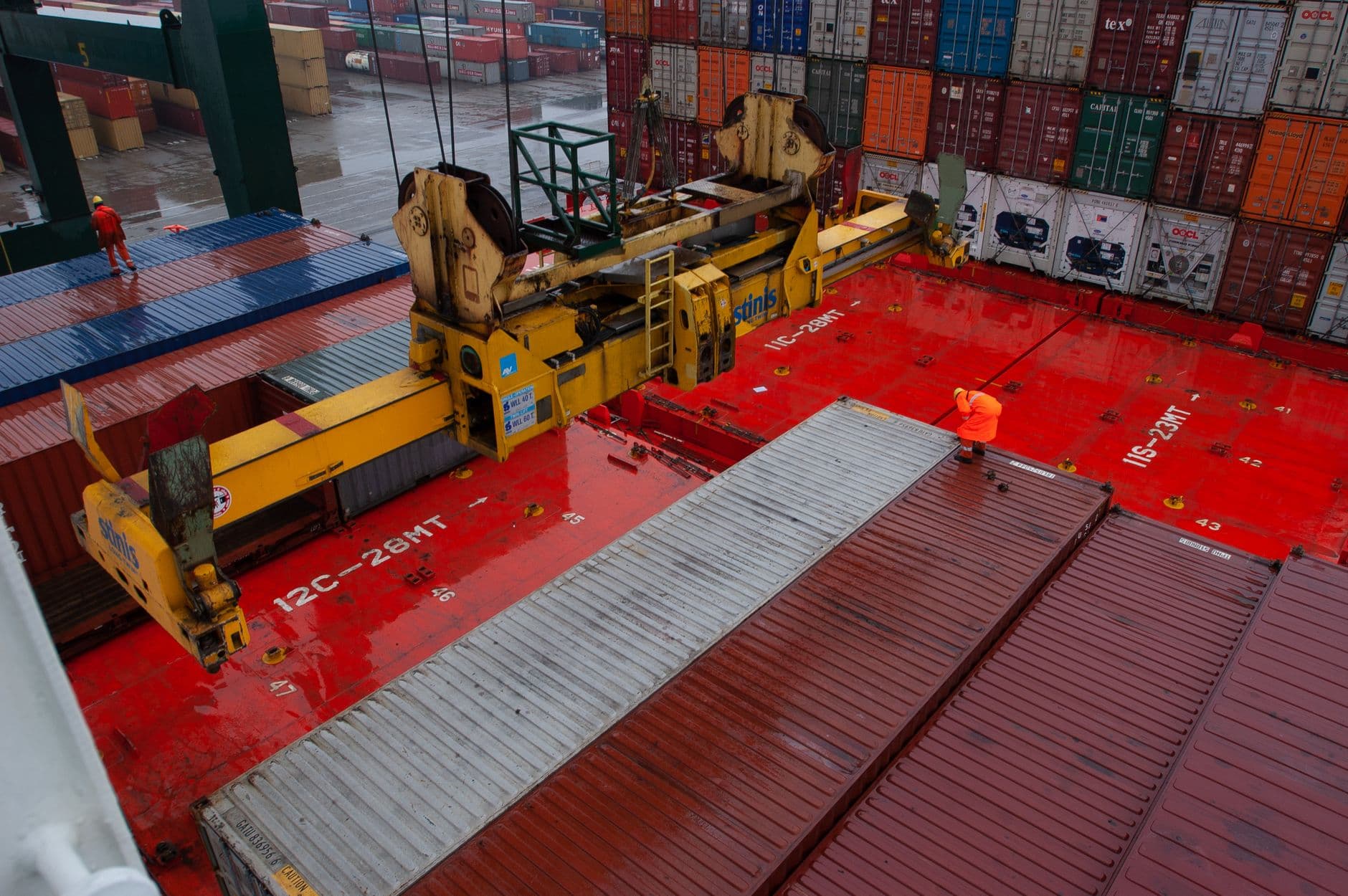
Quick Answer: Container Freight Station (CFS) optimization involves proactive strategies like pre-filing customs documentation, leveraging integrated digital platforms for real-time visibility, and meticulous vendor selection, ultimately minimizing dwell times, reducing demurrage/detention costs, and improving the accuracy of cargo consolidation and deconsolidation processes, saving shippers thousands annually.
Imagine a container filled with your critical components sitting for an extra week at a port CFS, racking up $1,800 in demurrage and detention charges, all because of an incorrect Harmonized System (HS) code. This isn't a hypothetical horror story; it's a daily reality for thousands of importers and exporters who collectively lose tens of millions each year to preventable CFS pitfalls. The margin for error in global freight is razor-thin, and as a veteran of this industry, I've seen firsthand how overlooked CFS operations can bleed your bottom line.
The Hidden Costs of Inefficient CFS Operations: Beyond the Line Item
Many shippers fixate on ocean freight rates, unknowingly accepting a blind spot at the Container Freight Station (CFS) that costs them more in hidden fees than any perceived ocean freight savings. The true financial impact of an unoptimized CFS goes far beyond the basic handling charges. We're talking about a cascading series of expenses that start small but quickly escalate into four- and five-figure bills per shipment.
For instance, incorrect or incomplete documentation is the single largest culprit. An average customs delay at a major US port, triggered by a missing permit or an inaccurately declared item, can lead to a minimum $1,200 fine for the first offense, escalating rapidly for repeat violations. Beyond direct penalties, you face demurrage and detention. Demurrage, charged by the shipping line for containers sitting too long at the terminal, typically runs between $150-$300 per day after the initial free time, and detention, charged for keeping the container chassis beyond the allowed period, adds another $75-$150 per hour. These costs are pure profit erosion.
According to the National Retail Federation (NRF), supply chain disruptions and inefficiencies, including those at CFS, cost US businesses an estimated $200 billion annually in lost sales, increased logistics costs, and inventory write-offs — 2023.
The indirect costs are even more insidious. Missed delivery deadlines can trigger contractual penalties with your customers, damage your brand reputation, and lead to lost future orders. If a critical component shipment is delayed, it can halt production, leading to idle labor, expediting future shipments at premium rates, and incurring storage fees for other goods waiting to be combined. These are the expenses that rarely appear on a single invoice but consistently drain profitability.
Why Traditional CFS Approaches Fail Shippers in 2025
The conventional wisdom around CFS operations, often inherited from legacy freight forwarding practices, is fundamentally flawed for today's dynamic global trade landscape. Most shippers still rely on a reactive approach, treating CFS as a necessary black box rather than a strategic point for value creation. This often manifests in three critical failure points: a pervasive lack of visibility, outdated manual processes, and an over-reliance on intermediaries without deep oversight.
A critical oversight stems from assuming your freight forwarder or 3PL automatically optimizes CFS activities. In my 15 years as a freight broker and logistics manager, I've observed that many intermediaries are incentivized to move cargo, not necessarily to optimize every dollar spent at the CFS for *your* benefit. Their primary goal is often volume and speed, not granular cost control for each client. This can lead to default CFS choices that aren't the most efficient or cost-effective for your specific cargo profile, potentially adding 5-10% to your landed cost through hidden fees.
"Over 65% of small to medium-sized importers lack real-time visibility into their cargo's status once it enters a foreign CFS, leading to an average 3-day delay in issue resolution compared to those with integrated tracking systems," states a 2024 Loadly industry report.
Furthermore, the industry's slow adoption of digital tools means many CFS operations still rely heavily on paper manifests, manual inventory checks, and phone calls for updates. This human-centric system is prone to errors, delays, and a complete lack of real-time data. When a discrepancy arises, such as an overage or shortage during deconsolidation, it can take days to reconcile, further delaying onward movement and attracting more demurrage. These inefficiencies are not merely inconveniences; they directly contribute to the $1.50 to $4.00 per cubic meter extra in handling and storage fees that could be avoided with better processes.
Proactive Documentation & Customs Compliance: The 48-Hour Head Start for Container Freight Station Optimization
The most effective strategy for container freight station optimization begins long before your cargo even touches the water: meticulous, proactive documentation and rigorous customs compliance. This isn't just about avoiding fines; it's about engineering a smooth flow that prevents delays before they materialize. Many shippers mistakenly believe customs clearance is solely the responsibility of their customs broker at the port. In reality, *you* hold the keys to a streamlined process by preparing accurate information well in advance.
- Automated Document Validation: Implement an AI-powered document validation tool or a robust checklist system internally. Ensure every single document—commercial invoice, packing list, bill of lading, certificate of origin, permits—is complete, consistent, and error-free at least 72 hours before container loading. An omitted decimal point or transposed number on a commercial invoice can trigger a customs hold costing upwards of $2,500 in examination fees and daily storage.
- Pre-File ISF 48 Hours Prior: For US-bound ocean shipments, the Importer Security Filing (ISF) must be filed with Customs and Border Protection (CBP) at least 24 hours *before* the cargo is loaded onto the vessel. Aim to submit this 48 hours in advance. This buffer allows for corrections without incurring the standard $5,000 penalty for late or inaccurate filings. Many professionals miss that early submission can even flag potential issues before the vessel departs, saving significant downstream costs.
- Engage a Customs Broker for HTS Verification *Before* Shipment: Never solely rely on your supplier's Harmonized System (HTS) codes. While they might be correct for *their* export country, HTS codes can vary subtly by importing nation. Hire your customs broker to verify all HTS codes for your *import* country before the goods are packed. This small investment can prevent a misclassification fine of 10% of the declared value and costly delays for re-classification.
By adopting a 48-hour head start, companies can achieve a 15% faster customs release on average, translating directly into a reduction of up to $800 per shipment in potential demurrage and detention charges. The insider tip here: Don't treat documentation as a clerical chore; view it as your first line of defense against costly port-side headaches. What most professionals miss is that a proactive approach gives you leverage: a clean shipment attracts less scrutiny, literally sailing through customs faster.
Strategic Vendor Selection & Performance Monitoring for CFS Efficiency
Choosing a Container Freight Station (CFS) isn't just about picking the cheapest option; it's about selecting a partner whose operational excellence directly impacts your bottom line. An effective CFS is an extension of your supply chain, and treating vendor selection with the same rigor you'd apply to a critical manufacturing partner is paramount for successful container freight station optimization.
- Define & Track Key Performance Indicators (KPIs): Before selecting a CFS, establish clear KPIs. These should include average dwell time (from container arrival to cargo availability), accuracy rate (number of discrepancies per shipment), claims ratio (damage/loss incidents), and turn-around time for documentation. A top-tier CFS should maintain an accuracy rate of 99.5% or higher and average dwell times under 48 hours for standard LCL. Request historical performance data and audit reports as part of your due diligence.
- Demand Audit Clauses & Site Visits: Include clauses in your service agreements that allow for periodic, unannounced audits of their facility and processes. Don't rely solely on their reported metrics; verify them. Conduct an initial site visit to assess their equipment, security protocols, and staff training. This is where you identify red flags like disorganized staging areas or outdated handling equipment which often signal future delays or damage.
- Implement a Multi-Vendor Strategy for Resilience: Relying on a single CFS, especially during peak seasons or unforeseen disruptions (like port strikes or natural disasters), is a significant vulnerability. Identify and qualify at least two to three CFS partners in key port areas. This redundancy provides flexibility and ensures your cargo can be rerouted with minimal delay. While it might slightly increase administrative overhead, the cost of a single major disruption can be 10x higher than managing multiple vendors.
An insider insight: When evaluating CFS partners, ask for their average container devanning time for LCL shipments. Many will quote an ideal scenario. Press them for their peak season average and their contingency plans for labor shortages. A CFS that can consistently devan a 40' LCL container in under 4-6 hours, even during peak, is a strong indicator of efficiency and robust staffing, ultimately reducing your detention exposure. What most shippers miss is the value of direct communication with the CFS operations manager, not just the sales representative, to gauge their actual operational capacity.
Leveraging Technology for Real-Time Container Freight Station Optimization
The era of managing CFS operations with spreadsheets and phone calls is over. For genuine container freight station optimization in 2025, integrating advanced technology into your supply chain is no longer an option—it's a mandate. Digital solutions provide the visibility and control necessary to preempt delays, mitigate risks, and cut costs by providing actionable data.
- API Integration with TMS/WMS: Demand that your CFS partners (or your freight forwarder acting as such) have API capabilities that can integrate directly with your Transportation Management System (TMS) or Warehouse Management System (WMS). This provides real-time data exchange on container arrival, devanning status, inventory counts, and onward delivery updates. Companies leveraging such integrations report a 23% reduction in manual data entry errors and a 1.7-day average reduction in overall lead time for LCL shipments.
- Predictive Analytics for Deconsolidation Scheduling: Utilize platforms that incorporate predictive analytics. These tools can analyze historical data, weather patterns, port congestion, and carrier performance to forecast optimal deconsolidation times and suggest alternative routes or earlier drayage appointments. This proactive scheduling can save hundreds of dollars per container by avoiding last-minute demurrage charges. For example, knowing a specific CFS often experiences a 3-hour delay on Tuesdays allows you to schedule pickups accordingly.
- IoT Sensors for Enhanced Cargo Tracking: For high-value or temperature-sensitive cargo, deploy IoT sensors within your consolidated shipments. These sensors can monitor temperature, humidity, shock, and even unauthorized door openings in real-time. This level of granular visibility means you're alerted instantly to deviations, allowing for immediate intervention. One client, by using IoT sensors, prevented a $15,000 spoilage claim on a pharmaceutical shipment by identifying a temperature excursion while the container was still at the CFS.
The insider tip here is to prioritize CFS operators who are not just "tech-friendly" but are actively investing in their digital infrastructure. Small CFS operations might offer cheaper initial rates, but if they lack robust APIs or digital tracking capabilities, the long-term cost of lost visibility, delayed information, and reactive problem-solving will far outweigh any initial savings. A good question to ask: "What is your average data refresh rate for container status updates?" Aim for hourly or better. What most professionals miss is that even basic digital integration can uncover inefficiencies you didn't even know existed, like excessive idle time between devanning and onward dispatch.
Incoterms Mastery for CFS Cost Control: Beyond "EXW" & "FOB"
Misinterpreting Incoterms is arguably the single largest source of hidden costs and disputes at the Container Freight Station (CFS). While "Ex Works" (EXW) and "Free On Board" (FOB) are widely known, their nuances, especially regarding consolidation and deconsolidation points, are frequently misunderstood. This leads to unexpected charges, delayed clearances, and contentious financial disputes. Mastering Incoterms for CFS operations isn't just about understanding acronyms; it's about precisely defining cost, risk, and responsibility from origin to destination for ultimate container freight station optimization.
- Train Teams on Specific Responsibilities: Ensure your procurement, sales, and logistics teams are fully educated on the exact points of transfer for cost and risk under various Incoterms. For importers, relying on EXW might seem cheap at first, but it places all responsibility for export customs, local haulage, and CFS charges on you. For optimal control and predictability at the CFS, consider terms like FCA (Free Carrier) at the supplier's factory or origin CFS, where the seller handles export clearance and delivery to your nominated carrier/CFS.
- Explicitly Define CFS Charges in Contracts: Regardless of the Incoterm chosen, always include specific clauses in your commercial contracts that clearly delineate who pays for what at the CFS. This should cover consolidation/deconsolidation fees, storage, handling, any re-packaging, and drayage to/from the port. Ambiguity around these "local charges" is a primary cause of inflated bills. For example, clarify if "FOB" means FOB *Port* or FOB *CFS*, as the difference can be significant in local haulage costs.
- Understand the Impact of DDP/DAP for Imports: If you are an importer seeking maximum predictability and minimal CFS hassle, consider Delivered Duty Paid (DDP) or Delivered At Place (DAP). Under DDP, the seller assumes all risks and costs, including import duties and taxes, right up to your final destination, often managing the CFS process entirely. This eliminates many CFS-related surprises but can lead to higher upfront costs. DAP is similar but excludes import duties/taxes.
Insider knowledge: Many first-time importers default to EXW thinking they have full control, only to be hit with exorbitant charges from their supplier's chosen local forwarder for export clearance and consolidation at the origin CFS. This "local charge" often includes a hefty markup. Always get a detailed breakdown of these local charges *before* agreeing to EXW from a new supplier. For instance, an EXW shipment from Shanghai can incur $300-$600 more in origin CFS charges if not meticulously managed, compared to an FCA agreement where you nominate your own forwarder to handle the origin.
| Incoterm | Cost Control for Importer | Visibility/Control at CFS | Liability at CFS | Recommended Use for CFS Optimization |
|---|---|---|---|---|
| EXW (Ex Works) | Low (Importer pays everything from seller's door) | Very Low (Importer relies on seller's choice) | High (Importer assumes all risk from pick-up) | Experienced importers with trusted local partners at origin. High risk of hidden CFS markups. |
| FCA (Free Carrier) | Medium (Importer pays main carriage & destination CFS) | Medium (Importer nominates carrier/CFS at origin) | Medium (Importer assumes risk once delivered to carrier/CFS) | Best for importers wanting control over main carriage and destination CFS, but wants seller to handle export. |
| FOB (Free On Board) | Medium (Importer pays from loading on vessel & destination CFS) | Medium (Importer control post-shipment from origin port) | Medium (Importer assumes risk from loading on vessel) | Common for LCL. Critical to define if it's FOB *port* or FOB *CFS* for clear charge demarcation. |
| DAP (Delivered At Place) | High (Seller pays main carriage, origin & destination CFS to named place) | High (Seller manages most logistics to destination) | Low (Seller assumes risk to named place, excluding import clearance) | Importers seeking predictable costs and minimal involvement in complex logistics. |
| DDP (Delivered Duty Paid) | Very High (Seller pays all costs including import duties to destination) | Very High (Seller manages entire door-to-door process) | Very Low (Seller assumes all risk to final destination) | Importers prioritizing simplicity and total landed cost clarity, willing to pay a premium. |
Key Takeaways
- Inaccurate documentation and Incoterms misunderstandings are the primary drivers of $1,200+ customs fines and $150-$300 daily demurrage at CFS.
- Prioritize CFS partners with strong digital integration (APIs) and a track record of <0.5% error rates to avoid costly re-work and delays.
- Implement a 48-hour pre-filing strategy for ISF and customs documentation to preemptively resolve issues and expedite clearance.
- Never blindly trust supplier-provided HTS codes; engage your own customs broker for verification before shipment to prevent re-classification fines.
- Utilize IoT sensors for high-value cargo within consolidated shipments to gain real-time visibility and mitigate damage or spoilage risks.
- Actively monitor CFS performance with KPIs like dwell time (aim for under 48 hours) and accuracy rate (99.5%+) to hold vendors accountable.
- Consider a multi-vendor CFS strategy for critical lanes to build resilience against peak season congestion or unexpected disruptions.
- Negotiate explicit clauses for all CFS handling, storage, and drayage charges in your commercial contracts to avoid hidden fees and disputes.
Frequently Asked Questions About Container Freight Station Optimization
What is a Container Freight Station (CFS)?
A Container Freight Station (CFS) is a facility where Less-than-Container Load (LCL) cargo is consolidated into full container loads for export, or deconsolidated from full container loads for import. It acts as a crucial interim point in the supply chain for cargo that doesn't fill an entire shipping container, preparing it for international transit or final delivery.
How can I reduce CFS dwell time for my shipments?
To reduce CFS dwell time, focus on proactive customs documentation filing (aim for 48-hour pre-filing), ensure your paperwork is 100% accurate, and choose CFS operators with robust digital tracking and efficient deconsolidation processes. Timely communication with your drayage carrier for pickup scheduling is also critical to avoid additional storage charges.
What are the typical costs associated with CFS operations?
Typical costs include consolidation/deconsolidation fees, handling charges, storage fees (if cargo exceeds free time), drayage to/from the port, and potential customs inspection fees or fines for non-compliance. These can range from a few hundred dollars for basic handling to thousands if delays lead to demurrage, detention, and penalties.
When should I choose a CFS over direct port delivery?
You should choose a CFS when shipping Less-than-Container Load (LCL) cargo, as your goods need to be combined with others to fill a container or separated upon arrival. Direct port delivery is only viable for Full Container Load (FCL) shipments where your cargo entirely fills a container and can be directly loaded or offloaded at the terminal.
What's the difference between consolidation and deconsolidation at a CFS?
Consolidation is the process where multiple LCL shipments from various shippers are combined at the origin CFS into a single Full Container Load (FCL) for efficient international transport. Deconsolidation is the reverse process, where an FCL containing multiple LCL shipments is unloaded and separated at the destination CFS for individual pickup or onward delivery.
How do Incoterms impact CFS charges and responsibilities?
Incoterms define the responsibilities, costs, and risks between buyer and seller in international trade, directly impacting CFS charges. For example, under EXW (Ex Works), the buyer is responsible for all costs and risks from the seller's factory gate, including origin CFS charges. Under DDP (Delivered Duty Paid), the seller bears all costs and risks, including CFS operations, up to the buyer's named destination.
Streamline Your Container Freight Station Optimization with Loadly
The complexities of container freight station optimization can feel overwhelming, leading to costly errors and lost time. I’ve lived through the challenges of juggling multiple CFS partners, chasing paperwork, and battling unexpected charges. That's why I'm confident in saying that the right technology can fundamentally transform your approach. Loadly isn't just a marketplace; it’s a platform designed to inject visibility and control into these exact pain points. Our integrated ecosystem connects you directly to a vetted network of CFS operators and carriers, allowing for real-time tracking, transparent pricing, and simplified documentation, essentially implementing the playbook you’ve just read. Stop leaving thousands on the table due to inefficient CFS operations. Explore how Loadly can empower your business to navigate the global freight landscape with unparalleled precision and cost-effectiveness today.