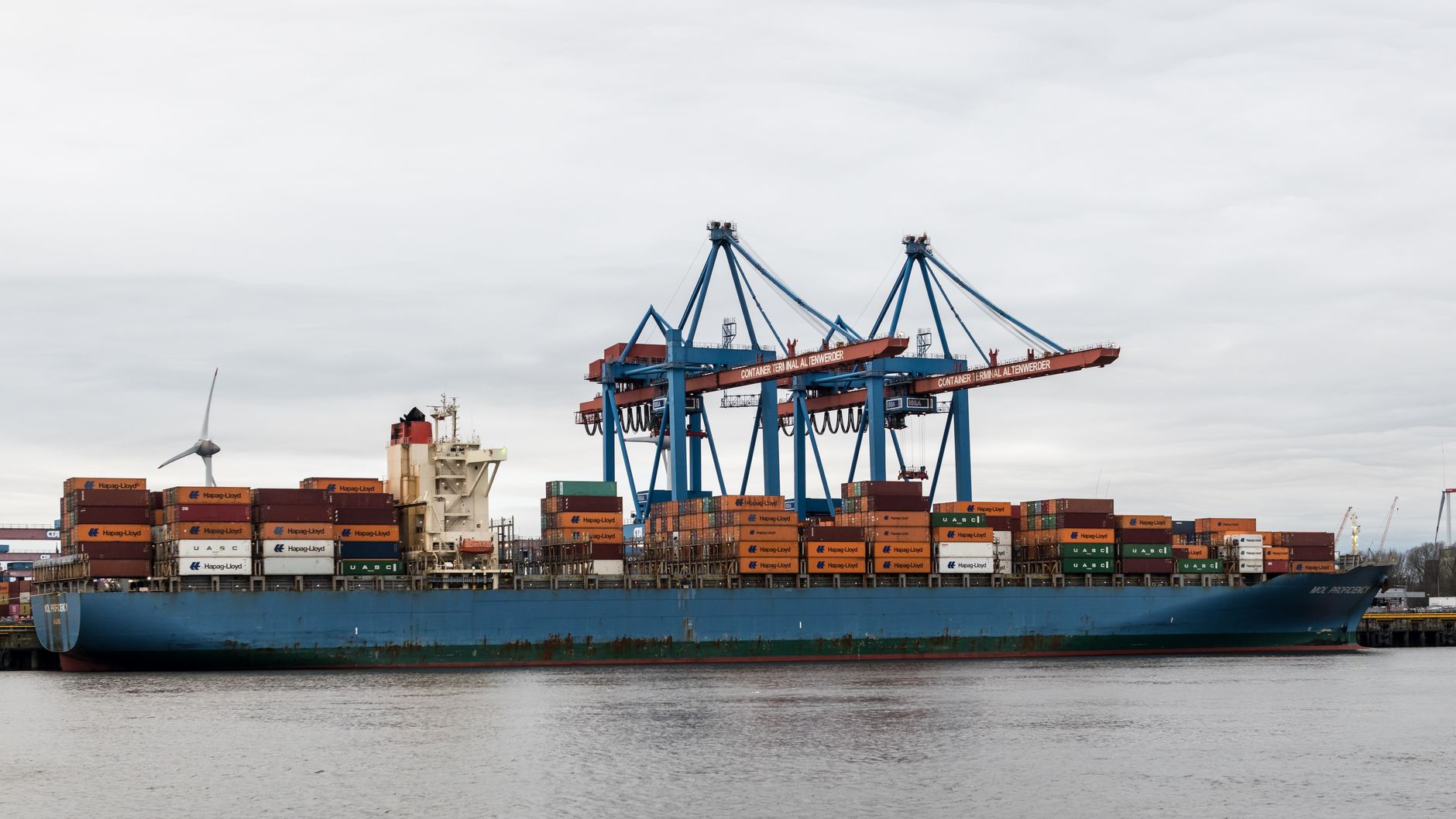
Quick Answer: CIF (Cost, Insurance, and Freight) means the seller covers costs and risk to the destination port, while FOB (Free On Board) shifts responsibility and risk to the buyer once goods are loaded onto the vessel at the origin port. For 2025, proactive importers should favor FOB to gain greater control over carrier selection, insurance, and overall landed costs, potentially saving 8-15% per shipment by directly managing the main freight leg.
Every year, I see importers and exporters needlessly bleed an extra $800 to $2,500 per container because they picked the wrong Incoterm, not realizing its hidden costs and risks until it’s too late. That’s enough to wipe out a significant chunk of your profit margin, especially when you factor in unexpected port delays or customs hold-ups that could add thousands more. For 2025, understanding the gritty realities of CIF vs FOB isn't just about compliance; it's about protecting your bottom line and regaining control of your supply chain.
As a veteran of this industry, having spent years on the docks, in dispatch offices, and negotiating with carriers, I've seen firsthand how a seemingly minor detail like an Incoterm choice can snowball into a catastrophic financial hit. Most businesses, especially those new to international trade, default to CIF because it feels "simpler" – the seller handles more. This is a critical mistake that seasoned professionals rarely make.
The Hidden Costs of Incoterm Mismanagement: Why CIF vs FOB Still Trips Up 70% of Shippers
The core problem isn't the Incoterms themselves, but the common misconception that CIF inherently offers a "better deal" or less hassle for the buyer. In reality, under a CIF agreement, the seller often chooses a carrier based on their own relationships or, frankly, kickbacks, not necessarily on the most competitive rates, transit times, or reliable service for you. This means you, the buyer, are locked into whatever freight costs they've negotiated, which are frequently inflated, and you have zero leverage to challenge them once the goods are en route.
"According to a recent FIATA report, up to 35% of international shipments processed under CIF terms faced undisclosed surcharges or inflated freight costs upon arrival, averaging 7-12% above market rates for comparable FOB shipments – 2023."
Beyond the immediate freight cost, there’s the opaque nature of insurance. While CIF includes insurance, it’s typically for a minimum coverage (usually 110% of the value of the goods) and often with a policy chosen by the seller. If damage or loss occurs, you're left dealing with an unfamiliar insurer, potentially in a foreign language, and navigating a claims process you didn't initiate. This can turn a simple claim into a six-month bureaucratic nightmare, tying up your capital and delaying your inventory replenishment. I’ve seen legitimate claims under CIF take nine months to a year to resolve, compared to weeks for a buyer-controlled policy under FOB.
Port Congestion & Customs Delays: The True Supply Chain Killers Beyond Incoterm Choice
Even with the "best" Incoterm, external factors like port congestion and customs delays are ever-present threats. However, your Incoterm choice dictates who bears the financial brunt and operational burden when these issues arise. Under CIF, the seller's responsibility ends when the goods clear the ship's rail at the destination port, or sometimes, literally upon arrival at the port facility. What happens next – demurrage, detention, port storage fees – can be a financial black hole for the unprepared buyer.
For example, during the peak season in 2023-2024, an average customs delay in Los Angeles or Rotterdam could easily cost a shipper an extra $1,200 to $1,800 per day in demurrage and detention fees, beyond the initial $300-$500 in port storage. Under CIF, these charges typically fall squarely on the buyer's shoulders, even though you had no control over the carrier or arrival timing chosen by the seller. Incorrect documentation, often prepared by the seller's chosen forwarder under CIF, can lead to fines ranging from $1,000 to $10,000 per violation from agencies like CBP, not including potential seizure or re-export costs. The problem isn't just the money; it's the lack of control. Under CIF, your entire supply chain becomes hostage to the seller's chosen logistics partners, leaving you vulnerable to their inefficiencies.
Demystifying CIF Incoterms 2025: When the Seller's Control Comes at Your Price
Let’s be blunt: CIF is rarely the optimal choice for an experienced importer, despite its apparent convenience. It's designed for situations where the buyer has limited logistical expertise or connections in the seller's country, or when the shipment value is so low that the administrative overhead of managing freight is prohibitive. Under CIF (Cost, Insurance, and Freight), the seller pays for the cost of the goods, freight, and insurance to the named port of destination. Risk transfers from seller to buyer once the goods are loaded on board the vessel at the port of shipment. This distinction is crucial and often misunderstood.
- Hidden Costs & Inflated Freight: The seller controls the ocean carrier selection. This often means they'll pick the forwarder offering them the best rebate or the cheapest headline rate, not necessarily the best service or transit time for you. You frequently get stuck with inflated terminal handling charges (THC), documentation fees, and often a higher ocean freight component bundled into the product price that you cannot dissect or negotiate. My rule of thumb: if the seller pushes CIF too hard, scrutinize their freight charges – they’re likely marking it up significantly.
- Insurance Blind Spots: While insurance is included, it's typically minimum coverage (110% of cargo value) and placed by the seller. This means you lack control over the insurer, the policy's specific terms, and the claims process. For a high-value shipment or goods prone to damage, this "convenience" can lead to financial disaster if a claim arises. You lose the ability to use your preferred insurance broker who understands your specific commodity and risk profile.
- Post-Arrival Vulnerability: The most insidious trap of CIF is its transfer of risk. While the seller pays freight and insurance to the destination port, YOUR risk begins the moment the cargo is loaded onto the ship at the origin port. If the vessel sinks halfway, it's your cargo, your claim to pursue with the seller's insurer. Furthermore, once the ship docks, all costs and risks associated with unloading, customs clearance, duties, taxes, and onward delivery are yours. This is where port congestion and unexpected delays can burn a hole in your pocket, as the seller’s responsibility has ended.
In short, CIF gives the seller maximum control and the buyer minimum visibility, which for sophisticated operations means less efficiency and often higher actual costs. Avoid CIF unless you have absolutely no alternative or are dealing with a trusted, long-term partner and a low-risk, low-value commodity.
Optimizing with FOB Incoterms 2025: Seizing Control & Cutting Your Ocean Freight Bill
For most importers and manufacturers looking to optimize their supply chain and costs in 2025, FOB (Free On Board) is the undisputed champion. Under FOB, the seller is responsible for delivering the goods to the named port of shipment and loading them onto the vessel. Once loaded, the risk and costs transfer entirely to the buyer. This single shift gives you, the buyer, immense power.
- Direct Carrier Negotiation & Cost Savings: With FOB, you are responsible for the main ocean freight leg and choosing your freight forwarder or NVOCC (Non-Vessel Operating Common Carrier). This means you can shop around for the best rates, negotiate volume discounts, and leverage Loadly's network to browse live LTL loads near you and secure competitive full container (FCL) rates. On average, switching from CIF to FOB for a typical 40-foot container shipment from Shanghai to Los Angeles can shave off $800 to $1,500 by allowing you to negotiate ocean freight directly. This is not "potential savings"; this is money in your pocket that sellers frequently mark up under CIF.
- Superior Risk Management & Insurance Control: You choose your own cargo insurance policy and provider. This gives you complete control over the coverage limits, deductibles, and crucially, the claims process. Should damage or loss occur, you deal directly with your insurer, expediting claims and ensuring your interests are paramount. For high-value goods like electronics or machinery, this control is non-negotiable. Knowing your insurance provider will fight for you can cut claim resolution times by 60% or more compared to navigating a seller-provided policy.
- Proactive Supply Chain Management: You control the booking, scheduling, and tracking of your main freight leg. This means better visibility into transit times, proactive communication with your chosen forwarder, and the ability to pivot if port congestion or carrier issues arise. If you have multiple suppliers in the same region, FOB allows for consolidation of shipments, further reducing costs and improving efficiency. This level of control helps mitigate risks and respond to disruptions, saving critical time and money during unforeseen events.
The "insider secret" here: always provide your supplier with your preferred freight forwarder's contact details early in the negotiation. Most suppliers are accustomed to working FOB and will appreciate the clarity. If they resist, it's a red flag that they might be profiting significantly from the freight under CIF.
Beyond the Basics: Strategic Incoterm Selection for High-Value & Perishable Goods
While FOB offers clear advantages for general cargo, the optimal Incoterm strategy demands nuance, especially for specialized shipments. For high-value goods like pharmaceuticals, luxury items, or sophisticated machinery, the increased control and transparent insurance under FOB are paramount. You want your own specialist insurer who understands the specific risks associated with these commodities, rather than a generic policy from the seller. Furthermore, having direct communication with your chosen carrier ensures proper handling instructions are followed precisely.
Consider DAP (Delivered At Place) for certain high-value or highly sensitive shipments where the seller has superior expertise in handling the entire journey, even if it comes at a premium. Under DAP, the seller delivers the goods to a named place of destination, cleared for export, but not for import, and ready for unloading. Risk transfers at the named place. While this might seem like CIF, the key difference is the designated delivery point. For example, if you're importing specialized medical equipment that requires specific handling at the destination warehouse, DAP might be preferable if the seller is a recognized expert in that niche, assuming you still control customs clearance. However, this is a rare exception and typically only viable when the seller has proprietary logistics advantages that outweigh the loss of control for the buyer.
For perishable goods, CFR (Cost and Freight) or CIF can be tempting, but again, the lack of control over carrier choice and specific transit schedules makes them risky. Under CFR, the seller pays for transport to the named port of destination, but risk transfers when the goods are on board the vessel. This is even riskier than CIF, as the buyer doesn't get the basic insurance included. For perishables, delays can mean total loss. Therefore, for most perishables, EXW (Ex Works) or FCA (Free Carrier) paired with a trusted freight forwarder who specializes in refrigerated cargo and has a proven track record of on-time delivery is superior. This allows you to dictate the precise handling, temperature control, and transit speed required, minimizing spoilage and mitigating financial loss. The "convenience" of CFR or CIF for perishables often comes with a statistically higher risk of rejection at destination due to spoilage, potentially costing 100% of the cargo value.
| Criterion | CIF (Cost, Insurance, and Freight) | FOB (Free On Board) |
|---|---|---|
| Cost Responsibility | Seller pays freight & insurance to destination port. Buyer pays after arrival at destination. | Seller pays to load goods onto vessel at origin port. Buyer pays main freight, insurance & destination costs. |
| Risk Transfer Point | Goods loaded onto vessel at origin port. | Goods loaded onto vessel at origin port. |
| Control & Visibility | Limited buyer control over carrier, routing, and insurance selection. Opaque freight costs. | Maximum buyer control over carrier, routing, and insurance. Transparent cost breakdown. |
| Typical Cost Savings for Buyer | Minimal, often higher due to seller markups. | Significant (typically $800-$1,500 per FCL) through direct negotiation. |
| Ideal Use Case | Buyer with limited international shipping experience or small, low-value, low-risk shipments. | Experienced importers/exporters seeking cost control, risk management, and supply chain efficiency. |
Key Takeaways
- For 2025, choose FOB over CIF for the majority of your international shipments to maximize control and minimize costs.
- FOB enables you to directly negotiate ocean freight, often saving $800-$1,500 per container compared to bundled CIF rates.
- Under FOB, you control cargo insurance, ensuring better coverage and faster claim resolution through your preferred provider.
- CIF's apparent "convenience" often masks inflated freight charges and leaves buyers vulnerable to post-arrival port costs and delays.
- Risk transfer for both CIF and FOB happens when goods are loaded onto the vessel at the origin port – a critical point often misunderstood.
- For high-value or perishable goods, FOB (or FCA/EXW for more control) allows for specialized handling and dedicated insurance, mitigating specific risks.
- Always provide your preferred freight forwarder's contact to your supplier early when negotiating FOB terms; resistance is a red flag.
Frequently Asked Questions
What is the primary difference between CIF vs FOB Incoterms?
The primary difference between CIF (Cost, Insurance, and Freight) and FOB (Free On Board) Incoterms lies in who pays for the main carriage and insurance, and critically, at what point the cost and risk transfer from seller to buyer. Under CIF, the seller pays for freight and insurance to the destination port, with risk transferring at the origin port. Under FOB, the seller's responsibility ends when goods are loaded onto the vessel at the origin port, and the buyer assumes all costs and risks from that point, including main freight and insurance.
When should an importer choose CIF terms in 2025?
An importer should rarely choose CIF terms in 2025, unless they have absolutely minimal experience in international shipping, are dealing with very low-value, low-risk goods where the logistical overhead of managing freight is disproportionate, or have an exceptionally trusted, long-term relationship with a supplier who provides transparent and competitive CIF rates. For most strategic importers, the lack of control over freight costs, carrier choice, and insurance under CIF makes it a less favorable option compared to FOB.
How much can I save by switching from CIF to FOB?
By switching from CIF to FOB, an importer can typically save between $800 to $1,500 per 40-foot container shipment on ocean freight alone, depending on the route and market conditions. These savings come from being able to directly negotiate with freight forwarders or NVOCCs, leverage volume discounts, and avoid the inflated freight charges often bundled by sellers under CIF terms. Direct control also mitigates unexpected costs from delays or poor carrier selection.
What specific risks does FOB mitigate better than CIF?
FOB mitigates several critical risks better than CIF. Firstly, it gives the buyer control over cargo insurance, allowing for tailored coverage and a more straightforward claims process. Secondly, it provides control over carrier selection and routing, which is vital for managing transit times and responding to supply chain disruptions like port congestion. Finally, by managing the main freight leg, the buyer can proactively address and mitigate risks associated with port delays, demurrage, and detention fees, which are often passed to the buyer under CIF without prior warning or control.
Do Incoterms 2025 introduce new rules for CIF vs FOB?
While the article refers to "2025," it's important to note that the current official Incoterms rules are Incoterms 2020, published by the International Chamber of Commerce (ICC). These rules govern global trade. There are no officially announced new Incoterms 2025 rules; the term "2025" in this context refers to best practices and strategic considerations for navigating international trade in the upcoming year under the existing Incoterms 2020 framework. Key principles for CIF vs FOB remain consistent under Incoterms 2020.
Mastering CIF vs FOB Incoterms for 2025 Success
Navigating the complexities of international trade requires a deep understanding of the practical implications of every decision, especially when it comes to Incoterms. What might appear as a minor contractual clause like CIF vs FOB can, in reality, dictate thousands of dollars in hidden costs, unnecessary risks, and a complete lack of control over your supply chain. My 15 years on the ground, dealing with these exact scenarios, has taught me that control and transparency are priceless in freight. For 2025, proactive management, choosing FOB, and leveraging technology are not just recommendations; they are necessities for survival and growth.
If you're ready to take command of your global shipping, eliminate those hidden fees, and ensure your cargo moves efficiently and cost-effectively, it's time to act. Don't let Incoterm confusion eat into your profits. Leverage the power of a digital freight marketplace to find trusted carriers, negotiate better rates, and gain the transparency you need. Start streamlining your logistics today and register for a Loadly account to unlock a world of efficient, cost-controlled global shipping solutions.