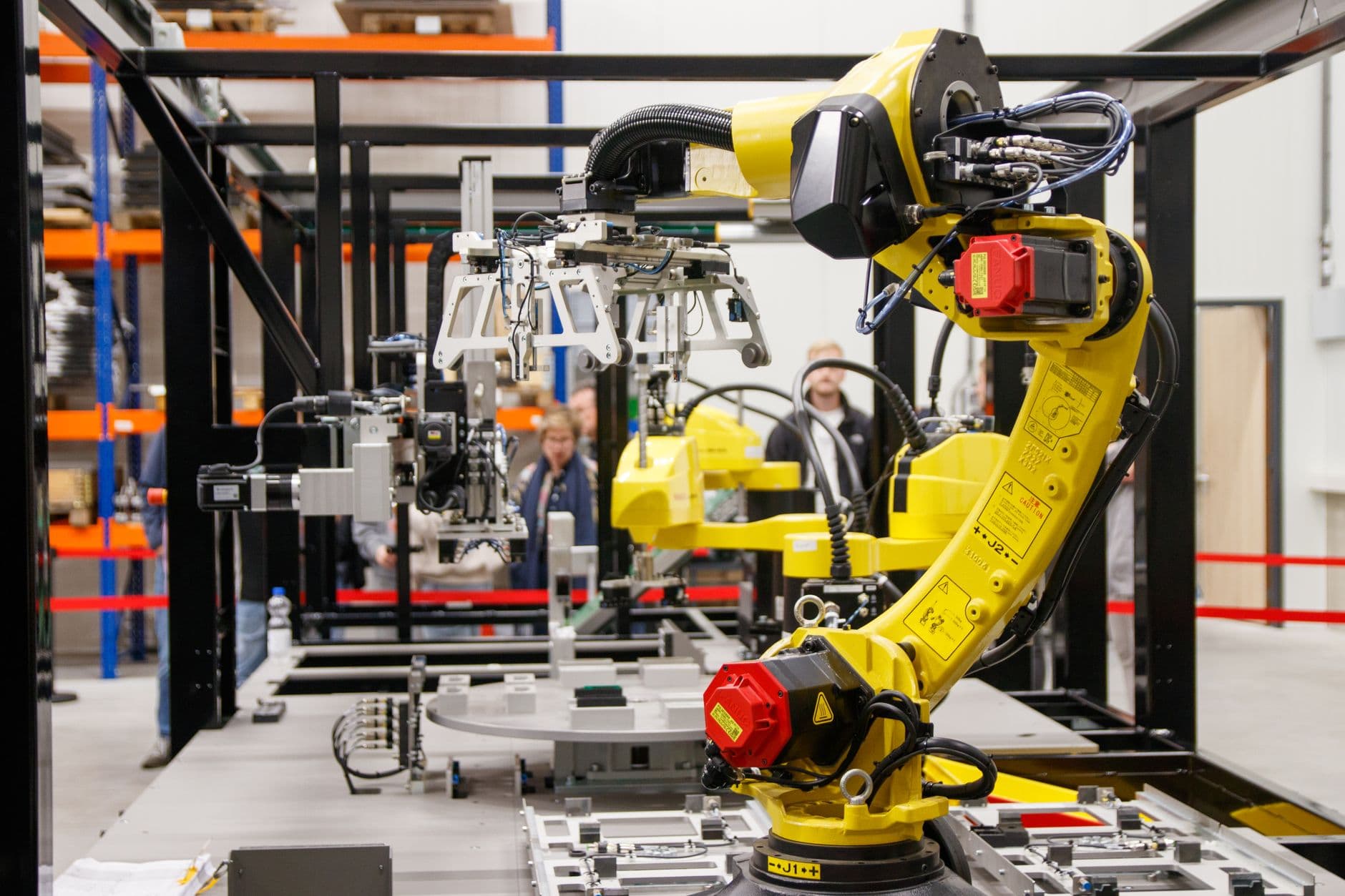
Quick Answer: Successful warehouse robotics implementation in 2025 requires a meticulous, data-driven approach, often overlooked by companies rushing to automate. Averting costly mistakes hinges on thorough data validation, seamless integration with existing WMS and freight platforms like Loadly, robust change management for staff, and a long-term scalability strategy to ensure sustained ROI and operational efficiency.
Picture this: a 400,000 sq ft distribution center, millions invested in a new fleet of Autonomous Mobile Robots (AMRs), yet your pick rates are stagnant, dock doors are still congested, and inventory discrepancies persist. This isn't a hypothetical nightmare; it's the reality for an estimated 40% of companies that rush into warehouse robotics implementation without proper foresight, often seeing projects fall short of ROI targets by 18-24 months post-deployment. The real cost isn't just the hardware; it's the operational chaos, missed shipping windows, and the erosion of your team's morale.
The Invisible Costs of Rushed Warehouse Robotics Implementation
As a freight veteran who's seen it all, from manually manifested LTL pallets to fully automated cross-docks, I can tell you that the biggest failures in warehouse robotics implementation aren't due to technical glitches. They stem from a fundamental misunderstanding of operational interdependence. Companies fixate on the shiny new robots and neglect the foundational issues – poor data hygiene, outdated Warehouse Management Systems (WMS), and a reluctance to address ingrained labor practices. This isn't just about efficiency; it's about avoiding a financial sinkhole that can drain millions. Consider that a single dock door bottleneck, exacerbated by an unoptimized AMR fleet, can cost an average facility upwards of $1,200 per day in carrier detention fees and delayed shipments.
"According to a 2023 report by the Material Handling Institute (MHI), companies that fail to adequately integrate new automation with existing IT infrastructure experience an average 15% drop in supply chain visibility during the first year of deployment."
What most professionals miss is that robotics amplify existing problems, they don't solve them in isolation. If your WMS struggles with accurate inventory counts or your dispatch system can't provide real-time carrier ETAs, robots will simply move incorrect items faster or queue up at congested docks more efficiently. The root cause of failure often lies not in the robot's capability, but in the brittle processes and siloed data ecosystems it's forced into. Before you even think about ordering a single unit, you need a forensic audit of your current operations. Anything less is just automating chaos.
Audit Your Data Foundation Before Robotics Deployment
The single most critical step in successful warehouse robotics implementation, often overlooked until it's too late, is a comprehensive data audit. Your robots are only as smart as the data they receive. Without pristine, real-time data, your advanced Guided Vehicles (AGVs) become expensive paperweights, and your Automated Storage and Retrieval Systems (AS/RS) turn into black holes for inventory. We're talking about more than just item master data; it’s about slotting accuracy, demand forecasts, labor tasking, and carrier scheduling data.
- Validate Inventory Accuracy: Before automation, conduct a wall-to-wall physical inventory audit. Aim for 99.5% accuracy or higher. If your current system struggles to hit 98%, your robotics will inherit and magnify every discrepancy. This means daily cycle counts, not just annual stocktakes.
- Map & Optimize Material Flow: Use simulation software to model current product movement, not just historical averages. Identify every pinch point, dead zone, and redundant movement. Automating inefficient paths simply makes them faster, not smarter.
- Integrate with ERP & WMS Data Streams: Your robots need direct, bidirectional communication with your Enterprise Resource Planning (ERP) and WMS. Ensure APIs are robust and data latency is minimal. A 2-second delay in data transfer can translate to meters of wasted robot travel or an incorrect pick.
- Cleanse Carrier & Dispatch Data: Robotics depend on predictable inbound and outbound flows. If your carrier data, including typical dwell times, preferred routes, and on-time performance, is unreliable, your dock scheduling robots will constantly be making poor decisions. Freight professionals consistently tell us that accurate carrier ETAs are the holy grail for optimizing dock utilization and preventing costly no-shows, averaging a $150-$500 loss per disrupted slot.
What most managers don't realize is that "clean data" isn't a one-time project; it's a perpetual operational discipline. Neglecting this leads to robots constantly requiring human intervention, erasing any projected labor cost savings and frustrating your newly trained workforce.
Beyond the Robot: Integrating Robotics with Your WMS and Loadly
Successfully deploying robotics isn't just about the hardware; it's about building a cohesive ecosystem where your robots, WMS, and external logistics platforms communicate seamlessly. The biggest mistake is treating robotics as a standalone solution rather than an extension of your existing operational brain. Your WMS dictates pick logic and inventory location, while your freight marketplace manages the inbound and outbound carrier movements. Disconnect these, and you introduce the very bottlenecks you're trying to eliminate, particularly around dock congestion.
- API-First Integration Strategy: Insist on robotics vendors providing open, well-documented APIs. Proprietary, closed systems create integration nightmares. Your WMS needs to tell the AMR where to go, and the AMR needs to report back its status in real-time.
- Synchronize Dock Scheduling: Leverage platforms that integrate your robotics tasking with carrier arrival and departure times. Imagine AGVs bringing outbound loads to a dock door only to find the truck hasn't arrived, or worse, arrived early and is now waiting. Integrating your WMS and robotics system with a digital freight marketplace allows for dynamic adjustments to carrier schedules, providing critical real-time visibility into truck movements that can directly inform your robot dispatching logic. This proactive approach can reduce carrier wait times by up to 2.3 hours, saving an average of $80 per truck in detention.
- Test End-to-End Workflows: Don't just test individual robot functions. Run full simulated scenarios from order receipt in your ERP, through WMS tasking, robot execution, and final loadout. Include edge cases: damaged items, rush orders, and unexpected carrier delays.
The insider secret here is understanding that a robot’s optimal route planning is worthless if the truck it's loading is stuck 300 miles away due to an unforeseen breakdown. True efficiency comes from interconnected visibility across your entire supply chain, not just within your four walls. This holistic view helps eliminate the "black holes" in information flow that plague many operations.
Mitigating Robotics Labor Resistance & Skill Gaps
Implementing warehouse robotics isn't just a technical challenge; it's a human one. The conventional wisdom focuses on "training," but the real hurdle is often deeply rooted resistance to change and fear of job displacement. Ignoring this can lead to low adoption rates, sabotage (passive or active), and a significant hit to productivity, turning your automation investment into a costly HR problem rather than a solution to rising labor costs.
- Proactive Communication & Role Redefinition: Announce automation plans early, emphasizing job evolution, not elimination. Clearly define new roles for workers, focusing on robot supervision, maintenance, and data analysis. For example, a picker might become a "robot-fleet manager," ensuring robot paths are clear and addressing minor faults.
- Invest in Upskilling & Reskilling Programs: Don't just offer basic training. Partner with local community colleges or technical schools for certified programs in mechatronics, data analytics, or robotic troubleshooting. Allocate a budget for this that is at least 15% of your total software investment.
- Create "Robot Champions": Identify enthusiastic early adopters among your current workforce and empower them as trainers and advocates. Peer-to-peer learning is often far more effective than top-down directives. They can demystify the technology and build trust.
- Implement Performance Incentives for Collaboration: Structure incentives that reward teams for successful robot-human collaboration, not just individual output. This shifts the mindset from competition to partnership, leading to smoother integration and higher overall efficiency.
What most companies overlook is the psychological impact of seeing a robot take over a repetitive task. If not managed carefully, this can breed resentment. A former owner-operator I know, who now manages a regional depot, reduced his staff turnover by 20% post-automation simply by making his team part of the robot naming and branding process. It's about ownership, not just instruction.
Future-Proofing Your Robotics Investment: Scalability & Maintenance
The upfront cost of warehouse robotics implementation is significant, but the long-term ROI is truly realized only through a scalable and maintainable infrastructure. Many companies invest in a solution for today's problems without considering tomorrow's growth or the inevitable wear and tear. This leads to costly re-platforming, diminished capabilities, and unexpected downtime, turning a strategic investment into an operational burden.
- Modular & Scalable Systems: Choose robotics solutions that are modular, allowing you to add or remove units and functionalities as demand changes. Avoid monolithic systems that require complete overhauls for expansion. Your current facility might need 10 AMRs, but anticipate needing 25 in three years.
- Robust Preventative Maintenance Schedule: Don't wait for a robot to break down. Implement a rigorous preventative maintenance schedule, often requiring 15-20% of the robot's annual operating cost. This includes regular sensor calibration, battery health checks, and firmware updates.
- Redundancy Planning: What happens if a critical robot or a fleet of robots goes offline? Have backup plans, whether that's temporary manual tasking or spare units. A single point of failure can cripple an automated warehouse faster than a human-centric one.
- Vendor Long-Term Support & Obsolescence Policy: Scrutinize vendor contracts for long-term support, software updates, and their obsolescence policy. You don't want to be stuck with unsupported robots five years down the line, requiring a costly replacement cycle.
The controversial truth often missed by procurement teams is that the lowest bid for robotics hardware rarely translates to the lowest total cost of ownership (TCO). A slightly higher initial investment in a vendor with superior long-term support, modularity, and a clear upgrade path can save millions in operational costs and future-proof your facility against unforeseen market shifts. It's not about buying robots; it's about buying a future-ready operational capability.
| Criterion | Low-Risk Vendor | High-Risk Vendor | Why It Matters for ROI |
|---|---|---|---|
| WMS/ERP Integration APIs | Open, RESTful, well-documented, multiple pre-built connectors (e.g., SAP, Oracle) | Proprietary, limited documentation, custom development required for each integration | Seamless data flow reduces manual intervention (saving $50k-$150k/year in IT/support) and prevents inventory discrepancies. |
| Scalability & Modularity | Add/remove units easily, software supports varied fleet sizes, clear upgrade paths | Fixed fleet size, complex re-configuration for expansion, no stated upgrade plan | Adapts to demand fluctuations (up to 30% peak demand increase) without costly system overhauls, protecting future investment. |
| Maintenance & Support | 24/7 remote monitoring, local field service teams, 99.9% uptime guarantee, transparent SLA | Limited support hours, distant service, no uptime guarantee, opaque SLA terms | Minimizes downtime (each hour of robot downtime can cost $500-$1,500 in lost productivity) and extends asset lifespan. |
| Labor Retraining Programs | Vendor-led certifications, train-the-trainer model, comprehensive digital learning modules | Basic operational manual, no explicit training support, assumed in-house expertise | Ensures rapid staff adoption and reduces resistance, preventing up to 20% efficiency loss during transition. |
| Safety & Compliance | ISO 3691-4 certified, clear safety protocols, integrated collision avoidance, active incident reporting | Minimal safety certifications, basic obstacle detection, reactive incident management | Protects employees, prevents costly accidents (averaging $10k-$50k per incident), and ensures regulatory compliance. |
Key Takeaways
- A staggering 40% of warehouse robotics implementation projects fail to meet ROI targets due to overlooked foundational issues.
- Rigorous data validation, aiming for 99.5% inventory accuracy, is paramount; robots amplify existing data discrepancies, costing up to $1,200/day in operational losses.
- Seamless integration with WMS and real-time carrier data, often via digital freight marketplaces, is critical to prevent dock congestion and carrier no-shows, saving $80 per truck in detention.
- Proactive labor management, including early communication, upskilling programs (budget 15% of software costs), and 'robot champions,' is essential to mitigate resistance and foster adoption.
- Future-proof your investment by choosing modular systems with robust preventative maintenance (15-20% of annual operating cost) and clear vendor support contracts, avoiding monolithic, short-sighted solutions.
- The lowest bid on robotics hardware rarely translates to the lowest total cost of ownership; prioritize long-term support, scalability, and integration capabilities.
- True automation success comes from a holistic ecosystem view, where robots, WMS, and external logistics platforms communicate dynamically to optimize the entire supply chain.
- Don't just automate chaos; conduct a forensic audit of current operations and processes before deploying any new robotic system.
Frequently Asked Questions
What is the biggest challenge in warehouse robotics implementation?
The biggest challenge in warehouse robotics implementation is often not the technology itself, but the lack of thorough data readiness and seamless integration with existing Warehouse Management Systems (WMS). Without accurate, real-time operational data and robust API connections, robots cannot operate efficiently, leading to amplified bottlenecks rather than solutions.
How much does warehouse robotics implementation typically cost?
The cost of warehouse robotics implementation varies significantly based on scale and robot type, ranging from $50,000 for a single Automated Guided Vehicle (AGV) up to several million dollars for a fully integrated system with hundreds of Autonomous Mobile Robots (AMRs) and Automated Storage and Retrieval Systems (AS/RS). This figure often excludes hidden costs like IT infrastructure upgrades, extensive data cleansing, and comprehensive labor retraining programs.
When should a warehouse consider implementing robotics?
A warehouse should consider implementing robotics when facing persistent labor shortages, consistently rising labor costs (e.g., 5%+ annual increase), chronic inventory inaccuracies (below 99% accuracy), frequent dock congestion causing carrier detention, or needing to significantly increase throughput (e.g., 20%+ in 1-2 years). Robotics are most effective when applied to high-volume, repetitive tasks in a well-defined operational environment.
What are the key benefits of warehouse robotics implementation?
Key benefits of warehouse robotics implementation include improved operational efficiency (up to 30% faster pick rates), reduced labor costs, enhanced inventory accuracy (99.5%+ achievable), increased safety by automating hazardous tasks, and better space utilization. They also offer scalability to adapt to fluctuating demand and reduced product damage, leading to lower operational expenses overall.
How do warehouse robotics impact existing labor?
Warehouse robotics significantly impact existing labor by shifting roles from repetitive manual tasks to supervision, maintenance, and data analysis. While some positions may be displaced, the emphasis is increasingly on upskilling the workforce for higher-value technical and oversight roles. Proactive communication and investment in retraining are crucial to ensure a smooth transition and maintain employee morale.
Seamless Robotics Integration with Loadly's Marketplace
The success of your warehouse robotics implementation hinges on far more than just the robots themselves. It's about creating an intelligent, responsive ecosystem that extends beyond your facility walls. When your automated systems can proactively adapt to real-world variables—like a last-minute carrier rescheduling or an unexpected inbound shipment—you unlock their true potential. This is where Loadly becomes an indispensable part of your automation strategy, providing the real-time visibility and dynamic freight orchestration that often remains the missing link in costly robotics deployments.
Don't let your multi-million dollar robotics investment be undermined by fragmented logistics data. Experience the power of truly integrated operations. Join Loadly's network today and connect your automated warehouse to a world of real-time freight intelligence.