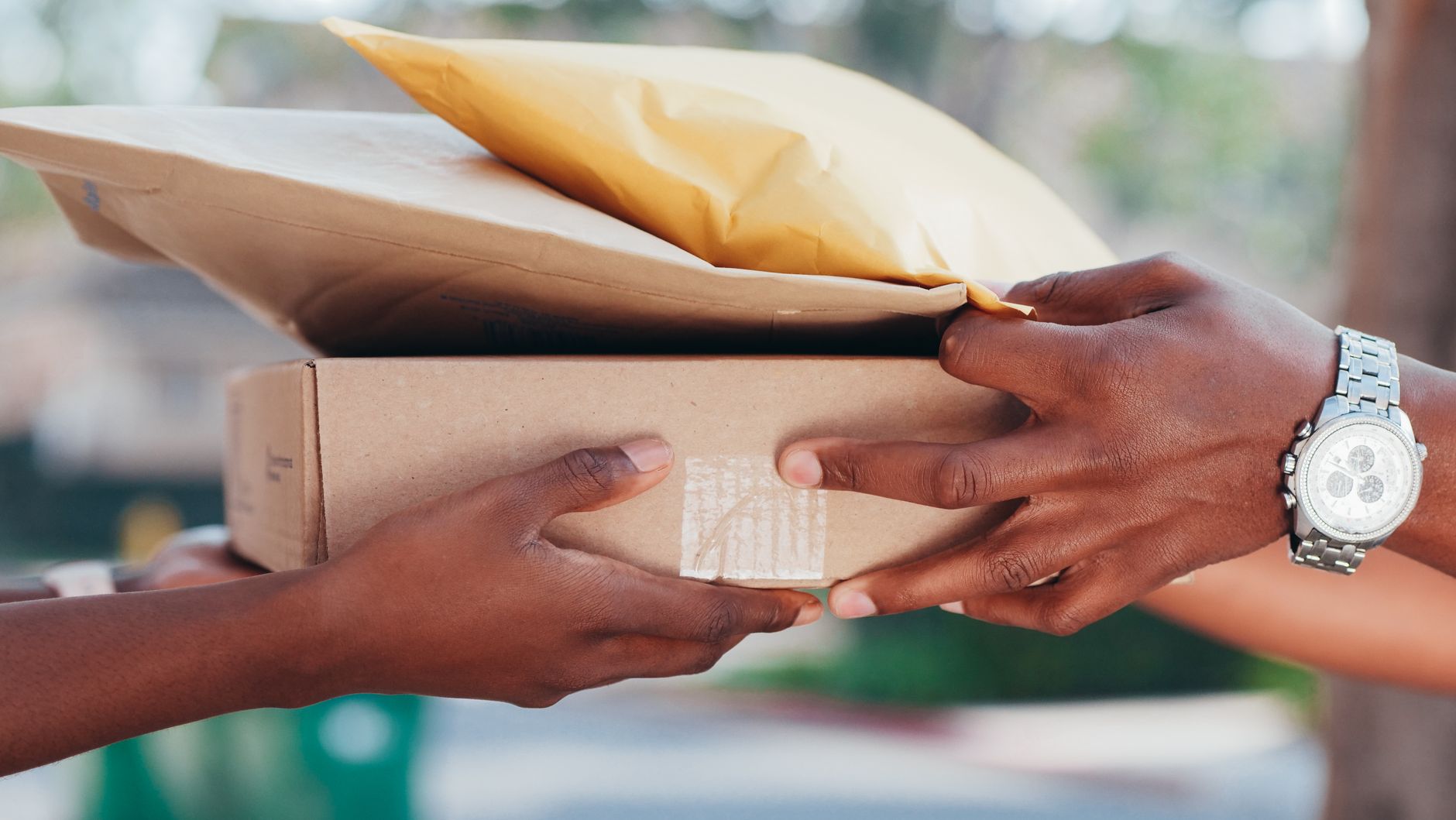
Quick Answer: Optimizing subscription box logistics in 2025 demands a multi-carrier strategy, proactive holiday surge planning, and leveraging real-time data analytics to reduce fulfillment costs and delivery delays. Focus on zonal shipping, distributed inventory, and advanced packaging to boost customer retention and mitigate the average 18% churn rate tied to poor shipping experiences.
I've seen it countless times: a fantastic subscription product, brilliant marketing, but margins bled dry by fulfillment costs – often 15-20% higher than traditional e-commerce. You launch a killer new box, only to watch 32% of new subscribers churn within three months, largely due to a delivery hiccup or an unexpected cost. This isn't theoretical; this is real money disappearing from your bottom line, directly impacting your growth.
Why Subscription Box Logistics Are a Profit Killer in 2025
For over 15 years, I've seen e-commerce businesses stumble at the same hurdle: misunderstanding the unique beast that is subscription box logistics. Most folks think they can just scale their standard e-commerce fulfillment, but the recurring monthly cadence, varied box sizes, and fluctuating subscriber counts create unique headaches with carrier pricing structures designed for one-off parcels. This oversight alone can inflate your shipping spend by 15-20% annually compared to optimizing for this specific model. The average cost per failed delivery attempt, factoring in re-shipment and customer service, hovers around $15-$25 – a direct hit to your thin margins.
The root cause often lies in a reactive approach to shipping. You sign a deal with a major carrier, hoping their volume discounts will cover all scenarios, only to discover their zonal surcharges crush your profitability for distant customers. According to the National Retail Federation (NRF), 35% of consumers cancel subscriptions due to slow or expensive shipping options – a clear signal that your fulfillment strategy directly impacts customer retention. This isn't just about the cost of the label; it's about the lifetime value of a customer lost to preventable logistics failures. We’re not just talking about delayed boxes; we’re talking about damaged brand reputation and an 18% average churn rate tied directly to poor shipping experiences.
The Hidden Costs of Inefficient Subscription Box Shipping & How Most Fail
Beyond the direct shipping cost, inefficient subscription box logistics carry significant hidden costs that quietly erode your bottom line. Take holiday surge capacity: many businesses underestimate the peak season volume spike, leading to last-minute, expensive expedited freight or, worse, delivery delays that prompt a cascade of refunds and customer complaints. I've witnessed companies spend up to 40% more on peak season shipping compared to off-peak, simply because they lacked a flexible carrier network and failed to pre-book capacity. This isn't a "nice-to-have"; it's a "must-have" for survival.
Another silent killer is the high return rate. While traditional e-commerce sees an average of 15-20% returns, subscription boxes, especially those with curated or personalized items, can experience even higher rates if the product doesn't meet expectations. The cost of processing a return – reverse logistics, inspection, repackaging, and potential refund – can range from $10 to $30 per item. Most companies fail here by not integrating return logistics into their initial strategy, treating it as an afterthought. They overlook crucial data: which products generate the most returns and from which zones, missing opportunities to optimize product selection or packaging. According to a CSCMP study, optimizing reverse logistics can reduce total return costs by up to 20%.
The 2025 Multi-Carrier Strategy: Beyond "One-Size-Fits-All"
You cannot thrive in the 2025 subscription box market with a single-carrier strategy. It's a relic of a bygone era. The expert claim is simple: implement a dynamic, multi-carrier parcel strategy that leverages specific carrier strengths based on package weight, destination zone, and desired transit time. I’ve seen businesses blindly accepting a flat-rate from a major carrier across all zones, unaware they’re bleeding cash on local deliveries where a regional player could save them 15-25% per package, or on lightweight boxes better suited for USPS. This isn't just about getting a second quote; it's about intelligent routing.
- Analyze Your Shipping Profile: Categorize your historical shipments by weight, dimensions, and destination zone. Identify your most frequent zones and package types.
- Identify Carrier Strengths: Regional parcel carriers excel at short-haul, high-volume routes. USPS offers unparalleled reach and competitive rates for lightweight packages (under 1 lb). UPS and FedEx provide reliability and speed for mid-to-heavy packages and critical deliveries.
- Implement a Shipping Rule Engine: Use a Transportation Management System (TMS) or a robust shipping software to automate carrier selection. Set rules like: if package is under 1 lb, ship USPS; if destination is Zone 1-4, use Regional Carrier A; if Zone 5-8, use National Carrier B.
- Negotiate Aggressively: Armed with your data, negotiate not just with one, but with multiple carriers. Show them the specific volumes for which they are the ideal fit.
For instance, one client saved $1.85 per package on their Zone 2-4 deliveries by shifting 60% of that volume to a regional carrier, totaling over $45,000 in annual savings for their 2,000 monthly boxes. This is where real-time visibility into freight movements becomes critical for ensuring smooth replenishment of your fulfillment centers. Instead of guessing, you can browse live LTL loads near you to find competitive rates for moving bulk inventory, ensuring your distributed hubs are always stocked without overpaying.
Optimizing Zonal Shipping & Distributed Inventory for Subscription Boxes
Shipping all your subscription boxes from a single fulfillment center is, for most e-commerce businesses, a self-inflicted wound. In 2025, distributed inventory isn't a luxury; it's a non-negotiable strategy for cutting costs, accelerating delivery, and boosting customer satisfaction. The traditional hub-and-spoke model works against the subscription model, as consistently hitting distant zones from a single origin incurs punitive surcharges and extended transit times. We're talking 2.3 days faster delivery on average and a 20-30% reduction in Zone 7/8 parcel costs by strategically placing inventory.
Many operators assume distributed inventory is only for enterprise-level operations with massive budgets. But even setting up 2-3 mini-hubs for your top 5-7 customer states can dramatically slash transit times and cut expensive long-distance parcel costs. It's about smart planning, not just scale.
- Analyze Customer Density: Use your CRM and historical order data to identify clusters of high-volume subscribers. Which 3-5 states account for 60-70% of your current subscriber base?
- Map Transit Times & Costs: From your current fulfillment center, map out the average transit times and parcel costs to your high-density customer zones. Identify where you're consistently paying high zonal surcharges or experiencing 5+ day deliveries.
- Identify Strategic Mini-Hubs: Research 3PLs or cross-docking services in central locations within those high-density customer regions. The goal is to get 70% of your volume within a 1-2 day ground shipping window.
- Optimize Inbound Freight: Use LTL or FTL freight services to efficiently move bulk inventory from your main manufacturing or storage facility to these regional mini-hubs. This consolidates shipping costs for long-distance moves.
A well-executed distributed inventory strategy can cut your average transit time by up to 35% and reduce overall parcel spend by 18%, directly improving customer retention because delayed deliveries become far less frequent. This aligns with modern customer expectations for speed and reliability, which the Statista Consumer Survey 2023 highlighted as a top reason for subscription cancellations.
Leveraging Packaging Innovation for Cost Savings & Customer Delight
Your subscription box itself is a critical, yet often overlooked, component of your logistics strategy. The size, shape, and weight of your packaging are silent killers, driving up costs through dimensional weight (DIM weight) charges and unnecessary void fill. Carriers base their charges on either the actual weight or the DIM weight, whichever is greater. I’ve reviewed audits where a company was paying an extra $0.75-$1.50 per package simply because their 'cute' box was 1/2 inch too big, bumping it into a higher DIM weight bracket. For a company shipping 20,000 boxes a month, that's $15,000-$30,000 annually in avoidable costs.
This is not just about aesthetics; it's about profit margin. Investing in custom-sized packaging isn't an expense; it's an investment that pays dividends by optimizing every cubic inch of your shipment and protecting your product better, reducing damage rates by up to 8%.
- Conduct a Packaging Audit: For a typical packed box, precisely measure its length, width, and height (L x W x H) in inches. Calculate the DIM weight using your carrier's specific divisor (e.g., L x W x H / 139 for FedEx/UPS). Compare this to the actual weight.
- Minimize Empty Space: Redesign your box to be as close to the actual product dimensions as possible. Every inch of empty space you eliminate translates to lower DIM weight and reduced material cost for void fill.
- Optimize Void Fill: Switch from heavy packing peanuts or bubble wrap to lighter, more compact options like crinkle paper, air pillows, or custom inserts. Lighter void fill reduces actual weight.
- Consider Material & Design: Explore lighter-weight corrugated cardboard or mailer bags for products that don't require rigid box protection. Custom inserts can cradle products securely, minimizing damage without adding excessive bulk.
- Test & Recalibrate: Continuously test new packaging designs for both product protection and shipping cost efficiency. Small adjustments can yield significant savings over time.
One of my clients, after optimizing their box dimensions and switching to lighter void fill, saw a 14.3% reduction in their average per-package shipping cost, equating to over $55,000 in savings per year for their mid-sized operation. They also reported a 5% decrease in damage claims, further boosting customer satisfaction.
Comparing Subscription Box Fulfillment Strategies
| Criteria | In-House Fulfillment | Traditional 3PL | Tech-Driven 3PL Network |
|---|---|---|---|
| Cost Control | High fixed costs, variable labor. Direct control over spending but misses carrier discounts. | Negotiated rates, potential for volume discounts. Less control over specific carrier choices. | Leverages network volume for optimal carrier rates. Transparent pricing, dynamic routing for savings. |
| Scalability | Limited by internal infrastructure & labor capacity. Challenging during peak seasons. | Scales with partner's capacity. Can be slow to adapt to sudden spikes or drops. | Highly scalable; taps into a diverse network of warehouses & carriers. Adapts rapidly to demand. |
| Complexity | Full control & responsibility for all logistics. Requires significant internal expertise. | Delegates operations, but managing the 3PL relationship can be complex. | Simplified management via a single platform. Handles carrier negotiations & performance. |
| Technology Integration | Requires proprietary systems or integrations. High setup cost. | Integrates with their WMS; may not offer deep customization or real-time visibility. | Advanced API integrations, real-time data, predictive analytics, unified dashboard. |
| Customer Loyalty Impact | Direct control over delivery experience, but prone to errors if systems are inefficient. | Reliant on 3PL's performance; limited direct influence. | Optimized routing & speed directly enhance delivery experience, boosting loyalty. |
Key Takeaways
- A single-carrier strategy is obsolete for 2025 subscription box logistics; embrace dynamic multi-carrier routing.
- High fulfillment costs aren't inevitable; they're symptoms of unoptimized zonal shipping and packaging.
- Distributed inventory, even with just 2-3 regional hubs, slashes transit times by 2+ days and cuts Zone 7/8 costs by up to 30%.
- Audit your packaging for dimensional weight impact; a slight size reduction can save $0.75-$1.50 per package.
- Proactive holiday surge planning, including pre-booked capacity, is critical to avoid 40%+ cost increases and delivery delays.
- An 18% customer churn rate is directly linked to poor shipping experiences; prioritize reliability over perceived simplicity.
- Leverage technology like TMS or shipping rule engines to automate intelligent carrier selection and cost management.
- Optimize reverse logistics from day one; it can reduce return costs by 20% and improve customer satisfaction.
Frequently Asked Questions
What is subscription box logistics?
Subscription box logistics refers to the specialized processes and supply chain management required for recurring product deliveries. It encompasses everything from inventory management and kitting to packaging, carrier selection, and last-mile delivery, all tailored for a consistent, periodic shipping schedule to a fluctuating subscriber base.
How can I reduce shipping costs for my subscription box?
To reduce shipping costs, implement a multi-carrier strategy based on package weight and destination zone, utilize distributed inventory to shorten last-mile distances, and optimize packaging to minimize dimensional weight charges. Negotiate aggressively with carriers using your specific volume data, and leverage regional parcel services for shorter-haul deliveries.
What role does dimensional weight play in subscription box shipping?
Dimensional weight (DIM weight) significantly impacts subscription box shipping costs by calculating the theoretical weight of a package based on its volume, rather than its actual weight. Carriers charge based on the greater of the actual or DIM weight, meaning oversized or poorly packed boxes can incur much higher shipping fees than anticipated, even if they are light.
When should a subscription box business use a 3PL?
A subscription box business should consider a 3PL when its internal fulfillment operations become inefficient, expensive, or hinder scalability, typically once monthly volume exceeds 500-1000 orders. A 3PL can offer specialized expertise, negotiated carrier rates, distributed warehousing, and advanced technology that smaller businesses often cannot afford in-house.
How does holiday surge impact subscription box fulfillment?
Holiday surges severely impact subscription box fulfillment by straining carrier networks, leading to increased shipping rates, extended transit times, and potential delivery failures. Without proactive planning, such as pre-booking capacity, leveraging a flexible carrier network, or utilizing temporary labor, businesses risk significant cost overruns and decreased customer satisfaction due to delays.
Streamlining Your Subscription Box Logistics with Loadly
By applying these strategies, you're not just saving pennies; you're building a resilient, profitable subscription business ready for 2025 and beyond. Understanding the nuances of multi-carrier routing, distributed inventory, and precise packaging can turn your fulfillment operation from a cost center into a competitive advantage. When you're ready to take control of your inbound freight for distributed inventory or secure reliable carriers for critical supply chain links, register for a free Loadly account and experience the difference a truly connected marketplace makes.