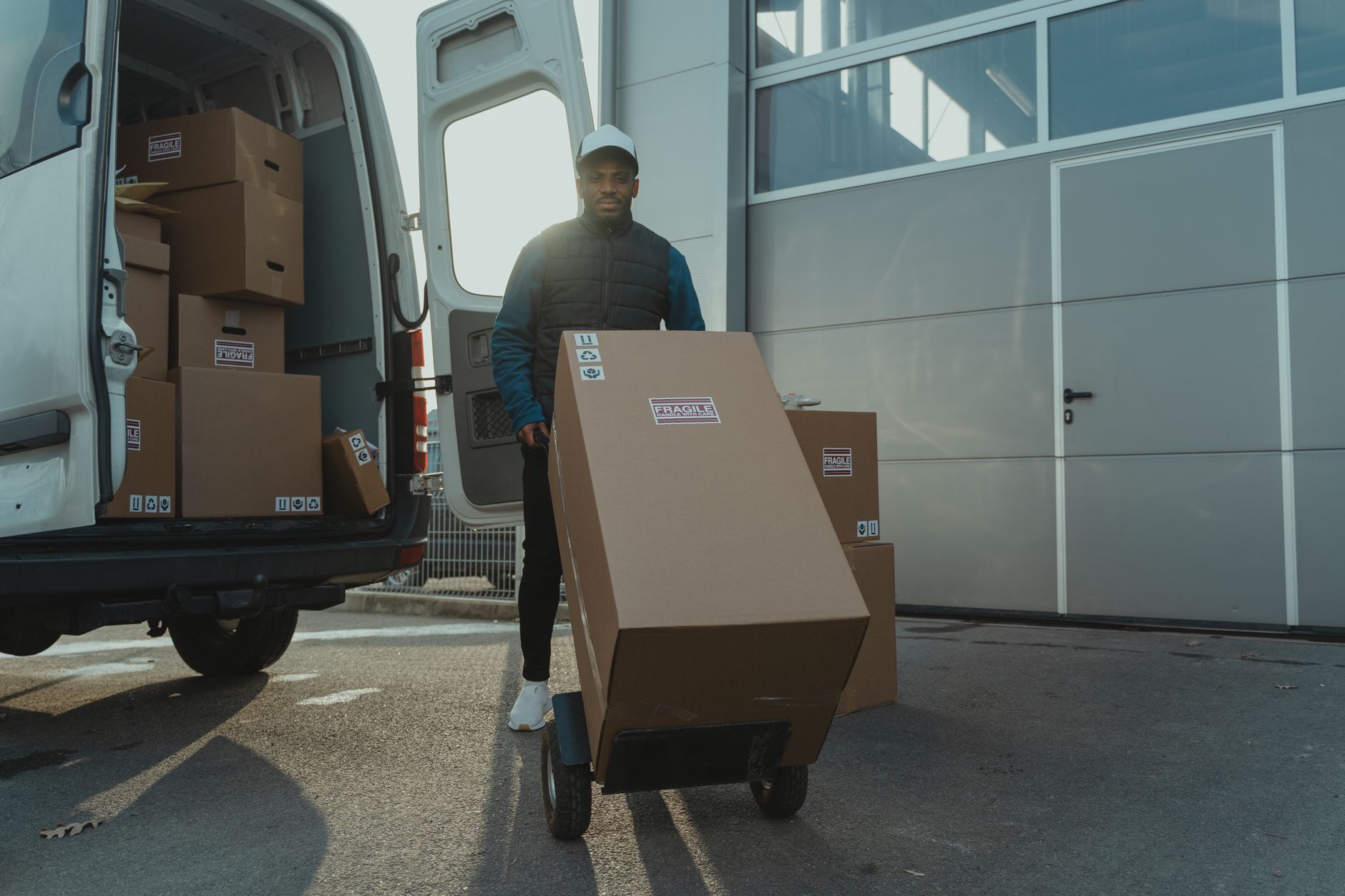
Quick Answer: To cut small business freight shipping costs by 25% in 2025, consolidate shipments into LTL or FTL, leverage digital freight marketplaces for real-time rate comparisons, meticulously optimize freight class, negotiate favorable payment terms, and implement a proactive claims management process. Focus on data-driven decisions to unlock volume discounts previously exclusive to larger enterprises.
You’re a small business owner, hustling to make every dollar count, but your shipping invoices feel like a leaky faucet, steadily draining your cash flow. If you're paying retail rates for freight, you're not just losing money; you're handing a 15-20% margin advantage directly to your larger competitors. It’s a systemic disadvantage that can cost a growing business upwards of $18,000 annually on just 100 average LTL shipments. The good news? The 2025 freight landscape offers unprecedented opportunities for small players to slash these costs dramatically, if you know where to look.
Why Small Businesses Overpay for Freight Shipping in 2025
Most small businesses get stuck paying exorbitant freight rates for three core reasons, all stemming from a lack of leverage and specific industry knowledge. First, they lack the shipment volume to command the deep discounts available to enterprise-level shippers. Second, many operate without dedicated logistics personnel, leaving crucial decisions to operations staff already stretched thin. Third, the opaque nature of traditional freight brokerage makes real-time rate transparency nearly impossible, leading to reactive, not proactive, cost management.
"According to a 2023 supply chain survey by the National Retail Federation (NRF), 68% of small businesses cited 'unpredictable shipping costs' as a major impediment to growth, often leading to unforeseen budget overruns of 10-15% per quarter."
This isn't merely an inconvenience; it's a strategic liability. An extra $50 on an LTL shipment can wipe out the entire profit margin on a $500 product, especially for businesses with tight operational budgets. The common mistake is viewing freight as a static line item rather than a dynamic variable that can be aggressively optimized. Without understanding factors like freight class manipulation, accessorial charges, and dynamic pricing models, small businesses are essentially playing poker blindfolded.
Step 1: Master Freight Class & Density for Cheaper Small Business LTL Shipping
The single biggest rookie mistake in LTL shipping is incorrectly classifying your freight or failing to optimize for density. The National Motor Freight Traffic Association (NMFTA) assigns a freight class (from 50 to 500) based on four characteristics: density, stowability, handling, and liability. For small businesses, density is your most powerful lever. Most carriers price LTL based on weight, distance, and freight class. A misclassified shipment can cost you 20-30% more per pallet.
- Calculate True Density: Don't guess. Measure the exact length, width, and height of your packaged freight in inches. Multiply these to get cubic inches, then divide by 1,728 to convert to cubic feet. Divide the total weight (in pounds) by cubic feet to get pounds per cubic foot (PCF).
- Verify Freight Class: Use the NMFC (National Motor Freight Classification) lookup tool (available through many TMS or carrier sites) with your calculated PCF and product description to find the accurate class. Don't rely on your manufacturer's generic class; it might be outdated or too broad. For instance, a box of "auto parts" might be Class 70, but "auto sheet metal parts" could be Class 150.
- Optimize Packaging: This is where insider knowledge shines. Can you slightly reduce packaging dimensions or consolidate multiple small items into a single, denser shipment? Even shaving an inch off each side of a pallet can push it into a lower PCF bracket, potentially dropping your freight class by 10-20 points. We've seen businesses save $75-$120 per pallet just by re-engineering packaging to achieve a lower freight class.
The key here isn't just knowing your class; it's actively working to improve it. Every fractional improvement in density translates directly to savings. Many small businesses fail to invest in proper packaging measurement tools, leading to consistent overestimation and overpayment. Focus on precision to unlock significant cost reductions.
Step 2: Leverage Digital Freight Marketplaces for Real-Time Rate Shopping & Volume Discounts
The traditional model of calling multiple brokers for quotes is dead weight. It’s slow, prone to human error, and rarely offers you the true market rate. Digital freight marketplaces are the great equalizer for small businesses, providing access to a vast network of carriers and dynamic pricing algorithms that mirror what large shippers get. You’re no longer relying on a single broker’s limited carrier base; you’re tapping into hundreds, even thousands, of available trucks.
- Compare Instantly: Instead of waiting hours for a quote, a digital platform provides multiple carrier bids in seconds. This isn't just about speed; it's about transparency. You can see how carriers like XPO, Estes, Old Dominion, or SAIA are pricing your exact lane in real-time.
- Access Consolidated Volume: Marketplaces aggregate the collective shipping volume of thousands of small businesses. This combined leverage allows them to negotiate deeply discounted rates with carriers that individual small businesses could never secure on their own. Think of it as group buying for freight.
- Identify Backhaul Opportunities: This is a powerful, often overlooked tactic. Carriers frequently offer lower rates on backhaul lanes (returning empty after a delivery) to avoid deadhead miles. A good marketplace will surface these opportunities, letting you snatch up a carrier who’s already going your way, potentially saving up to 30% on that specific route. Look for carriers with good live LTL load availability on your regular routes.
Don't fall into the trap of loyalty to a single broker. While relationships matter, your bottom line matters more. Digital platforms remove the emotional attachment and replace it with data-driven decision-making, ensuring you always get the most competitive rate available, not just the one your contact offers. This is particularly crucial for smaller shippers who typically pay 10-15% more than large shippers on identical lanes without marketplace access.
Step 3: Negotiate Payment Terms and Minimize Accessorial Charges
Every small business owner should treat freight invoices like a legal document, scrutinizing every line item. Accessorial charges – fees for services beyond standard pickup and delivery – are profit killers if not managed proactively. These can inflate a base freight bill by 15-40%. Equally important, your payment terms directly impact cash flow, a lifeline for startups.
- Challenge Every Accessorial: Don't just pay them. Were you charged for "Liftgate Service" when your facility has a dock? Was there a "Redelivery Fee" because the carrier arrived outside your specified hours? Document everything. Photos, timestamps, and clear communication with the carrier *before* pickup or delivery are your best defense. Carriers are often willing to waive or reduce fees if you can prove their error or an unforeseen circumstance.
- Standardize Your Facilities: Reduce accessorials at the source. If you frequently ship from residential addresses, a liftgate is unavoidable. But if you have control, invest in a forklift or ensure consistent dock access. Know your facility's capabilities and communicate them clearly during booking to avoid surprise fees like "Limited Access" or "Inside Delivery."
- Negotiate 15-Day Payment Terms: Instead of paying immediately, push for Net 15 or even Net 30 terms. This might not directly cut the freight cost, but it significantly improves your operational cash flow. Many carriers offer a small discount (often 1-3%) for immediate payment, but for a small business, holding onto that cash for an extra two weeks is often more valuable. The key is to ask; if you don't ask, you don't get.
The "hidden fees" aren't hidden to seasoned freight professionals. They’re line items clearly detailed in carrier tariffs. Your job is to understand these tariffs and pre-empt charges. According to the Transportation Intermediaries Association (TIA), 34% of freight invoice discrepancies stem from disputed accessorials, highlighting a critical area for savings.
Step 4: Proactive Damage Claims and Insurance Management for Small Business Freight
Freight damage is inevitable. What’s not inevitable is losing money on it. Many small businesses simply write off damaged shipments, absorbing the loss and eroding profits. This is a critical mistake. Understanding the Carmack Amendment and having a clear claims process can recover substantial losses, often reducing your total cost of ownership by 5-10% annually.
- Document EVERYTHING at Delivery: This is non-negotiable. Instruct your receiving staff to note ANY visible damage or shortage on the Bill of Lading (BOL) *before* signing. Take clear photos of the damaged freight, packaging, and the BOL. Without proper notation, proving carrier liability under the Carmack Amendment (49 CFR Part 14706) becomes exponentially harder.
- File Claims Promptly: Most carriers have a 9-month window to file a claim, but don't wait. The sooner you file, the better. Gather all supporting documentation: BOL, freight bill, delivery receipt, photos, and a commercial invoice showing the value of the goods. Follow the carrier's specific claims procedure to the letter.
- Understand Limited Liability vs. Shipper's Interest Insurance: Carriers operate under limited liability (e.g., $0.50 per pound for LTL), which rarely covers the full value of your goods. For high-value shipments, always purchase supplemental Shipper's Interest Insurance. The cost is often minimal (0.5% - 1% of cargo value) compared to the risk of losing a $5,000 shipment for which the carrier only pays $250. This is what separates smart shippers from those constantly absorbing preventable losses.
The "what most professionals miss" here is the power of a strong paper trail and the difference between carrier liability and actual cargo value. Don't let a carrier intimidate you with complex forms; a well-documented claim is your best friend. A survey by the Council of Supply Chain Management Professionals (CSCMP) indicates that small businesses recover only 45% of eligible freight damage claims due to insufficient documentation.
Traditional Broker vs. Digital Freight Marketplace: Small Business Shipping
| Feature | Traditional Freight Broker | Digital Freight Marketplace |
|---|---|---|
| Rate Transparency | Limited; often single quote, no real-time comparison | Full; multiple carrier rates, real-time comparisons, bid system |
| Carrier Network | Limited to broker's established relationships | Vast; access to thousands of vetted carriers simultaneously |
| Volume Discounts | Based on your individual volume; difficult for small businesses | Aggregated volume from all users; small businesses access enterprise rates |
| Speed of Quote | Hours to days via phone/email | Seconds to minutes, instant online |
| Accessorial Management | Relies on broker's diligence; often reactive | Often automated pre-calculation; clearer visibility upfront |
| Backhaul Opportunities | Rarely proactively offered to small accounts | Algorithms often highlight cost-saving routes proactively |
| Cost Savings Potential | Moderate (5-10%) | Significant (15-30%) by optimizing across all factors |
Key Takeaways for Small Business Freight Shipping Savings
- Density is King: Meticulously calculate and optimize your freight density to secure lower LTL freight classes, saving up to $120 per pallet.
- Embrace Digital: Use digital freight marketplaces to instantly compare rates from hundreds of carriers and leverage aggregated volume discounts previously out of reach.
- Challenge Accessorials: Scrutinize every line item on your freight invoice; proactive communication and documentation can eliminate 15-40% in hidden fees.
- Negotiate Terms: Push for Net 15 or Net 30 payment terms to improve cash flow, even if it means foregoing a small immediate payment discount.
- Document Claims: Never absorb damage losses. Document all discrepancies on the BOL and file claims promptly with comprehensive evidence to recover assets under the Carmack Amendment.
- Insure Smartly: Understand carrier limited liability. For high-value goods, always invest in supplemental Shipper's Interest Insurance; it’s cheap risk mitigation.
- Proactive Mindset: Shift from reactive shipping to a proactive, data-driven strategy. Every freight decision should be informed by cost, service, and risk.
Frequently Asked Questions About Small Business Freight Shipping
How much does small business LTL freight shipping cost per mile in 2025?
Averages for small business LTL freight shipping in 2025 can range from $2.50 to $6.00 per mile, but this varies wildly based on freight class, weight, density, lane, and current market conditions. Shorter hauls typically have a higher per-mile cost due to fixed terminal fees, while longer hauls see the per-mile cost decrease. Utilizing a digital marketplace for real-time quotes is the only way to get an accurate cost for your specific shipment.
What is the most cost-effective way to ship freight as a small business?
The most cost-effective way for a small business to ship freight is by leveraging digital freight marketplaces for competitive bidding, optimizing freight class through density management, and consolidating shipments whenever possible. For denser, lower-class goods, LTL shipping is often preferred, but for very light or oversized items, specialized carriers or even parcel services might be cheaper for specific routes. Always compare options, including partial truckload (PTL) for shipments between LTL and FTL volume.
How can small businesses get volume discounts on freight without high volume?
Small businesses can access volume discounts on freight by utilizing digital freight marketplaces. These platforms aggregate the shipping volume of thousands of small businesses, effectively allowing individual shippers to benefit from the collective purchasing power. This grants access to negotiated rates that would typically only be available to enterprise-level accounts, often reducing costs by 15-20% compared to direct carrier retail rates.
When should a small business use LTL vs. FTL shipping?
A small business should use Less-than-Truckload (LTL) shipping when their freight doesn't fill an entire truck (typically 1-10 pallets, under 20,000 lbs). LTL is cost-effective as you only pay for the space your freight occupies. Full Truckload (FTL) shipping is ideal when you have enough freight to fill a 48-foot or 53-foot trailer, need expedited service, or have highly fragile/high-value goods that benefit from fewer handling points. FTL is generally cheaper per pound for larger volumes and offers dedicated transit.
What are common hidden fees in small business freight shipping?
Common hidden fees, or accessorial charges, in small business freight shipping include liftgate services, limited access (for residential or non-commercial deliveries), re-delivery fees, detention charges (for excessive loading/unloading time), fuel surcharges (often variable), and re-consignment fees. Proactive communication with carriers and meticulous review of freight bills are crucial to identify and mitigate these charges, which can add 15-40% to your base freight cost.
Unlock Your Small Business Freight Shipping Savings with Loadly
You’ve seen the strategies; now it’s time to implement them. The biggest hurdle for small businesses isn’t a lack of desire to save money, it’s a lack of tools and transparent access to the market. Stop paying retail rates and start leveraging the same advanced tactics that larger corporations use to dominate their supply chains. With Loadly, you get instant access to competitive rates from a vast network of vetted carriers, eliminating the guesswork and manual quoting nightmares. Our platform helps you optimize freight class, identify backhaul savings, and proactively manage your shipments with unparalleled transparency.
Don't let shipping costs strangle your growth in 2025. It's time to take control of your logistics budget and turn freight from a liability into a competitive advantage. Join thousands of small businesses cutting costs and expanding their reach with Loadly today.