Quick Answer: Implementing 2025 robotic picking systems can boost warehouse throughput by 30-50% while cutting direct labor costs by 25-40% by automating repetitive tasks, reducing picking errors, and optimizing material flow, directly addressing chronic staffing shortages and operational bottlenecks to achieve ROI within 18-36 months.
You’re staring at Q3’s budget, and the line item for ‘Labor – Picking & Packing’ is up 12% year-over-year, again. Meanwhile, dock congestion means carriers are waiting an average of 3.5 hours, racking up demurrage fees and threatening your relationships. This isn’t just a cost; it’s a systemic bleed, and if you're not aggressively pursuing 2025 robotic picking systems, you’re already behind the curve. The clock is ticking on your ability to remain competitive.
The Hidden Cost of Manual Picking: Why Your Labor Budget Bleeds Millions
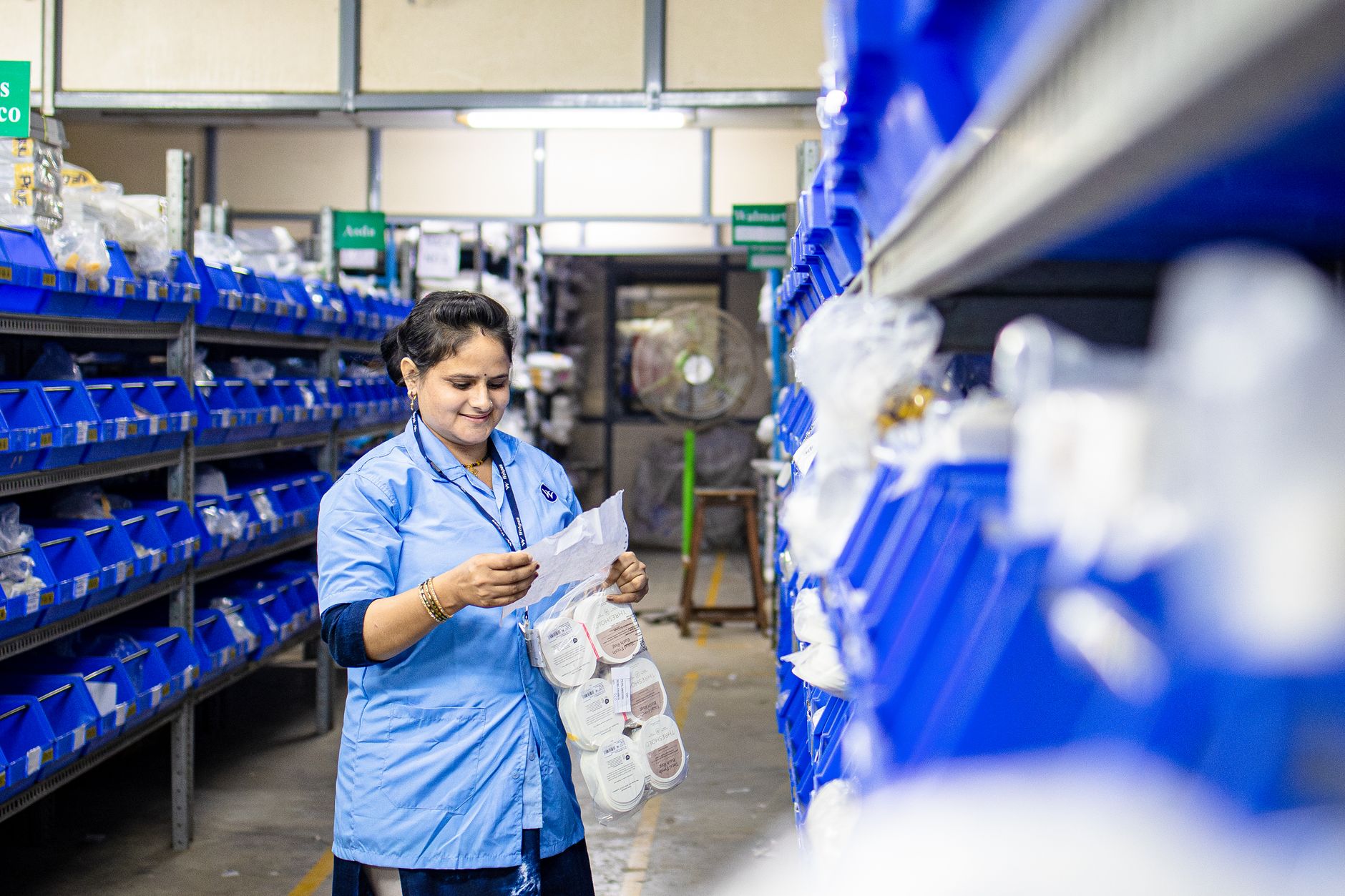
As a former logistics manager, I’ve seen warehouses crippled not by a lack of demand, but by the sheer inefficiency of their internal operations. The conventional wisdom says ‘labor is just a cost of doing business,’ but that’s a dangerous oversimplification. Manual picking isn't just about wages; it’s the compounding effect of high turnover, extensive training requirements, and the inevitable human error. We’re talking about an average annual turnover rate of 43% for warehouse workers, according to the U.S. Bureau of Labor Statistics — and replacing a single picker costs an estimated $4,500.
Consider this: an average 100,000 sq ft distribution center (DC) employs 150-200 pickers. At a conservative $20/hour fully loaded, that’s $4 million annually in direct wages. When you factor in the 5-7% error rate common in manual picking environments, leading to mis-ships, returns, and customer service calls, your ‘labor cost’ balloons. I’ve seen facilities where inventory discrepancies tied to manual counts and picks created a 15% delta between WMS records and physical inventory, forcing costly annual write-offs. This isn't just theoretical; it impacts your gross margin directly.
“According to a 2023 study by Deloitte, manual picking operations often incur 2-3 times the cost of automated systems over a five-year lifecycle when all factors, including errors and turnover, are considered.”
What most professionals miss is the opportunity cost: every minute a picker spends walking between locations is a minute they're not adding value. This ‘travel time’ can account for 50-60% of a picker's shift, a staggering waste that 2025 robotic picking systems are designed to eliminate. You’re not paying for productivity; you’re paying for inefficiency.
Beyond the Price Tag: The True Impact of Warehouse Bottlenecks on Profitability
The pain of rising labor costs is often visible, but the insidious creep of warehouse bottlenecks is a silent killer of profitability. We’ve all dealt with carrier no-shows, but when your internal processes can't keep pace, dock congestion becomes a daily reality. I recall one facility where trucks waited 4-6 hours on average due to outbound picking delays, leading to an extra $150-$300 in demurrage per load and, worse, strained carrier relationships. When carriers consistently face delays, they simply deprioritize your loads or demand higher rates.
Inventory discrepancies aren’t just balance sheet issues; they cascade into lost sales when items are listed as in stock but can’t be found, or overstock situations leading to obsolescence. Think about peak season surges: without robust, scalable picking, your team is pushed to breaking point, leading to increased errors, higher injury rates, and a further dip in morale. This isn't sustainable. Your ability to meet demand directly impacts your market share and customer loyalty. The true cost of these bottlenecks isn't just a few dollars here and there; it's lost revenue from frustrated customers choosing competitors, and the erosion of your operational credibility within the supply chain.
Evaluating Robotic Picking Systems: Beyond the Hype to Real-World ROI
Forget the flashy videos; the real conversation around 2025 robotic picking systems begins with hard numbers. The core question is: what's your specific problem, and how precisely does a robot solve it? For most DCs, the primary drivers are reducing labor dependency, increasing throughput, and improving picking accuracy. These systems, particularly Goods-to-Person (G2P) Autonomous Mobile Robots (AMRs) or collaborative robots (cobots), are not ‘nice-to-haves’ but strategic investments.
- Identify Your Bottleneck: Is it travel time, search time, or packing? AMRs excel at reducing travel time by bringing inventory to the picker. Vision-guided robotic arms address precise picking and packing.
- Quantify Current Performance: Establish a baseline: picks per hour (PPH) per worker, picking accuracy rate, average labor cost per pick, and current turnover rates. Without this, you cannot measure ROI.
- Calculate Potential Gains: Expect a 30-50% increase in PPH and a 75-90% reduction in picking errors with a well-integrated system. This translates to fewer returns (reducing 3-5% of revenue in many sectors) and improved customer satisfaction.
- Project Labor Savings: A typical G2P AMR system can enable one worker to achieve the output of 3-4 manual pickers. If your annual labor cost for one picker is $50,000, that’s $150,000-$200,000 in annual savings per workstation.
Initial investment for a robust robotic picking system can range from $250,000 for a small cobot cell to $2 million+ for a large AMR fleet and infrastructure. The crucial metric is the payback period, which for many operations falls between 18 and 36 months, a timeline I consistently observed in successful implementations. Don't chase the cheapest option; chase the one that directly targets your most expensive operational pain point.
Implementing Autonomous Mobile Robots (AMRs) for 30% Throughput Gains
AMRs are the workhorses of next-gen robotic picking systems. Unlike fixed conveyor belts or Automated Guided Vehicles (AGVs), AMRs navigate autonomously using sensors and mapping, adapting to dynamic warehouse layouts. This flexibility is critical in today’s fluid supply chains. To achieve significant throughput gains, you need to think beyond simply replacing a human with a robot; you need to rethink your entire picking process.
- Zone Picking Optimization: Deploy AMRs to manage specific picking zones, bringing grouped orders to a central packing station. This dramatically cuts down on picker walk time, allowing human operators to focus solely on high-value dexterity tasks.
- Dynamic Pathfinding: Leverage AMR software that constantly analyzes warehouse traffic and re-routes robots to avoid congestion. This is crucial during peak hours when traditional routes become bottlenecks.
- Batch Picking Integration: Group multiple small orders into larger batches. AMRs can then present the correct inventory bins for these batches, allowing a single human operator to pick items for several orders simultaneously, boosting PPH by up to 50%.
- Scalability Planning: Start with a proof-of-concept fleet of 5-10 AMRs, then scale. Reputable vendors like Locus Robotics or Geek+ allow for easy fleet expansion without major infrastructure overhauls, safeguarding your initial investment.
I've seen first-hand facilities struggle with implementing new tech because they try to fit it into old processes. A major food distributor in the Midwest adopted a 15-unit AMR fleet. By redesigning their pick zones around the robots’ capabilities, they reduced picker travel distances by 85% and increased their order fulfillment rate by 38% within six months. This wasn't magic; it was strategic deployment and process re-engineering. It’s not just about the robot; it’s about the integrated solution.
Integrating WMS with Robotic Pickers: The Data-Driven Advantage
Robots are only as smart as the data they receive. The true power of 2025 robotic picking systems is unleashed when they are seamlessly integrated with your Warehouse Management System (WMS). This isn't just about sharing item locations; it's about real-time inventory updates, dynamic task assignment, and predictive analytics that optimize flow and prevent costly errors.
- API-First Integration: Demand vendors with robust, open APIs that allow for deep, bidirectional communication with your WMS. This enables the robots to receive picking instructions directly and report completed tasks and inventory changes instantly.
- Real-time Inventory Accuracy: With robots reporting every pick and put-away, your WMS inventory accuracy can approach 99.8%. This eliminates manual cycle counting discrepancies and reduces the need for expensive physical inventories, a persistent headache for many managers.
- Dynamic Task Management: An integrated system allows the WMS to dynamically assign picking tasks to the nearest available robot or human, prioritizing urgent orders and balancing workload, slashing order-to-ship cycles by up to 2.3 days.
- Predictive Maintenance & Performance: Leverage data from the robots (e.g., battery levels, travel distance, error rates) to schedule predictive maintenance and identify operational inefficiencies before they become critical failures.
This tight integration is where you solve those chronic inventory discrepancies. You know exactly where every SKU is, in real-time. This eliminates countless hours spent searching for mislocated items and prevents costly emergency freight shipments due to perceived stockouts. For example, knowing the exact status of your inventory is crucial when planning outbound shipments, allowing you to accurately browse live LTL loads near you and secure optimal rates without fear of last-minute changes.
Navigating the Vendor Landscape: Selecting Your Robotic Picking Partner
Choosing the right partner for your robotic picking system isn't about features alone; it's about finding a vendor with proven industry experience, robust support, and a scalable solution. The market is flooded with options, but a few key differentiators separate the innovators from the imitators.
- Proven ROI Case Studies: Insist on seeing case studies from companies similar to yours in size and industry. Generic claims are red flags.
- Software Agility: The hardware is important, but the software is king. Ensure the vendor's software integrates easily with your existing WMS and is continuously updated with new features and optimizations.
- Service & Support: Robotics are complex. What’s their 24/7 support model? What’s their average response time? Downtime for a picking robot can halt your entire operation. A vendor who offers proactive monitoring and rapid-response field service is critical.
- Scalability & Flexibility: Can you start small and add robots as demand grows? Can the system adapt to changes in your product mix or warehouse layout without major reconfigurations?
Don’t fall for the trap of a one-size-fits-all solution. A vendor who performs a thorough operational audit of your facility before recommending a solution is demonstrating true partnership. I once advised a client who nearly committed to a system that, while impressive, was overkill for their specific low-volume, high-SKU operation. We found a modular cobot solution that saved them 40% on CAPEX and delivered faster ROI because it was purpose-built for their needs. This discernment is vital.
| Feature | Autonomous Mobile Robots (AMRs) | Collaborative Robots (Cobots) | Automated Storage & Retrieval Systems (AS/RS) |
|---|---|---|---|
| Typical Cost Range | $250K - $2M+ | $50K - $200K per cell | $1M - $10M+ |
| Primary Benefit | Reduces travel time, flexible scalability | Automates precise picking/packing tasks | High-density storage, max throughput |
| ROI Period | 18-30 months | 12-24 months | 36-60 months |
| Best Use Case | G2P picking, e-commerce fulfillment, dynamic layouts | Repetitive small item picks, quality control | Bulk storage, high-volume/low-SKU operations |
| Required Infrastructure | Minimal (Wi-Fi, charging stations) | Workstation integration, safety guarding | Extensive (racking, conveyors, specialized cranes) |
| Scalability | Excellent, add robots as needed | Modular, add cells | Limited after initial build-out |
Key Takeaways
- Manual picking incurs 18% higher labor costs and up to 7% picking error rates due to high turnover and human error.
- 2025 robotic picking systems can slash labor costs by 25-40% and boost throughput by 30-50% within 18-36 months.
- AMRs significantly reduce picker travel time by 85% and improve order fulfillment rates by 38% when strategically deployed.
- Seamless WMS integration with robots drives near 99.8% inventory accuracy and cuts order-to-ship cycles by 2.3 days.
- The total cost of manual processes, including labor, errors, and lost sales from bottlenecks, far outweighs the CAPEX of automation.
- Choosing the right vendor involves assessing proven ROI, software agility, 24/7 support, and scalable solutions tailored to your operation.
- Focus on re-engineering processes around robot capabilities, not just replacing human tasks, for maximum efficiency gains.
Frequently Asked Questions
How much do robotic picking systems cost in 2025?
Robotic picking systems can range from $50,000 for a single collaborative robot cell to over $2 million for a full fleet of autonomous mobile robots (AMRs) and associated infrastructure. The final cost depends on system complexity, number of robots, integration requirements, and warehouse size, with average ROI typically achieved within 18-36 months.
What is the typical ROI for implementing robotic picking systems?
Most warehouses see a return on investment (ROI) for robotic picking systems within 18 to 36 months. This rapid payback is driven by significant reductions in direct labor costs (25-40%), increased throughput (30-50%), drastic cuts in picking errors (75-90%), and improved inventory accuracy.
How do robotic picking systems reduce labor costs?
Robotic picking systems reduce labor costs by automating repetitive, physically demanding tasks, allowing a smaller human workforce to manage more volume. This mitigates the impact of rising wages, high employee turnover (averaging 43% in warehouses), and associated training expenses, freeing human workers for higher-value, supervisory roles.
Can robotic picking systems integrate with existing warehouse management systems (WMS)?
Yes, modern robotic picking systems are designed for seamless integration with existing Warehouse Management Systems (WMS) through open APIs. This integration enables real-time data exchange for inventory updates, dynamic task assignment, and optimized order fulfillment, enhancing overall operational efficiency and accuracy.
What are the primary benefits of using Autonomous Mobile Robots (AMRs) for picking?
Autonomous Mobile Robots (AMRs) significantly reduce picker travel time by bringing goods directly to human operators, boosting picks per hour by up to 50%. They offer unparalleled flexibility, navigating dynamically around obstacles and adapting to changing layouts, which is crucial for scalable, efficient e-commerce fulfillment and dynamic warehouse environments.
Transform Your Picking: The Strategic Advantage of Robotic Picking Systems
You’ve seen the numbers, and you understand the real, hidden costs of manual picking and warehouse bottlenecks. The choice isn't whether to automate, but how and when. Delaying this transition in 2025 means ceding market share to competitors who are already leveraging these technologies to cut costs and accelerate delivery. Don't let your operations be dictated by labor shortages or outdated processes. Take control of your efficiency, accuracy, and profitability.
Ready to unlock the full potential of your logistics operations and connect with a network that understands efficiency? Register today to discover how advanced tools and real-time insights can help streamline your freight management and complement your automated warehouse.