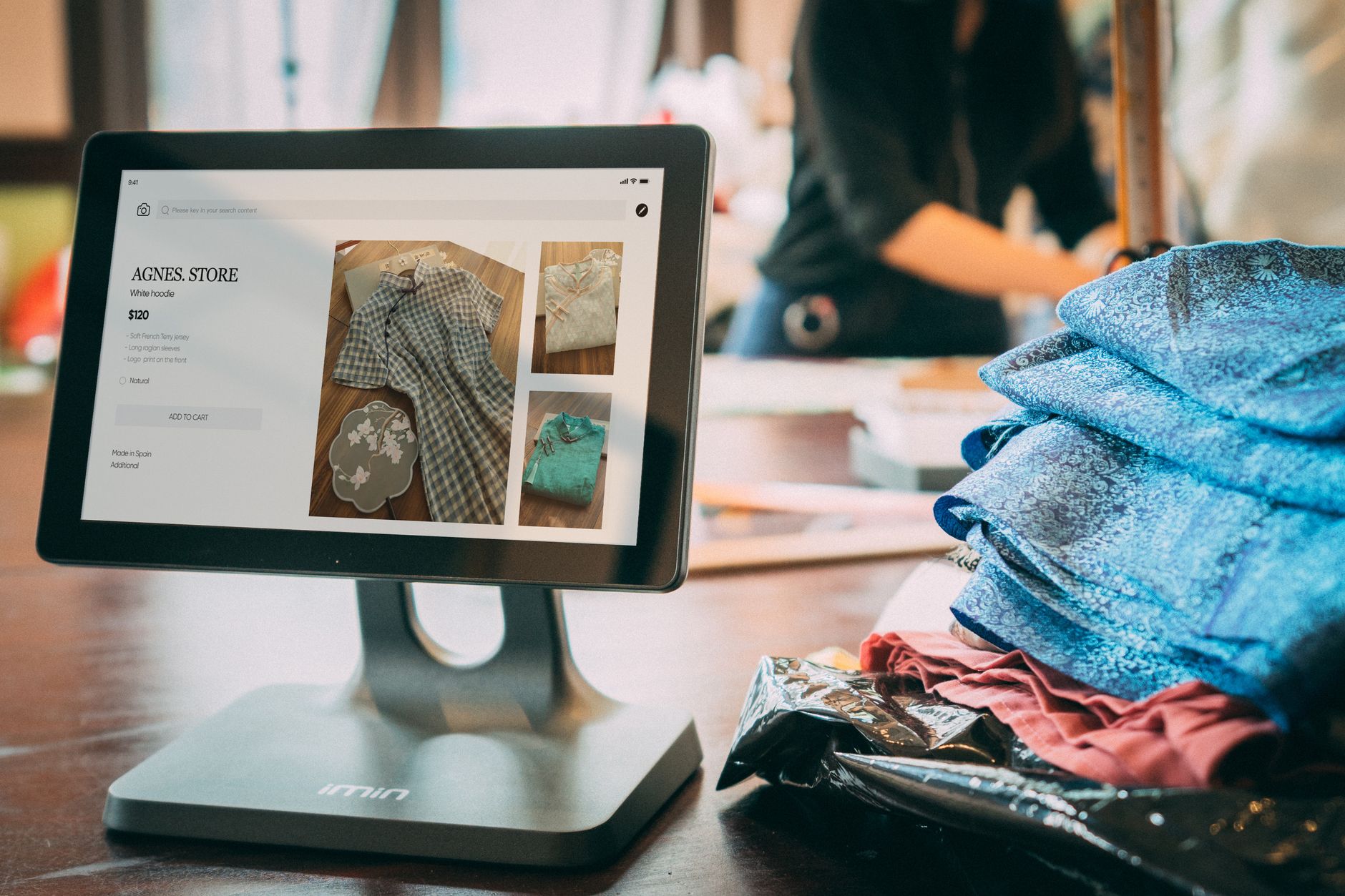
Imagine a customer in downtown Chicago ordering a trending item online, only for your system to flag it as 'in stock' in a distant Texas distribution center, forcing a costly expedited shipment or a disappointing delay. This isn't theoretical; 73% of retailers still grapple with fragmented inventory visibility, leading to an average 18% increase in fulfillment costs and direct customer churn. Your customers expect seamless, rapid delivery, but disconnected systems and inefficient logistics are silently eroding your margins and reputation. It's time to build a distribution model that truly puts the customer first, from click to doorstep, without bleeding profit.
The Hidden Costs of Fragmented Retail Logistics in 2025
As a veteran of dispatch, brokerage, and logistics management, I’ve seen firsthand how retailers, often unknowingly, dig their own graves with fragmented logistics. The conventional wisdom focuses on individual channel optimization, but the real bleed isn't in a single silo; it's in the gaps between them. Your e-commerce store, physical boutiques, and marketplace presences often operate with their own inventory feeds, WMS, and fulfillment rules. This isn't multi-channel; it's self-sabotage.
The root cause is a pervasive reliance on disparate legacy systems that simply weren't built for today's dynamic retail landscape. Your POS system might not talk to your primary warehouse WMS, which certainly isn't in real-time sync with your drop-shipper's feed or your temporary holiday pop-up store's stock. This leads to profound inventory distortion.
According to the National Retail Federation, businesses lose an average of 4.5% of revenue due to inventory distortion – stockouts and overstocks combined – amounting to over $300 billion annually in the U.S. alone. Imagine losing one out of every twenty dollars earned, simply because you can't tell where your product actually is, or how much you really have. This isn't just about lost sales; it's about holding costs for excess inventory and expedited shipping for stockouts that could have been avoided.Most companies fail here because they're afraid of the complexity of deep systems integration or they try to overlay a 'visibility dashboard' on top of bad data. A dashboard won't fix a broken pipe. The true cost isn't just financial; it's the operational inefficiency that consumes managerial time, creates disputes between departments, and ultimately translates to a slower, less reliable customer experience. You're not just paying for inefficiency; you're paying for brand erosion.
Customer Churn & Return Rates: The Real Impact of Delivery Delays
Beyond the internal operational costs, the most immediate and painful consequence of a fragmented distribution strategy is its impact on your customers. In an era where Amazon has set the bar for delivery speed and transparency, anything less than near-perfection results in abandoned carts, negative reviews, and a higher rate of returns. Your customer doesn't care if your ERP didn't sync with your WMS; they care that their promised 2-day delivery turned into 5, or worse, that the item they bought was actually out of stock.
This isn't an abstract problem.
A 2023 McKinsey study found that 40% of customers abandon their carts due to slow delivery times, and 23% cite a lack of transparent shipping information. Think about that: nearly half your potential customers are walking away before they even hit 'buy' due to concerns about delivery. Furthermore, an inconsistent delivery experience often directly correlates with higher return rates. Each percentage point increase in return rates can trim net profits by 0.5-1%. It's a silent killer of profitability.What most professionals miss is that it's not just the absolute speed of delivery; it's the consistency and transparency. A consistent 5-day delivery promise, clearly communicated and reliably met, often outperforms an advertised 2-day delivery that frequently becomes 7. The broken promise is more damaging than the slower speed. When you can't dynamically route orders from the closest fulfillment node or accurately predict delivery windows, you're setting yourself up for failure, leading to re-shipping costs, refund processing, and the irreversible damage of a lost customer.
Building Your Unified Inventory Single Source of Truth for Omni-Channel
The Holy Grail of omni-channel distribution is a truly unified inventory. This isn't just about having a spreadsheet that aggregates stock levels; it's about dynamic, real-time allocation that understands not just how much you have, but where it is, and how quickly it can reach a specific customer from any fulfillment node. Forget 'visibility tools' that provide 24-hour delayed snapshots; you need a system that acts as the brain for your entire product ecosystem.
- Audit and Harmonize Data Sources: Start with a forensic audit of every system touching your inventory: your e-commerce platform, brick-and-mortar POS systems, warehouse management systems (WMS), enterprise resource planning (ERP), and any third-party logistics (3PL) providers. Identify discrepancies, duplicate SKUs, and inconsistent product attributes. The goal is a clean, harmonized master data set for all products.
- Select a Robust Order Management System (OMS) or iPaaS: Your OMS becomes the central nervous system. It must be capable of ingesting real-time inventory feeds from all sources and, critically, allocating inventory dynamically based on pre-defined business rules (e.g., fulfill from closest store, lowest shipping cost, highest margin potential). For complex environments, an Integration Platform as a Service (iPaaS) can be invaluable for linking disparate legacy systems without a full rip-and-replace. Look for native API integrations, not just flat file transfers.
- Implement Master Data Management (MDM): This isn't a one-off project; it's ongoing. Establish clear protocols for product data creation, updates, and retirement across all channels. Who owns the master record for a given SKU? How quickly are changes propagated? Strong MDM is the foundation for accurate inventory.
- Establish Data Governance Protocols: Define clear processes for error resolution, inventory adjustments, and discrepancy reconciliation. This includes setting up automated alerts for low stock thresholds or negative inventory. Without strong governance, even the best system will eventually succumb to dirty data.
Insider knowledge: Many retailers try to overlay a simple reporting dashboard on top of bad, disparate data. This is akin to putting a fresh coat of paint on a crumbling wall. You need to integrate at the transactional level. Your inventory needs to be dynamically allocating, not just reporting. The system should reserve stock for a customer's cart in real-time. Companies that achieve real-time inventory visibility can reduce carrying costs by 15-20% and significantly cut down on costly expedited shipments due to false stockouts.
Optimizing Fulfillment Nodes: Strategic Micro-Warehousing and Dark Stores
The traditional hub-and-spoke distribution model is increasingly unsustainable for last-mile delivery. Your customers demand speed, and that means bringing inventory closer to them. The answer isn't always building massive new DCs; it's rethinking your existing assets and strategically deploying smaller, agile fulfillment nodes. Think of your physical stores not just as sales points, but as mini-distribution centers.
- Network Optimization Study: Don't guess. Analyze your current order origins, customer density, and existing fulfillment locations. Tools exist to model optimal micro-fulfillment center (MFC) or dark store placements based on delivery radius, population density, and product velocity. The goal is to maximize one-day or same-day delivery coverage while minimizing transportation costs.
- Evaluate "Ship-from-Store" Capabilities: This is low-hanging fruit for many retailers. Train existing store staff on basic picking, packing, and carrier label generation. Dedicate a small portion of store inventory for online fulfillment. Integrate your POS with local carrier APIs for real-time shipping quotes. The biggest hurdle here isn't the technology, it's often the internal retail vs. e-commerce operations silos. Retail store managers are usually incentivized by in-store sales, not online fulfillment. You need cross-functional KPIs that reward both.
- Consider Automated Dark Stores and MFCs: For high-volume urban areas, purpose-built dark stores or automated micro-fulfillment centers offer rapid order processing and high throughput. These aren't customer-facing and are optimized solely for picking, packing, and staging for last-mile delivery or Buy Online, Pick Up In Store (BOPIS) orders. Implementing ship-from-store strategies can increase local store sales by 10-15% and reduce last-mile delivery costs by up to 25%.
Insider knowledge: Many retailers underestimate the cultural shift required for ship-from-store. It means retraining sales associates to think like warehouse pickers and packers, and it requires robust inventory accuracy within the store itself—a challenge often overlooked. You must align incentives; reward store teams for fulfilling online orders, not just for in-store sales numbers. Without that alignment, even the best tech will falter.
Dynamic Routing & Carrier Orchestration for Agile Delivery Networks
Sticking to fixed, long-term carrier contracts for all your lanes is a relic of a bygone era. In 2025, an agile, omni-channel distribution strategy demands dynamic carrier orchestration. This means intelligently selecting the best carrier for each individual order, based on real-time factors like cost, speed, service level, historical performance, and even weather conditions.
- Implement a Transportation Management System (TMS) with Advanced Optimization: A modern TMS is non-negotiable. It needs capabilities beyond basic load planning, including multi-carrier rate shopping, dynamic routing algorithms, and real-time visibility into in-transit shipments. Look for systems that integrate directly with a broad network of parcel, LTL, regional, and last-mile carriers.
- Integrate with Multiple Carrier APIs: Don't rely on just one or two national carriers. Build a network that includes regional parcel carriers (often 10-20% cheaper for specific lanes), local couriers for same-day delivery, and specialized LTL providers. Each carrier has its sweet spot. Your TMS should connect to their APIs to pull real-time rates and capacity.
- Establish Intelligent Business Rules for Carrier Selection: Define criteria for automatic carrier selection. For a high-value, urgent item going 50 miles, perhaps prioritize a local courier. For a non-urgent, heavy item going 500 miles, an optimized LTL carrier might be best. These rules need to be dynamic, adjusting for peak seasons, fuel surcharges, and service level agreements (SLAs).
- Utilize Predictive Analytics for Demand Forecasting: Beyond reactive fulfillment, truly advanced omni-channel leverages AI-powered forecasting to predict demand spikes (e.g., holiday seasons, flash sales) and proactively position inventory. This allows you to pre-book carrier capacity and avoid costly last-minute expedites.
Insider knowledge: Many retailers focus so heavily on negotiating lower base rates with a few large national carriers that they miss the 15-20% savings achievable by dynamically tendering each shipment to the optimal carrier for that specific lane, weight, and service level. Often, regional or specialized local providers, which they haven't bothered to onboard, offer better value and speed for specific routes. The real cost isn't just on the rate sheet; it's in the missed opportunities and the expensive, ad-hoc fixes. Optimizing carrier selection and dynamic routing can cut shipping costs by 12-18% and improve on-time delivery rates by 7-10 percentage points.
| Feature | ERP-Centric Approach | Dedicated OMS Approach | iPaaS (Integration Platform as a Service) |
|---|---|---|---|
| Integration Complexity | High; often requires custom development and deep ERP knowledge. | Moderate; typically API-driven, but still requires linking to ERP/WMS. | Low to Moderate; designed for easy connection between disparate systems with pre-built connectors. |
| Real-time Capabilities | Variable; depends heavily on ERP's architecture and custom integrations. Can be slow. | High; designed for real-time inventory updates and order routing. | High; facilitates real-time data flow between all connected systems. |
| Cost | Highest upfront and ongoing maintenance. | Moderate to High; specialized software with licensing and implementation costs. | Moderate; subscription-based, costs scale with usage and number of integrations. |
| Scalability | Good once implemented, but initial scaling is difficult. | Very good; designed to handle increasing order volumes and channels. | Excellent; highly flexible for adding new systems or scaling integrations. |
| Best Use Case | Large enterprises with existing, deeply entrenched ERPs and strong in-house IT. | Mid-sized to large retailers needing robust order orchestration and inventory accuracy. | Companies with a mix of modern and legacy systems needing agile, flexible integration without overhauling core platforms. |
Key Takeaways
- Fragmented inventory management directly causes 18%+ higher fulfillment costs and significant customer churn.
- A unified, real-time 'single source of truth' for inventory is non-negotiable; static dashboards won't cut it.
- Leverage existing physical stores as micro-fulfillment centers to reduce last-mile delivery costs by up to 25%.
- Implement cross-functional KPIs to align retail and e-commerce teams, especially for ship-from-store initiatives.
- Dynamic carrier orchestration, driven by a modern TMS, can reduce shipping costs by 12-18% per order.
- Prioritize consistency and transparency in delivery promises over unrealistic speed claims to build customer trust.
- Proactively use predictive analytics to anticipate demand spikes and pre-book logistics capacity, especially during holiday surges.
- The biggest barrier to omni-channel success isn't technology, but often organizational silos and a fear of data integration complexity.
Frequently Asked Questions
What is omni-channel distribution in retail?
Omni-channel distribution is a holistic logistics strategy where all sales channels—online, physical stores, marketplaces—operate as a single, unified system for inventory management and order fulfillment. It ensures that customers have a seamless experience, accessing products and services consistently regardless of how or where they interact with the brand, optimizing inventory flow from any point to any customer.
How does omni-channel distribution reduce fulfillment costs?
Omni-channel distribution reduces fulfillment costs by optimizing inventory placement and leveraging the closest available stock to the customer, minimizing shipping distances and expedites. Real-time inventory visibility prevents stockouts and overstocks, cutting carrying costs by 15-20% and reducing the need for expensive transfers. Dynamic carrier selection further optimizes costs by matching each shipment to the most economical and efficient carrier.
What technologies are essential for seamless omni-channel inventory flow?
Essential technologies for seamless omni-channel inventory flow include a robust Order Management System (OMS) as the central brain, an advanced Warehouse Management System (WMS) for optimized warehouse operations, an Enterprise Resource Planning (ERP) system for overall business processes, and potentially an Integration Platform as a Service (iPaaS) to connect disparate systems. Real-time data synchronization across these platforms is critical.
How can retailers improve last-mile delivery in an omni-channel model?
Retailers can improve last-mile delivery by strategically deploying micro-fulfillment centers or leveraging physical stores for 'ship-from-store' and 'buy online, pick up in store' (BOPIS) options. Implementing a Transportation Management System (TMS) with dynamic routing and multi-carrier integration allows for optimized carrier selection based on speed and cost, ensuring faster, more efficient deliveries from the closest inventory point.
What are the biggest challenges in implementing an omni-channel distribution strategy?
The biggest challenges in implementing an omni-channel distribution strategy are often organizational silos between e-commerce and brick-and-mortar teams, integrating disparate legacy systems, maintaining real-time inventory accuracy across all channels, and the initial investment in technology and process changes. Overcoming resistance to change and aligning departmental incentives are crucial for success.
What is the difference between multi-channel and omni-channel distribution?
Multi-channel distribution involves offering products across several independent channels (e.g., a website and a physical store), but these channels operate in silos with separate inventory and processes. Omni-channel distribution, by contrast, integrates all channels into a single, unified ecosystem where inventory is shared and accessible across all touchpoints, providing a consistent and seamless customer experience regardless of the channel used.
Your Omni-Channel Distribution Playbook for 2025
Navigating the complexities of omni-channel distribution in 2025 requires more than just good intentions; it demands real-world tools and a dynamic network. The fragmented logistics that plague so many retailers—leading to bloated costs, delivery delays, and customer frustration—are solvable. The key lies in unifying your inventory, strategically leveraging your physical footprint, and optimizing every shipment with precision. Loadly understands these challenges because we've lived them. Our platform connects shippers like you with a diverse, vetted network of carriers and owner-operators, enabling you to dynamically rate-shop, book, and track freight across all modes. This isn't just about finding a cheaper truck; it's about giving you the agility to orchestrate your fulfillment from any node, to any customer, with real-time visibility and cost control. Stop losing 18% of your margins to outdated logistics. Explore how Loadly's digital freight marketplace can empower your omni-channel strategy by connecting you to the right carrier, at the right price, for every single delivery.