Every year, shippers leave thousands on the table, not because of carrier rates, but because of a preventable error in their initial container selection. I’ve seen countless logistics managers, focused purely on price per mile, opt for the cheapest 40-foot box only to incur $300+ in drayage penalties for overweight loads or realize too late they only filled 60% of the cubic capacity, effectively paying for empty air. This single mistake, often overlooked, is costing the industry millions annually in wasted space and inefficient rail movements.
The Hidden Costs of Mismatched Intermodal Container Sizes
It’s a tale as old as intermodal itself: you've got product to move, and you grab the most readily available container. But that seemingly innocuous decision can inflate your freight costs by 10-15% without you even realizing it. The root cause? A fundamental misunderstanding of "cube out" versus "weight out" and the dynamic interplay between container dimensions, commodity density, and rail network limitations. Most shippers fail here because they rely on historical data or generic load plans instead of analyzing each shipment's unique requirements against available container specifications.
This isn't just about paying for empty space. A poorly matched container leads to increased transit times due to re-work, higher damage claims from shifting cargo, and potential demurrage fees if you hit capacity limits at the rail ramps because you needed a specialized box that wasn't properly pre-ordered.
"According to the Intermodal Association of North America (IANA), 28% of all intermodal damages in 2023 were directly attributable to improper containerization or load distribution, leading to over $120 million in claims industry-wide."
The real cost isn't just the immediate freight bill; it’s the ripple effect of supply chain disruption, strained carrier relationships, and the operational headache of resolving preventable issues. Understanding the granular details of container selection isn't just a best practice; it's a strategic imperative for any shipper looking to maintain a competitive edge in 2025.
Why Most Shippers Overpay by Underestimating Rail Network Nuances
Beyond the physical dimensions, the biggest blind spot for many logistics managers is the rail network itself. You might have a perfectly loaded 53-foot domestic container, but if your chosen rail lane has clearance restrictions for double-stacking, or limited chassis availability for that specific size at the destination ramp, you're looking at significant delays and unexpected costs. I’ve seen loads sit for days because the shipper assumed an open-top container could be routed anywhere, only to find out the rail line had tunnel height restrictions. This isn't theoretical; it's the daily reality that impacts your bottom line.
The common pitfall is treating intermodal like a simple truckload shipment. It’s not. It involves specific rail equipment, specialized chassis, and fixed-route infrastructure. Not every rail yard can handle every container type, especially when it comes to specialized equipment or less common dimensions like 45-foot units. Shippers often fail to account for the actual "street turn" availability of chassis at origin and destination, leading to extended drayage times or the need for expensive dedicated chassis rentals. This systemic lack of understanding about rail operational nuances translates directly into wasted budget.
"Roughly 18% of all intermodal demurrage and detention charges in North America are due to chassis unavailability or improper container specification at the rail ramp, costing shippers an average of $350 per delayed unit."
Ignoring these specifics means you’re not just paying for a container; you're paying for operational inefficiencies that could be easily avoided with better planning and an expert-level understanding of the intermodal ecosystem.
Decoding the Standard: 20-Foot & 40-Foot Intermodal Containers for 2025
When navigating the world of intermodal, the 20-foot and 40-foot containers are your workhorses, particularly for international shipments. But "standard" doesn't mean "one size fits all." The crucial differentiator for 2025 is understanding when to opt for the more compact 20-foot unit over its larger sibling, and critically, recognizing the high-cube variant of the 40-foot.
A 20-foot container, with its approximate 1,172 cubic feet of capacity, is ideal for extremely dense, heavy commodities that will "weight out" before they "cube out." Think machinery parts, industrial raw materials, or dense chemicals. The mistake I see is shippers putting lighter, bulkier goods into a 20-footer, paying a premium per cubic foot for largely empty space. You must use a 20-footer when the freight’s weight demands it; if your product density is above 60 lbs per cubic foot, a 20-footer is likely more cost-effective than a half-filled 40-foot.
The 40-foot container (approx. 2,385 cubic feet) is the general-purpose champion, but here's where the #1 mistake often lies: not distinguishing between standard height (8'6") and 40-foot high-cube (HC) containers (9'6" height). While the standard 40-footer is common for international ocean freight, the 40-foot HC is almost exclusively used for domestic intermodal. Misordering a standard 40-foot for domestic moves where a high-cube would fit more product is a common error, leaving 9% of potential cubic capacity unused. Conversely, attempting to ship a 40-foot HC internationally can lead to chassis issues or even port rejection if destination equipment isn't compatible. Always specify "high-cube" for domestic moves where allowed.
Beyond the basic box, remember that the true cost savings come from optimizing your drayage. A 20-foot container might require a specialized tri-axle chassis, which isn't always as available as a standard tandem for a 40-footer. Before committing, verify chassis availability at both ends, or you'll eat up any savings with expensive per diem charges.
Finding the right equipment and capacity for your specific needs, especially for international connections, often requires access to a broad network. Savvy shippers frequently leverage platforms where they can browse live LTL loads near you and secure appropriate intermodal equipment that aligns with their specific freight and destination requirements.
The Domestic Powerhouse: Maximizing 53-Foot Intermodal Container Efficiency
For domestic shipments within North America, the 53-foot intermodal container is the undisputed king of cubic capacity, mirroring the dimensions of a standard dry van truckload. Offering a massive 3,894 cubic feet of space, it's designed for high-volume, lighter freight that "cubes out" long before it "weights out." Think consumer goods, packaged foods, or retail merchandise. The promise? Up to 10% lower linehaul costs compared to over-the-road truckload for long-haul routes (1,000+ miles).
However, this efficiency comes with a crucial caveat: network limitations. The 53-foot container operates primarily on dedicated North American rail networks, which means not all lanes are created equal. The #1 mistake here isn't selecting the wrong size; it's assuming unrestricted access. You must verify:
- Rail Lane Availability: Not every rail line or intermodal ramp can accommodate 53-foot containers. Specific corridors are optimized for these longer boxes.
- Chassis Pool Depth: The physical chassis needed to move that 53-foot box during drayage can be a significant bottleneck. I've personally seen loads delayed for 2-3 days because of chassis shortages at destination ramps, easily eroding any linehaul savings with $150+/day demurrage fees.
- Weight Restrictions: While built for cube, you still have federal weight limits. Exceeding 45,000 lbs (payload) in a 53-footer can lead to overweight fines and transloading costs, despite having empty space.
To maximize the 53-foot advantage, you need to understand your freight's true density and plan for consistent volumes on specific, high-frequency rail lanes. Engage with your intermodal provider or freight broker to confirm lane and chassis availability 72-96 hours in advance, especially during peak seasons. Failure to do so transforms a cost-saving strategy into a logistical nightmare.
Specialized Intermodal Containers: When Standard Won't Cut It (and What It Costs)
Sometimes, standard dry boxes simply aren't enough. When your cargo demands specific environmental controls, open-top loading, or robust flat-rack support, you'll need specialized intermodal containers. While these units can solve critical shipping challenges, they come with higher costs and tighter availability. Ignoring these specifics is a guarantee for logistical headaches and budget overruns.
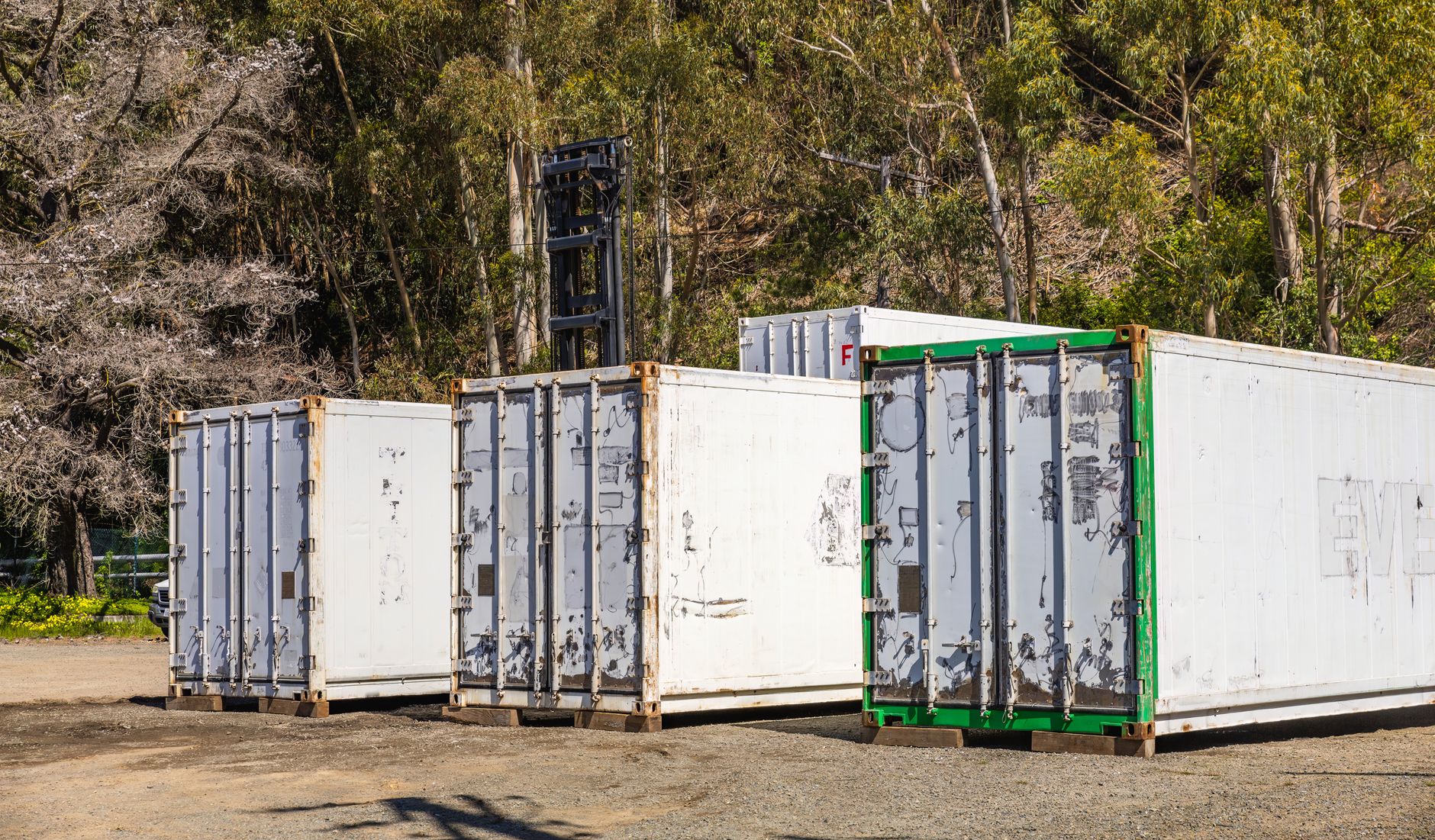
- Refrigerated (Reefer) Containers: Essential for temperature-sensitive goods like pharmaceuticals, fresh produce, or certain chemicals. They maintain temperatures between -30°C and +30°C. The cost premium is significant, often 2-3x that of a dry container, due to specialized equipment, fuel, and maintenance. Availability is also much lower, requiring longer lead times – don't expect one to materialize overnight.
- Open-Top Containers: Perfect for oversized cargo that needs to be loaded by crane from the top, such as heavy machinery or tall construction materials. They come with a removable tarpaulin cover. The challenge? Rail clearances. I've seen loads rejected at the ramp because the combined height of the cargo and container exceeded bridge or tunnel limits on the route, forcing costly transloading or re-routing. Always confirm your total height with the rail carrier's clearance engineers before booking.
- Flat Rack Containers: Designed for extremely heavy or wide cargo, providing a flat base with fixed or collapsible end walls. They are ideal for boats, heavy equipment, or industrial project cargo. These are by far the most complex and expensive to move intermodally, often requiring special permits (which can add $500-$2,000 per state for over-dimensional moves) and specific rail car types.
The insider knowledge here: specialized containers are almost always booked on a specific "per trip" basis, and their repositioning costs are baked into your rate. If you don't load and unload efficiently, per diem charges can skyrocket. You must have precise loading/unloading plans and equipment ready at both ends. Any deviation from the plan will be heavily penalized.
The #1 Intermodal Container Selection Mistake Costing You Thousands Annually
The single biggest blunder shippers make with intermodal container selection, consistently costing them thousands, is failing to accurately calculate the true cost per cubic foot or per pound relative to their specific commodity, often due to an imbalanced focus on freight class or gross weight alone. This leads to the infamous "paying for empty space" scenario or, conversely, overfilling a smaller container and incurring costly overweight fines.
Here’s the breakdown of this common, expensive mistake:
- Ignoring Cube Utilization: Many shippers prioritize getting a container, any container, rather than the right one. They might have 2,000 cubic feet of product with a low density, but blindly book a 40-foot container (approx. 2,385 cu ft) when a 53-foot (approx. 3,894 cu ft) would have been more cost-effective. They end up paying for 385 cubic feet of empty air in the 40-footer that could have gone into a proportionally cheaper 53-footer. This oversight can inflate costs by 15-20% on cubic-out loads.
- Miscalculating Weight Distribution: On the flip side, dense cargo often leads to "weighting out" a container long before its cubic capacity is reached. A shipper might fill a 53-foot container with 48,000 lbs of product, exceeding the legal payload of 45,000 lbs, simply because there was still physical space. This leads to overweight citations ($500-$5,000 per incident), forced transloading, and major delays. You must pre-calculate the total gross weight (container + cargo + chassis) against state and federal limits (typically 80,000 lbs total).
- The Dunnage & Void Factor: Real-world loading isn't perfectly stacked. You need space for dunnage, airbags, and potential load shifts. Many calculations overlook this, packing a container "to the brim" on paper, only to find in practice they're short on actual usable space, forcing a costly split shipment or risking damage. Always factor in an additional 5-7% for load securement and voids.
To avoid this, you must conduct a detailed "cube-out vs. weight-out" analysis for every unique SKU you ship. Understand your product's dimensions and density. Then, apply these real-world figures to the exact internal dimensions of available intermodal containers. This granular approach, while initially more work, is the only way to avoid thousands in annual preventable costs.
Comparison Table: Key Intermodal Container Sizes for 2025
| Container Type | Approx. Internal Dimensions (LxWxH) | Approx. Cubic Capacity | Typical Max Payload Weight | Best Use Cases | Network & Cost Efficiency |
|---|---|---|---|---|---|
| 20-Foot Dry Van | 19'10" x 7'8" x 7'10" | 1,172 cu ft | 45,000 - 48,000 lbs | Heavy, dense cargo; industrial parts; raw materials; international ocean freight | Lower cost per lb for dense freight; versatile internationally; limited domestic volume |
| 40-Foot Dry Van (Standard) | 39'5" x 7'8" x 7'10" | 2,385 cu ft | 42,000 - 44,000 lbs | General cargo; consumer goods; international ocean freight | Good balance for mixed cargo; widely available internationally; less efficient for domestic volume |
| 40-Foot High-Cube (HC) | 39'5" x 7'8" x 8'10" | 2,694 cu ft | 42,000 - 44,000 lbs | Domestic general cargo; lighter, bulkier goods; provides 9% more cube than standard 40' | More cost-effective for domestic volume than standard 40'; better cube utilization; limited international use |
| 53-Foot Domestic | 52'6" x 8'2" x 9'2" | 3,894 cu ft | 44,000 - 45,000 lbs | High-volume, lighter consumer goods; retail freight; long-haul domestic moves | Best cost per cu ft for domestic; significant savings over truckload (10%+); network-dependent (rail lines/chassis) |
| Reefer (Specialized) | Varies (e.g., 40' or 53') | Varies (less due to insulation) | Varies (less due to insulation) | Temperature-sensitive goods (food, pharma) | Higher cost (2-3x dry van); specialized equipment; lower availability; tight temperature control |
Key Takeaways
- Shippers collectively lose millions annually by mis-selecting intermodal container sizes, primarily due to ignoring the "cube out vs. weight out" principle.
- The 20-foot container is optimal for dense, heavy freight that will reach weight limits before filling cubic space, reducing cost per pound.
- Always specify "40-foot High-Cube" for domestic intermodal moves to gain 9% more cubic capacity over standard 40-foot dry vans.
- For domestic North American freight, the 53-foot container offers the best cost per cubic foot for high-volume, lighter goods but requires strict attention to rail lane and chassis availability.
- Specialized containers (reefer, open-top, flat rack) solve unique shipping challenges but demand higher costs, longer lead times, and meticulous planning for rail clearance and drayage.
- Before booking, conduct a detailed SKU-level analysis of product density and dimensions, factoring in 5-7% for dunnage and void space.
- Verify chassis availability at both origin and destination 72-96 hours in advance to avoid costly demurrage and detention fees.
- Never assume all rail ramps or lanes can handle all container types; always confirm specific route capabilities for your chosen equipment.
Frequently Asked Questions
What is the most common intermodal container size for domestic freight in 2025?
The 53-foot intermodal container is the most common and efficient size for domestic freight within North America in 2025. Its dimensions mirror those of a standard truckload dry van, making it ideal for high-volume, lighter commodities and long-haul rail-truck movements.
How do I calculate intermodal container capacity effectively?
To calculate intermodal container capacity effectively, measure your product's individual dimensions (LxWxH) and weight. Multiply these to get cubic feet per unit, then divide the container's internal cubic capacity by your product's cubic feet. Crucially, also calculate total load weight and factor in at least 5-7% for dunnage, bracing, and unavoidable voids to avoid overfilling or wasted space.
When should I choose a 20-foot intermodal container over a 40-foot?
You should choose a 20-foot intermodal container over a 40-foot when shipping extremely dense or heavy commodities where your freight will "weight out" the container before it "cubes out." This ensures you're paying for maximum payload efficiency rather than unused cubic space. Typically, product densities above 60 lbs per cubic foot make a 20-foot container more cost-effective.
What is the difference between a 40-foot standard and a 40-foot high-cube intermodal container?
The primary difference is height: a 40-foot standard container is 8 feet 6 inches tall, while a 40-foot high-cube (HC) is 9 feet 6 inches tall. This extra foot of height in the HC container provides approximately 9% more cubic capacity, making it far more efficient for domestic shipments of bulkier, lighter goods. Standard 40-footers are more common for international ocean freight, while HCs dominate domestic rail.
How much can I save by optimizing intermodal container sizes?
By accurately optimizing intermodal container sizes, shippers can expect to save 10% to 15% on their total freight costs. These savings come from maximizing cube utilization, avoiding overweight penalties, reducing the need for costly split shipments, and minimizing demurrage/detention charges from equipment mismatches or delays.
2025 Intermodal Container Sizes: Your Playbook for Cost Savings
The truth is, intermodal shipping offers incredible advantages, but only if you approach it with precision. The days of "just throw it in a box" are long gone. Every cubic foot, every pound, and every rail-friendly inch matters. By diligently applying the principles of cube-out vs. weight-out, understanding the nuances of specialized equipment, and proactively addressing chassis availability, you’re not just saving money; you’re building a more resilient, predictable supply chain. It’s the difference between merely moving freight and moving freight strategically. Don't let preventable mistakes drain your budget another year. Equip yourself with the right knowledge, make informed decisions, and secure the exact capacity you need. Register today to streamline your intermodal bookings and optimize your container choices.