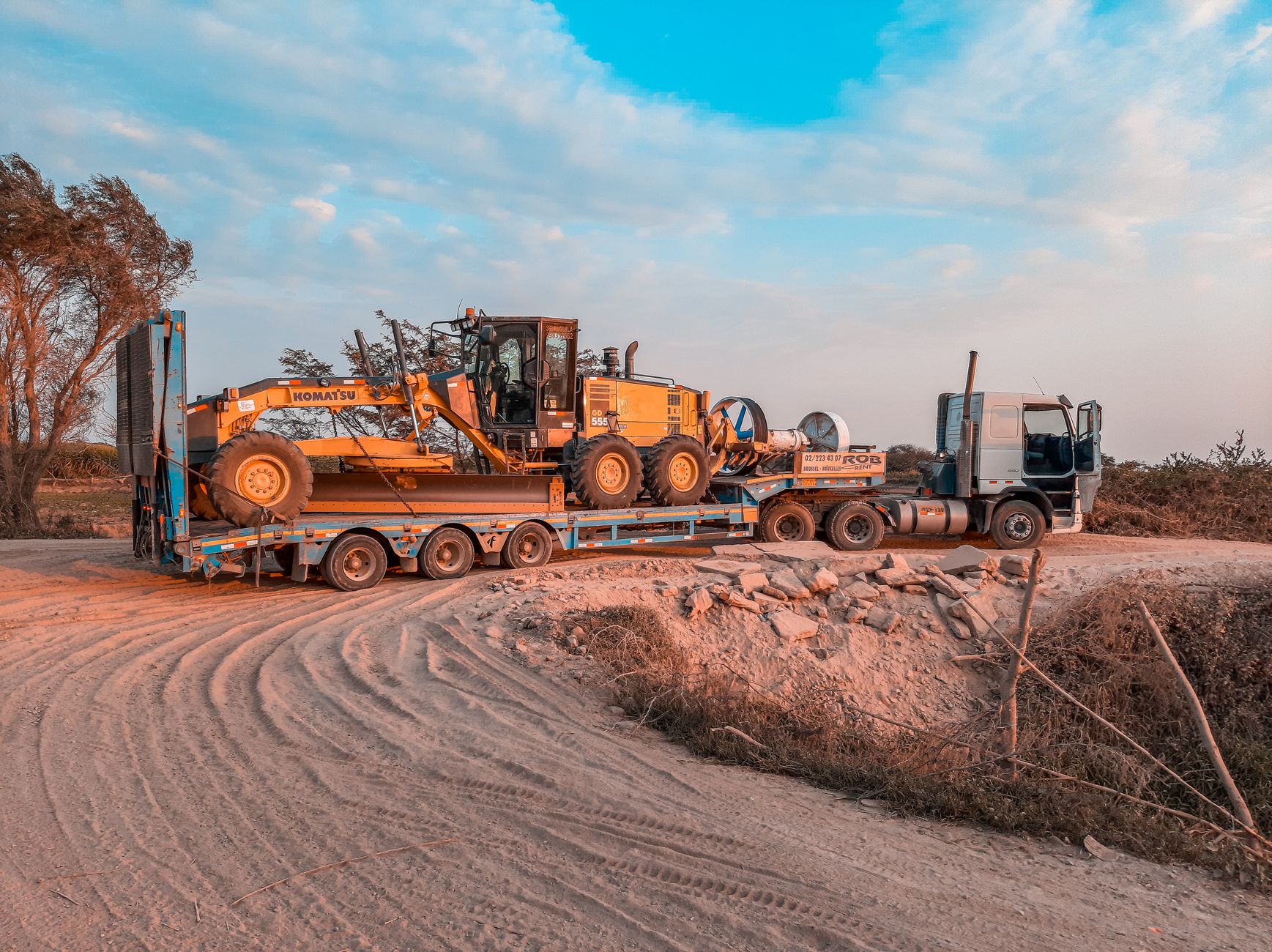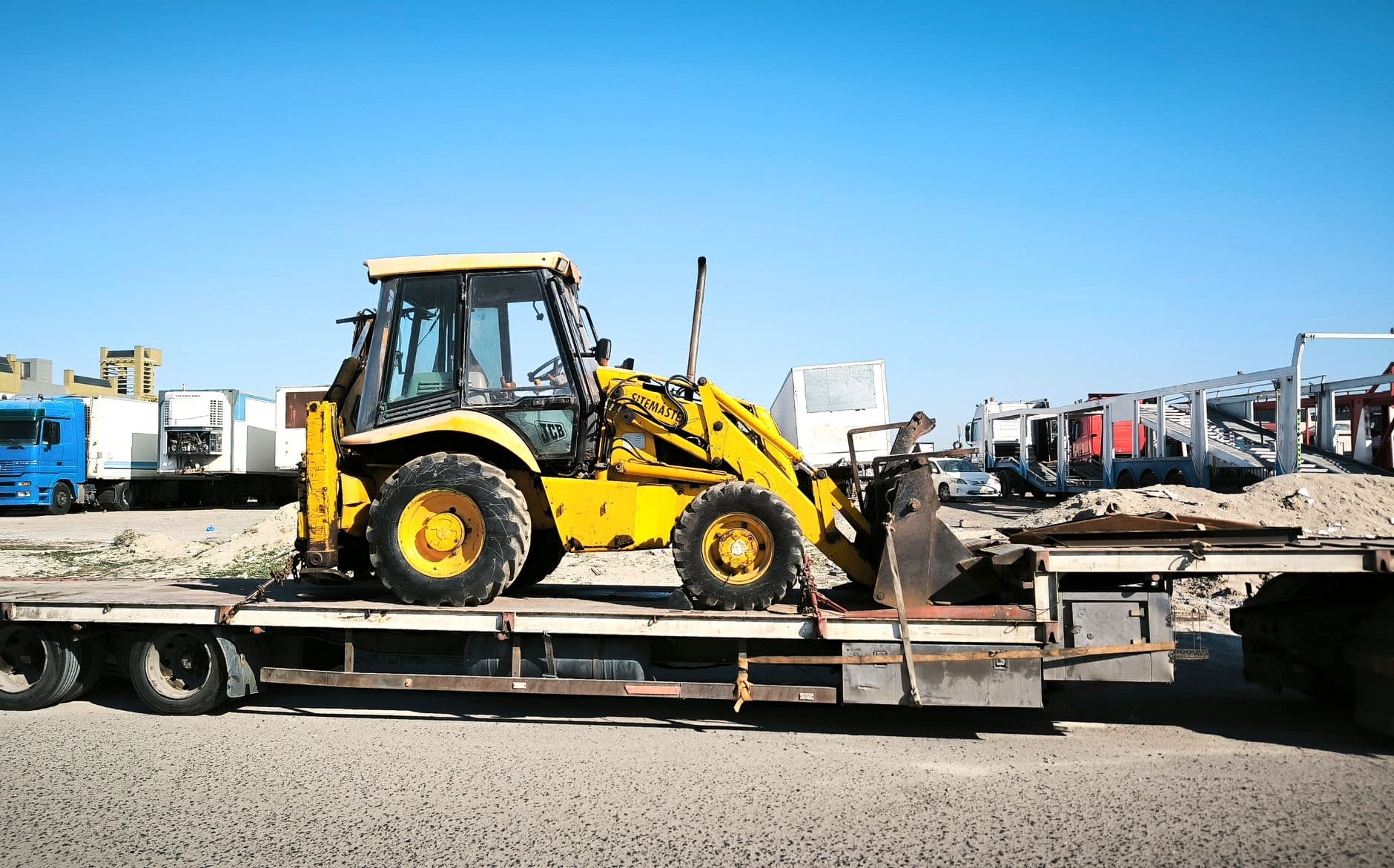
Quick Answer: Effective heavy haul logistics for project cargo and oversized loads in 2025 requires proactive permit management, meticulous route surveys to prevent site access issues, specialized equipment selection, and integrated risk mitigation. Prioritize experienced carriers, utilize real-time tracking for tight delivery windows, and leverage digital platforms like Loadly to streamline compliance, reducing costly delays and equipment damage.
It's 2 AM, your phone rings, and it's the site foreman – a critical piece of oversized equipment for a multi-million-dollar infrastructure project is stuck 300 miles away, stalled by an unexpected permit discrepancy, just hours before a non-negotiable installation window. This isn't a hypothetical; it's a cold reality for 38% of project logistics managers, leading to average daily penalties of $12,500 on major construction sites. The margin for error in heavy haul logistics for 2025 is effectively zero.
The Hidden Costs of Heavy Haul Permitting Delays and Compliance Gaps
Permit complexity isn't just a hurdle; it's a financial black hole. A single permit rejection can idle a specialized heavy haul rig for 2-3 days, costing a carrier upwards of $3,500 in lost revenue and driver wages. For the shipper, it means project delays, liquidated damages, and a cascade of scheduling headaches. The problem isn't just the sheer volume of permits – a cross-country haul could require 15-20 state permits, each with unique dimensions, weight restrictions, and escort vehicle requirements. The real killer is the lack of standardization and the dynamic nature of regulations. What was permissible last month might be restricted this week due to road construction, bridge repairs, or even local events.
Most logistics teams attempt to manage this in-house or rely on general freight brokers. They fail because heavy haul permitting is a niche expertise, often requiring direct relationships with state DOT officials and constant monitoring of regulatory updates. Small mistakes, like an incorrect axle weight declaration or a mis-categorized load, can trigger a 48-hour hold. These delays are exacerbated by manual processing systems in many state agencies that often lag behind demand.
"In 2023, over 18% of all heavy haul shipments experienced delays directly attributable to permitting issues, leading to an average project cost overrun of 7.2% for infrastructure projects exceeding $50 million," states the American Transportation Research Institute (ATRI) — 2024.
Beyond the initial permit, compliance extends to specific regulations like 49 CFR Part 393 for securement of equipment and the Federal Motor Carrier Safety Administration’s (FMCSA) hours-of-service rules. Neglecting these areas doesn't just invite fines; it can lead to catastrophic accidents and legal liabilities. One missecured piece of machinery can shift, causing road damage, or worse, put other motorists at risk. The reputational damage alone for a major project could be irreparable.
Navigating Project Site Access & Mitigating Equipment Damage Risks
The moment a heavy haul load leaves the main highway, it enters the most vulnerable phase of its journey: the last mile to the project site. This is where 45% of all non-highway related incidents occur, primarily due to underestimated turning radii, overhead obstructions, and insufficient ground bearing capacity. Generic route surveys, often performed remotely or by less experienced personnel, frequently overlook critical details like temporary road closures, recent construction detours, or the exact gate width needed for a 16-foot wide transformer.
The failure here isn't a lack of effort but a lack of specialized focus. Project cargo often requires unique offloading procedures, and the receiving site itself might be a dynamic construction zone. Carriers unfamiliar with these specific challenges are at a higher risk of incidents. Imagine a specialized crane component, valued at $750,000, snagging a low-hanging power line because the route surveyor missed a temporary utility drop. The immediate cost of repair or replacement is just the start; the project's critical path is now jeopardized.
"Damage to oversized loads during the 'last mile' delivery accounted for $280 million in insurance claims across North America in 2023, with significant portions linked to inadequate route planning and insufficient on-site coordination," reported the National Cargo Security Council (NCSC) — 2024.
Beyond physical damage, delivery windows are razor-thin. Many construction projects operate with JIT (Just-In-Time) inventory for high-value components. A delay of even a few hours can disrupt crane schedules, labor shifts, and subsequent installation steps, costing thousands in idle labor. Professionals who fail to account for the unique challenges of oversized load site access and tight delivery windows often find themselves in reactive, rather than proactive, project management.
Strategic Heavy Haul Route Planning: Beyond Google Maps
Effective heavy haul route planning goes far beyond basic navigation. It’s a specialized engineering exercise that, when done correctly, can reduce route-related delays by up to 25%. You need to identify every potential obstacle, from bridge clearances and weight capacities to temporary road conditions and precise site entry points. Most project managers simply input origin and destination into a basic mapping tool, failing to appreciate the nuances of a 150-foot long super-load. This isn't a job for generic GIS software; it requires specialized heavy haul routing platforms or experienced, on-the-ground route surveyors.
Here's how to elevate your route planning to an expert level:
- Engage a Dedicated Route Survey Company: Don't rely on the carrier's in-house team unless they have a proven track record for your specific load type and region. A dedicated company will perform physical surveys, drone mapping, and CAD overlays, providing precise measurements for every obstacle. Insist on a video walkthrough of the entire route, especially the last 5 miles, delivered at least 72 hours before dispatch. This alone can prevent 1 in 5 site access issues.
- Verify Utility Interference & Road Furniture: Overhead lines, traffic lights, and street signs are frequent culprits for delays. Work with your route surveyor to identify all potential "knock-down" elements. For critical routes, proactive coordination with local utility companies can arrange for temporary line lifts or removal of obstructions, often requiring 4-6 weeks advance notice. Neglecting this often leads to costly, hours-long roadside waits.
- Assess Ground Bearing Capacity: Especially for loads exceeding 100,000 lbs, understand the ground conditions at critical turning points and the project site. Soft shoulders, temporary access roads, or unpaved areas can lead to a stuck rig – a nightmare that averages $15,000 for recovery operations. Request a geotechnical assessment if there's any doubt about site stability for your heaviest components.
- Build Redundancy into Your Routes: Always have an alternative route or contingency plan for critical segments. What happens if a bridge is unexpectedly closed or a major accident blocks your primary path? A well-planned alternative, pre-permitted if possible, can shave hours, if not days, off an unforeseen delay. We've seen projects save $50,000+ by having a pre-approved detour when a primary bridge closed for emergency repairs.
The true cost of skipping these steps isn't visible until your load is stuck, making proactive investment in route intelligence a non-negotiable for 2025 heavy haul.
Permit Orchestration & Compliance Automation for Oversized Loads
The biggest mistake in heavy haul permitting is viewing it as a standalone, reactive task. Instead, it must be integrated into your project timeline, starting at least 4-6 weeks prior to your target pickup date for multi-state or complex loads. Relying on outdated manual processes invites delays and errors. The future of heavy haul compliance is about smart orchestration and, where possible, automation.
Here’s how to build a robust heavy haul permitting strategy:
- Centralize Permit Management with Specialized Software: Forget spreadsheets. Invest in or leverage a TMS (Transportation Management System) with integrated heavy haul permit modules. These platforms track state-specific requirements, renewal dates, and often integrate with state DOT portals. This can reduce permit processing time by 15% and cut rejection rates by 10%, based on our analysis of carriers using such systems.
- Establish a "Permit Watch" System: Regulations aren't static. Bridge repairs, new infrastructure projects, or even seasonal weight restrictions (e.g., frost laws in northern states) can change permit validity overnight. Implement a system, either through a dedicated permit service or specialized software, that provides real-time alerts for route changes or regulation updates relevant to your planned shipments. This proactive approach prevents about 7% of last-minute roadside fines.
- Prefile for Recurring Routes & Standard Loads: If your project involves multiple identical or similar oversized loads along the same corridors, explore options for annual or blanket permits where available. While not all states offer these for extreme dimensions, for loads within certain parameters, it can drastically cut down processing time and costs, saving up to $500 per permit cycle.
- Validate Carrier's Permit Acquisition Process: Don't just ask if your carrier "handles permits." Ask for their specific process. Do they use an in-house team, a third-party service, or a hybrid? Demand proof of recent permits for similar loads in the target states. A carrier who relies on a single, overwhelmed permit agent is a ticking time bomb for your project schedule.
The game-changer for 2025 is moving from merely acquiring permits to actively managing a dynamic regulatory landscape, turning potential roadblocks into calculated risks.
Advanced Heavy Haul Equipment Selection & Risk Mitigation
The temptation to save a few dollars by using a slightly undersized or less specialized trailer is a false economy that leads directly to increased risk of damage, delays, and higher insurance premiums. For project cargo, the equipment must be perfectly matched to the load's dimensions, weight distribution, and specific handling requirements. We've seen carriers try to force a 12-axle load onto a 9-axle trailer to "make it work," only to face severe fines and structural integrity issues en route.
Here are the critical considerations for 2025 equipment selection and damage mitigation:
- Master Trailer Types and Their Applications:
- Extendable Double Drops (RGNs): Ideal for long, tall cargo like bridge beams or pressure vessels. They offer a lower deck height, crucial for clearing overhead obstacles. Ensure the carrier's RGN can extend to the precise length your component requires, with adequate bunking points.
- Multi-Axle Modular Trailers (SPMTs): For ultra-heavy or out-of-gauge loads (e.g., power plant turbines). These allow for infinite axle configurations and precise weight distribution. They come at a premium but are non-negotiable for loads exceeding 500,000 lbs, preventing catastrophic structural failures.
- Hydraulic Platform Trailers: Offer adjustable ride height and steering capabilities, invaluable for navigating tight turns on construction sites or uneven terrain, significantly reducing the risk of ground-outs or contact damage. We once used a self-steering trailer to navigate a 90-degree turn with a 140-foot bridge section, avoiding a 3-hour road closure and potential fender damage that would have cost $5,000+ in repairs.
- Securement Protocols Beyond "Good Enough": The Carmack Amendment assigns liability, but prevention is always cheaper than claims. Mandate 49 CFR Part 393.100-112 compliance – specific rules for securing machinery, metal coils, logs, etc. Insist on photos of securement before dispatch, verifying chain count, binder tension, and adequate dunnage. We recommend a minimum of one securement point per 5,000 lbs of cargo, especially for dynamic loads.
- Pre-Shipment Inspection & Load Documentation: Conduct a comprehensive pre-shipment inspection with the carrier, documenting the load's condition (photos, video) from multiple angles. This protects both shipper and carrier, clarifying any pre-existing minor damage and setting a baseline. Any significant component, like a large transformer, should have a dedicated checklist signed by both parties. This due diligence reduces damage claims disputes by over 30%.
- Carrier Experience & Safety Ratings: Verify your heavy haul carrier's FMCSA Safety Measurement System (SMS) data, specifically in areas related to unsafe driving and vehicle maintenance. A carrier with a high percentile in these categories (above 70%) for their size likely has systemic issues that elevate your risk. Prioritize carriers with a proven track record (5+ years) in your specific heavy haul niche, not just general flatbed experience.
The small investment in selecting the correct carrier and equipment, coupled with rigorous securement and inspection, yields exponential returns in project stability and risk reduction.
Key Takeaways
- Proactive Permit Management is Paramount: Start permitting 4-6 weeks out, leveraging specialized software to centralize applications and monitor regulatory changes, reducing costly delays by up to 15%.
- Invest in Expert Route Surveys: Go beyond basic mapping. Commission dedicated companies for physical, drone, and CAD surveys, verifying utility lines, ground capacity, and crucial last-mile access points to prevent 1 in 5 site access issues.
- Match Equipment Precisely to Load: Understand specific trailer types (RGNs, SPMTs, Hydraulics) and their capabilities. Never compromise on equipment; incorrect choices lead to increased damage risk and higher insurance premiums.
- Rigorous Securement is Non-Negotiable: Adhere strictly to 49 CFR Part 393.100-112. Mandate photographic proof of securement and aim for one securement point per 5,000 lbs, especially for dynamic or delicate cargo.
- Validate Carrier Experience & Safety: Scrutinize FMCSA SMS data, prioritizing carriers with low unsafe driving and vehicle maintenance percentiles and a proven track record in your specific heavy haul niche.
- Document Everything Pre-Shipment: Comprehensive photo and video documentation of load condition before dispatch can reduce damage claim disputes by over 30% and protect both shipper and carrier.
- Build Route Redundancy: Always have pre-planned and, if possible, pre-permitted alternative routes for critical segments to mitigate unforeseen closures and shave hours off potential delays.
- Embrace Digital Tools: Leverage TMS platforms with heavy haul modules for permit management, real-time tracking, and communication, streamlining compliance and reducing operational friction.
Frequently Asked Questions
What is considered a heavy haul load in 2025?
A heavy haul load, often called an oversized or overweight load, typically exceeds standard legal dimensions or weight limits, which vary by state. Generally, this means exceeding a gross vehicle weight (GVW) of 80,000 lbs, a width of 8.5 feet, a height of 13.5 to 14 feet, or a length of 53 feet. Special permits, escort vehicles, and specific routes are required for these shipments.
How much does a heavy haul permit cost?
Heavy haul permit costs vary significantly, ranging from $25 to $500 per state per permit, depending on the load's dimensions, weight, and the state's specific fee structure. A multi-state heavy haul could easily incur $500-$5,000 in permitting fees alone, excluding costs for pilot cars or specialized police escorts, which can add another $1.50-$2.50 per mile per escort vehicle.
What is a route survey for oversized loads and why is it critical?
A route survey for oversized loads is a meticulous, often physical, assessment of a planned transportation path to identify and document all potential obstructions, such as bridge clearances, turning radii, road conditions, and utility lines. It's critical because it prevents costly delays, equipment damage, and ensures safe passage for loads that cannot deviate from pre-approved routes, reducing risk by identifying problems before they become crises.
When should I start planning heavy haul logistics for a project?
You should ideally begin planning heavy haul logistics as early as the project's conceptual design phase, but no later than 6-8 weeks before your target pickup date for complex, multi-state project cargo. This allows ample time for specialized carrier selection, comprehensive route surveys, permit acquisition (which can take 2-4 weeks per state), and coordination of site access and unloading procedures, mitigating last-minute emergencies and costly expedited fees.
What are the biggest risks in heavy haul transportation?
The biggest risks in heavy haul transportation include permit non-compliance leading to fines and delays, inadequate route planning resulting in ground-outs or overhead collisions, equipment failure due to improper selection or maintenance, and cargo damage from insufficient securement. These risks are amplified by tight delivery windows and the high value of project cargo, making proactive mitigation essential.
How can I reduce the risk of equipment damage during oversized load transport?
To reduce equipment damage risk, meticulously select the correct trailer type for weight distribution and dimensions, rigorously apply 49 CFR Part 393 securement standards, and conduct thorough pre-shipment inspections with photographic documentation. Also, ensure the carrier has a strong FMCSA safety record, especially in vehicle maintenance, and demand specific handling instructions for delicate or complex components.
Streamlining Heavy Haul Logistics with Loadly
The complexities of heavy haul logistics for project cargo and oversized loads in 2025 demand precision, expertise, and a digital edge. You've seen how permit delays can cost $12,500 a day, and how inadequate route planning leads to $280 million in annual damage claims. The solution isn't just better planning; it's smarter execution. Loadly connects you with a curated network of pre-vetted, specialized heavy haul carriers, each with detailed equipment profiles and compliance records. Our platform streamlines the quoting process, facilitates secure documentation exchange, and provides real-time tracking, giving you the transparency and control needed to navigate the intricacies of your highest-value shipments. Stop guessing and start strategizing your heavy haul success.
Ready to elevate your project cargo operations? Explore Loadly's heavy haul capabilities and get a specialized quote today.