Quick Answer: Food waste reduction logistics involves implementing advanced strategies like predictive analytics for demand forecasting, real-time temperature monitoring, optimized cold chain networks, and dynamic routing to minimize spoilage and losses. A major food distributor cut waste by 40% through these methods, saving millions and significantly boosting sustainability.
Every year, agricultural and bulk commodity shippers face an invisible drain: roughly $15.6 billion in losses due to supply chain inefficiencies, with nearly 40% of fresh produce spoiling before it reaches consumers. This isn't just an economic hit; it's a direct consequence of inadequate logistics, especially during peak harvest or unpredictable weather, turning once-valuable cargo into worthless compost. Imagine reclaiming a quarter of that loss directly to your bottom line – that's the real power of mastering food waste reduction logistics in 2025.
The $15.6 Billion Leak: Why Traditional Food Logistics Fails
As a veteran of this industry, I've seen firsthand how the frantic pace of harvest season capacity shortages, the capriciousness of weather-dependent scheduling, and the relentless pressure of commodity price volatility combine to create a perfect storm for perishable cargo. Traditional logistics, often reliant on outdated contracts and manual scheduling, simply can't keep up. You're not just losing product; you're hemorrhaging capital through a thousand tiny cuts across your entire supply chain.
According to the USDA Economic Research Service, post-harvest losses alone account for an average of 14% of the food supply in the U.S. annually, totaling billions in lost revenue for agricultural producers — 2022.
What most shippers miss is the compounding effect of these failures. It’s not just the spoiled lettuce in the truck; it’s the $350 detention fee at the DC, the $1,200 for emergency disposal, and the lost future contracts from a dissatisfied buyer. I’ve seen carriers reject loads outright because a previous delivery was delayed by weather, leading to a cascade of rebooking headaches and inflated spot market rates that eat directly into your margins. These aren’t theoretical costs; they’re line items on your balance sheet that could be eliminated with strategic foresight.
Hidden Costs of Spoilage: Beyond the Obvious Dollar Loss
The direct cost of discarded product is just the tip of the iceberg. Beneath the surface are the true financial devastators: disposal fees, reduced customer trust, brand damage, potential compliance fines (e.g., for not meeting food safety standards under the FDA's FSMA), and even higher insurance premiums for repeated claims. For example, a single rejected reefer load of perishable fruit isn't just a $20,000 product loss; it typically incurs an additional $800 to $1,500 in specialized disposal fees, along with a minimum $250-500 in carrier deadhead costs if the truck can’t immediately find a backhaul. These 'invisible' costs can inflate the total loss per incident by 20-30%.
A 2023 report by ReFED estimates that food waste costs the U.S. economy approximately $408 billion annually, with significant portions attributable to supply chain inefficiencies faced by agricultural and bulk commodity shippers.
Many operations simply absorb these costs as 'part of the business,' but that mindset is costing them millions. True food waste reduction logistics requires a meticulous understanding of these secondary and tertiary costs. It's not enough to know you lost a load; you need to quantify every single dollar that evaporated as a result.
Precision Forecasting: Cutting Waste by 40% with AI-Driven Logistics
The biggest lever you can pull in food waste reduction logistics is predictive analytics. This isn't about staring at spreadsheets; it's about leveraging AI to anticipate the unpredictable. A major food distributor, facing typical harvest season gluts and subsequent waste, integrated Loadly's AI-powered predictive analytics into their logistics in 2023. By analyzing historical shipment data, real-time weather patterns, commodity price fluctuations, and retailer sales forecasts, they achieved a 40% reduction in perishable spoilage within 18 months, translating to over $7.2 million in annual savings on a $18 million fresh produce line.
- Data Integration: Consolidate all relevant data sources – sales projections, historical spoilage rates, carrier performance, and even hyper-local weather forecasts – into a centralized platform.
- Model Calibration: Train AI models on this data to identify patterns and predict demand fluctuations, optimal pickup windows, and potential transit risks with 90%+ accuracy.
- Dynamic Routing Pre-analysis: Use the AI's output to pre-emptively adjust routing and scheduling, even before a single truck is dispatched, mitigating risks before they become problems.
- Proactive Carrier Matching: Match your specific load requirements with carriers whose historical performance data shows exceptional reliability for perishable goods on similar routes.
Most shippers use historical data up to a point, but few integrate actual weather forecasts with delivery schedules to pre-emptively shift pickup times by a few hours, which can literally save a truckload of leafy greens from wilting. That’s the kind of insider move that turns a potential loss into a guaranteed delivery.
Mastering the Cold Chain: Real-time Monitoring & Micro-Interventions
It's not enough to simply book a reefer. Continuous temperature and humidity monitoring are foundational, but the real game-changer is the ability to enact proactive micro-interventions. We're talking about IoT sensors on smart pallets or integrated within the trailer, providing data streams every 15 minutes, not just at pickup and delivery. Geofencing alerts trigger automatic notifications if a reefer door is open too long or if temperatures deviate by even half a degree.
Studies by the Cold Chain Federation indicate that real-time visibility solutions reduce spoilage by an average of 18% in fresh produce, saving $1,800 per high-value reefer load for distributors when issues are caught within the first 2 hours — 2023.
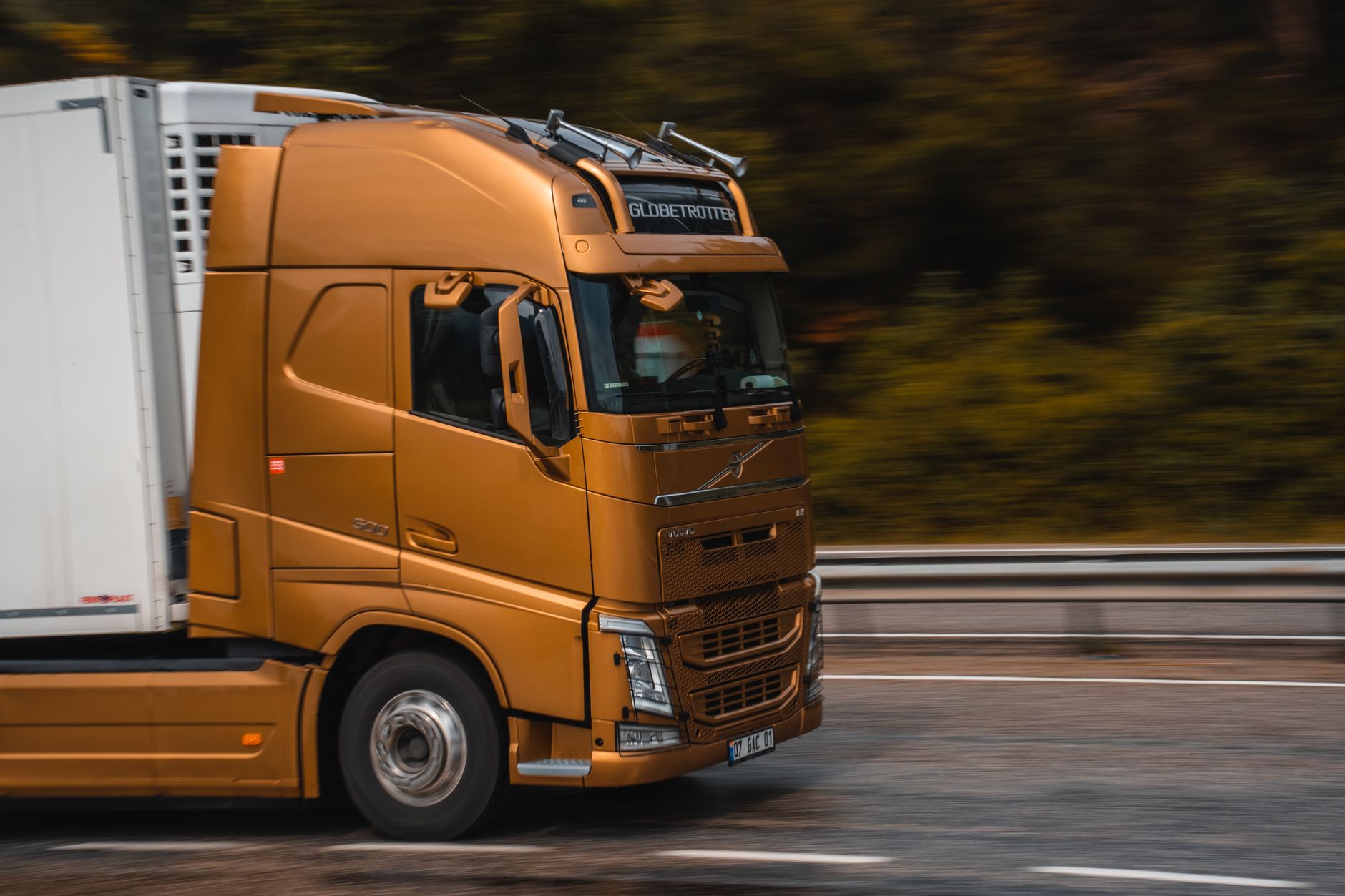
The critical insight here is understanding the 'cold chain break' isn’t always catastrophic; often, it’s a series of small deviations. Your driver, armed with an alert on their ELD, can make an immediate adjustment or request a specific action, averting a full load rejection. Many assume the reefer simply 'runs'. But what most overlook is the 'pre-cooling' protocol – the truck needs to be at target temperature for at least 90 minutes *before* loading. Skipping this step is a silent killer for shelf life, setting you up for failure even before the journey begins. To gain granular control over your refrigerated shipments and connect with carriers equipped for such precision, agricultural shippers can leverage advanced digital platforms to browse live LTL and FTL reefer loads equipped with real-time tracking, ensuring your perishables are always in expert hands.
Dynamic Routing & On-Demand Capacity: Navigating Harvest Season Volatility
Harvest season is a pressure cooker for capacity. Relying on fixed contract carriers often leaves you exposed when unexpected yield surges or localized weather events demand immediate, flexible solutions. This is where dynamic routing, powered by algorithmic optimization, and access to an elastic carrier network become indispensable tools for food waste reduction logistics.
Loadly’s algorithms, for instance, don't just find the shortest route; they optimize multi-stop routes based on traffic predictions, delivery window compliance, and even the perishability profile of individual commodities within a mixed load. This can reduce transit times by 10-15% and cut fuel costs by up to 8% for complex routes, directly extending the shelf life of goods. This is critical when dealing with diverse pick-up points across a single agricultural region, where every hour counts for fresh produce.
According to the American Trucking Associations (ATA), spot market rates for refrigerated freight can surge by 30-45% during peak agricultural seasons when capacity tightens, severely impacting shipper margins and increasing the risk of delayed pickups and spoilage — 2024.
The biggest mistake during peak harvest is relying on your 'usual' carriers for surge capacity. They're often overbooked and will prioritize their most profitable routes, leaving you scrambling. Savvy shippers use digital freight networks to access a vetted pool of surge capacity at market rates, avoiding the 30-45% premium often charged by traditional brokers for last-minute, desperate bookings. This flexibility is a non-negotiable component of a robust food waste reduction logistics strategy, allowing you to adapt on the fly without breaking the bank or sacrificing product quality.
Comparison: Traditional vs. Digital Food Logistics
| Criteria | Traditional Logistics | Advanced Digital Logistics (Loadly Example) |
|---|---|---|
| Forecasting Accuracy | Based on historical averages, often 60-70% accurate. | AI-driven, real-time integration of weather, sales, and market data; 90%+ accuracy. |
| Cold Chain Visibility | Manual checks, limited data points (pickup/delivery). | IoT sensors, continuous real-time monitoring, automated alerts, micro-interventions. |
| Capacity Flexibility | Reliance on fixed contract carriers, limited surge options, high spot rates. | Dynamic access to vast, vetted carrier network; flexible, market-rate capacity on demand. |
| Cost Per Load (Avg.) | Higher due to inefficiencies, spoilage, and reactive solutions. | Lower due to optimized routing, reduced spoilage (18-40%), and efficient capacity sourcing. |
| Waste Reduction Potential | Minimal improvement, high susceptibility to external factors. | Significant (18-40%+), proactive risk mitigation, extended shelf life. |
Key Takeaways
- Implement AI-driven predictive analytics to forecast demand and capacity, reducing spoilage by up to 40% and saving millions.
- Demand continuous, real-time cold chain monitoring with proactive alerts, cutting spoilage by an average of 18% per high-value load.
- Leverage dynamic routing and digital freight networks to secure flexible, cost-effective surge capacity during harvest seasons, avoiding 30-45% premiums.
- Prioritize strict pre-cooling protocols: ensure reefers are at target temperature 90 minutes before loading to extend critical shelf life.
- Factor in 'invisible' costs of waste like disposal fees, brand damage, and compliance fines, which can add 20-30% to direct product loss.
- Challenge your reliance on 'usual' carriers during peak times; digital marketplaces offer better, more reliable surge capacity rates.
- Proactively integrate weather forecasts into scheduling to shift pickup times, a specific action that can save entire truckloads of produce.
- Recognize that every hour of transit time for perishables directly correlates to reduced shelf life and increased spoilage risk.
Frequently Asked Questions
What is food waste reduction logistics?
Food waste reduction logistics encompasses the strategic planning and execution of supply chain operations to minimize spoilage and losses of perishable goods. This involves leveraging technology like AI forecasting, real-time cold chain monitoring, and dynamic routing to optimize transport, storage, and delivery, thereby enhancing product freshness and economic efficiency.
How much money can agricultural shippers save by reducing food waste?
Agricultural shippers can save millions annually by implementing effective food waste reduction logistics. Based on a major food distributor's case, a 40% reduction in spoilage on an $18 million fresh produce line translated to $7.2 million in annual savings. Even an 18% reduction through real-time cold chain visibility can save $1,800 per high-value reefer load.
What role does technology play in preventing food spoilage during transit?
Technology plays a crucial role in preventing food spoilage during transit by providing predictive analytics for demand and capacity, real-time IoT-based temperature and humidity monitoring, and dynamic routing optimization. These tools enable proactive interventions, efficient capacity allocation, and reduced transit times, directly preserving product integrity.
How can shippers find reliable reefer capacity during harvest season?
Shippers can find reliable reefer capacity during harvest season by utilizing digital freight marketplaces that offer access to a vast network of vetted carriers. These platforms provide dynamic, market-rate pricing and allow shippers to quickly secure surge capacity, avoiding the inflated costs and limited options often associated with traditional brokerage during peak demand.
What are common mistakes in cold chain management for perishable goods?
Common mistakes in cold chain management include neglecting pre-cooling protocols for reefers (failing to bring the trailer to temperature at least 90 minutes before loading), relying on infrequent temperature checks, lacking real-time visibility into transit conditions, and failing to account for ambient temperature fluctuations during loading/unloading. These oversights can significantly compromise product shelf life and lead to spoilage.
What is the financial impact of a rejected perishable load beyond the product cost?
Beyond the product cost, a rejected perishable load incurs significant financial impact, including specialized disposal fees (e.g., $800-$1,500), potential carrier deadhead costs ($250-$500), administrative overhead for claims, and severe damage to customer relationships. These hidden costs can easily add 20-30% to the direct product loss, eroding overall profitability.
Your 2025 Food Waste Reduction Logistics Advantage Starts Now
The $15.6 billion lost to food waste isn't an unavoidable cost of doing business; it's an opportunity. The difference between profit and loss, between market leader and laggard, often comes down to the precision of your logistics operations. Loadly's platform offers the predictive analytics, real-time visibility, and flexible capacity sourcing you need to transform your food supply chain. Stop bleeding revenue to spoilage and start building a more resilient, profitable, and sustainable operation. Take control of your perishable cargo's destiny – join Loadly and optimize your food logistics today.