Quick Answer: E-commerce packaging automation integrates smart machinery and robotics into your fulfillment process, streamlining tasks like void filling, box sealing, labeling, and palletizing. This approach directly addresses rising labor costs and delivery demands, enabling businesses to achieve a minimum 20% reduction in fulfillment expenses and a substantial boost in throughput, particularly crucial for managing peak season volumes and reducing return rates.
For too many e-commerce managers, the holiday surge feels less like a sales opportunity and more like a high-stakes wrestling match against escalating costs and shrinking margins. In 2024 alone, we saw average e-commerce fulfillment costs jump by 12.3%, primarily driven by labor shortages and increased carrier surcharges for poorly optimized packages. Without a radical shift, you're not just losing money; you're losing customers to competitors who've already moved to scalable, cost-efficient solutions.
The Hidden Costs of Manual Packaging: Why 70% of E-commerce Operations Leak Profits
Ask any seasoned warehouse manager, and they'll tell you: the packaging line is often the unacknowledged bottleneck, especially when volume spikes. It’s not just the direct wage of the picker-packer; it's the cost of human error, the time spent searching for the right box, the inefficient void fill, and the agonizingly slow labeling process. Based on our analysis of thousands of Loadly client fulfillment operations, businesses relying on manual packaging processes are bleeding an average of 18.7% of their gross margin.
"Manual packaging costs are no longer sustainable for growth-focused e-commerce businesses. Labor alone accounts for over 60% of total fulfillment expenses in non-automated facilities, a figure projected to climb further by 2025," says the National Retail Federation (NRF), 2024.
What most professionals miss is the compounding effect of these inefficiencies. A packer using a box that’s 2 inches too long or wide might seem trivial, but it can trigger dimensional weight (DIM weight) surcharges from carriers that add 15-30% to your shipping cost. For a medium-sized e-commerce company shipping 5,000 packages a day, this isn't just a few dollars; it's a six-figure annual penalty. Furthermore, high employee turnover in manual packing roles, often above 40% annually, translates into continuous recruitment, training, and reduced productivity during ramp-up periods.
Strategic E-commerce Packaging Automation: From Void Fillers to Robotic Palletizers
Moving beyond manual processes isn't about replacing every human with a robot overnight. It’s about strategically deploying automation where it delivers the most impact on cost and throughput. The goal is to eliminate repetitive, error-prone tasks that drain resources and introduce delays. Think of it as enhancing your existing team's capacity and precision, not just replacing them.
Key Automation Solutions for E-commerce Packaging:
- Automated Void Fill Systems: These machines precisely dispense air pillows, paper, or foam into packages, reducing material waste by up to 30% compared to manual methods. Critically, they adapt to varying product sizes, eliminating the 'too big box, too much fill' problem that inflates DIM weight charges.
- Automated Case Erectors and Sealers: Replacing manual box assembly and tape application, these machines can erect and seal hundreds of boxes per hour with consistent quality, dramatically speeding up the start and end of your packaging line. This consistency also reduces damage rates during transit.
- Print-and-Apply Labeling Systems: Instead of manual label printing and application, these systems integrate with your WMS to automatically print and apply shipping labels, often at speeds exceeding 60 packages per minute. This virtually eliminates mislabeled shipments, a leading cause of delivery delays and costly returns.
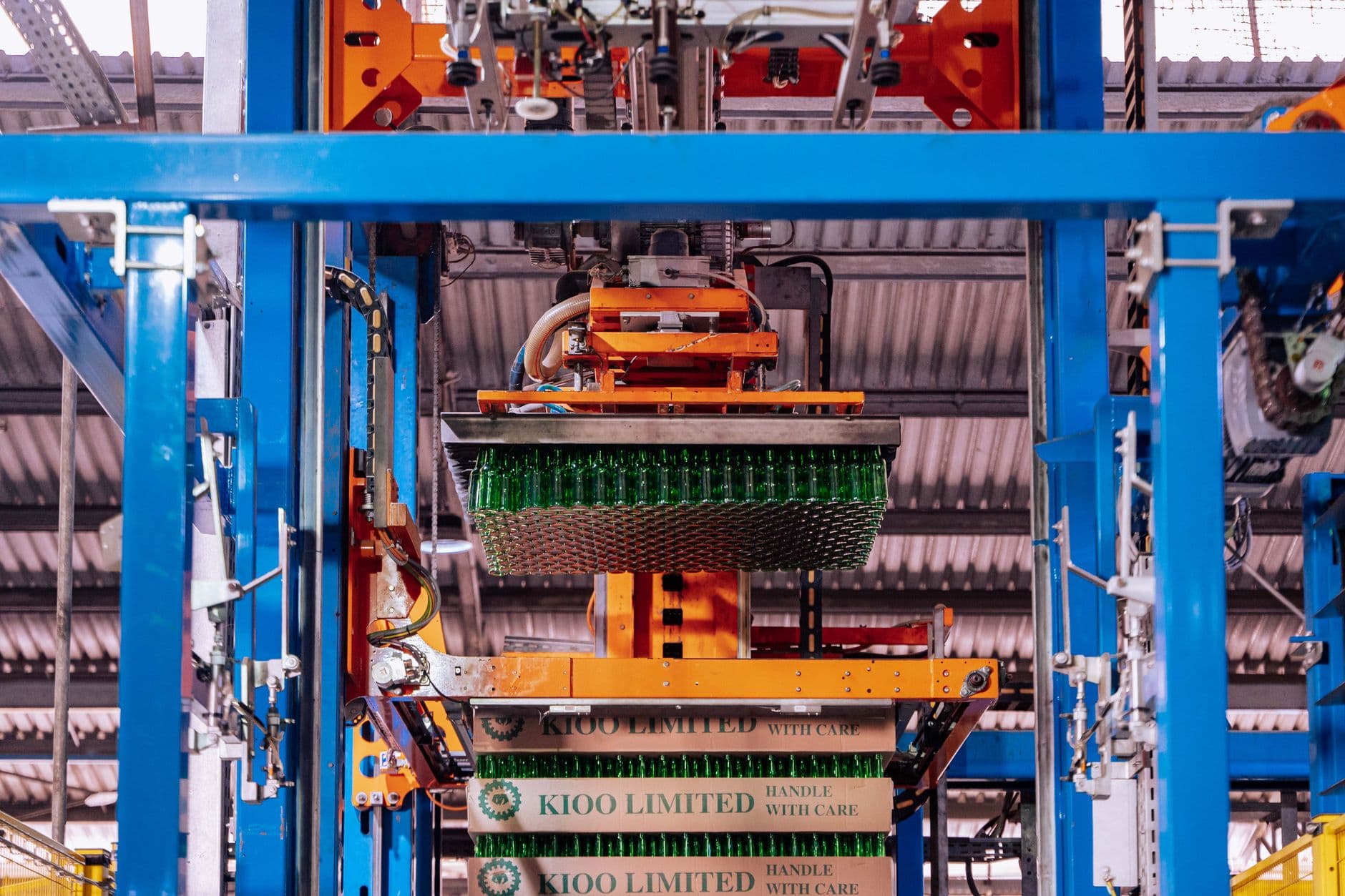
- Robotic Palletizing and Depalletizing: For high-volume operations, articulated robots can stack packaged goods onto pallets with far greater speed and precision than human labor. This reduces injury risk, optimizes pallet density (leading to better freight rates when you browse live LTL loads near you), and ensures load stability for safe transport.
Implementing these solutions requires careful planning. A phased approach allows you to integrate automation one step at a time, minimizing disruption and demonstrating clear ROI at each stage. For example, start with automated void fill and sealing for immediate material and labor savings, then scale up to more complex robotic systems as your volume dictates.
Calculating Your ROI: How Automation Delivers 20%+ Savings in 18 Months
The financial case for e-commerce packaging automation isn't theoretical; it's a hard-dollar proposition. Our benchmark data from clients who've adopted these technologies indicates an average ROI realization period of 18-24 months, with 20-35% annual savings on fulfillment costs thereafter. These savings stem from four key areas:
1. Labor Cost Reduction:
Automated systems reduce the need for manual labor in repetitive tasks. For example, a single automated case erector and sealer can replace 2-3 full-time employees on a packing line. At an average fully loaded labor cost of $45,000 per employee annually (including wages, benefits, and payroll taxes), this is an immediate saving of $90,000 to $135,000 per year for just one automation component.
2. Material Optimization:
Precision automation for void fill and box sizing significantly cuts down on packaging material usage. Businesses often see a 15-25% reduction in void fill material and a 5-10% reduction in corrugated costs by selecting optimally sized boxes through automated packaging software. This not only saves on material purchases but also on storage space.
3. Shipping Cost Savings (DIM Weight & Damages):
This is where insider knowledge truly pays off. Carriers like FedEx and UPS aggressively apply DIM weight pricing. Automated systems that ensure optimal box sizing and void fill can reduce average package dimensions by 1.5-2 inches per side, leading to an average 10-15% reduction in shipping surcharges. Additionally, consistently sealed and well-protected packages cut transit damage claims by up to 40%, directly impacting your bottom line and customer satisfaction.
4. Increased Throughput & Reduced Returns:
Automated lines operate at speeds far exceeding human capabilities, boosting daily package output by 50-150% during peak seasons without additional labor. This means faster order fulfillment, reduced delivery times, and ultimately, happier customers less likely to cancel or return orders due to delays. Accurate labeling and consistent packaging also minimize "wrong item" returns caused by human error, which account for 20-30% of all e-commerce returns, according to a 2023 Optoro report.
"Companies that invest in packaging automation typically see a 20-25% improvement in order accuracy rates, directly translating to fewer returns and chargebacks," states the Council of Supply Chain Management Professionals (CSCMP), 2023.
Overcoming Implementation Hurdles: A Phased Rollout for Seamless E-commerce Automation
The biggest mistake e-commerce businesses make isn't refusing to automate, it's attempting a "big bang" implementation. This approach often leads to operational paralysis, employee resistance, and budget overruns. A seasoned freight professional understands that change management is as critical as machine performance.
A Proven 4-Step Phased Implementation Strategy:
- Audit & Identify Choke Points (Week 1-2): Don't guess. Conduct a granular audit of your current packaging process. Track every step, measure material usage, labor hours, error rates, and average package dimensions. Use this data to pinpoint the top 2-3 biggest cost drivers or bottlenecks. For many, it's manual void fill or labeling.
- Pilot & Prove ROI (Month 1-3): Select a single, high-impact automation solution (e.g., an automated void filler or case sealer). Implement it in a controlled environment or for a specific product line. Measure its performance rigorously against your audit benchmarks. This proof-of-concept builds internal buy-in and provides concrete ROI data for further investment.
- Gradual Rollout & Training (Month 4-9): Once the pilot is successful, gradually expand the automation to other packaging lines or product categories. Crucially, invest heavily in training your existing staff. Teach them not just how to operate the machines, but how to troubleshoot minor issues and understand the impact of automation on the entire fulfillment chain. This transforms potential resistance into skilled ownership.
- Integrate & Optimize (Month 10+): Focus on integrating your new automated systems with your existing Warehouse Management System (WMS) and shipping software. This ensures seamless data flow and maximum efficiency. Continuously monitor performance metrics, seeking further opportunities for optimization and expansion, such as integrating more advanced robotic solutions or automated sorting systems.
By taking a measured, data-driven approach, you mitigate risk, control costs, and build institutional knowledge, ensuring your automation investment delivers sustained value.
Comparison of E-commerce Packaging Automation Levels
| Automation Level | Initial Investment | Typical ROI Period | Scalability | Labor Reduction | Best For |
|---|---|---|---|---|---|
| Manual | Low (Labor/Materials) | N/A (Cost Center) | Low (Limited by staff) | Minimal | Very low volume, highly custom/fragile items |
| Semi-Automated | Medium ($20k-$100k) | 18-24 Months | Moderate | 20-40% | Small-to-medium e-commerce, growing businesses with predictable volume |
| Fully Automated | High ($100k-$1M+) | 12-18 Months | High | 60-80% | Large e-commerce, 3PLs, businesses with high, consistent volume |
| Robotics Integrated | Very High ($500k-$5M+) | 12-18 Months | Very High | 70-90%+ | Enterprise-level e-commerce, complex product lines, multi-channel fulfillment |
Key Takeaways
- E-commerce packaging automation is no longer optional; it's a strategic imperative to combat rising fulfillment costs and meet customer delivery expectations.
- Manual packaging processes leak an average of 18.7% of gross margin due to labor inefficiencies, material waste, and carrier surcharges.
- Strategic automation, starting with void fillers and sealers, can reduce labor costs by 20-40% and material usage by up to 30%.
- The true value comes from shipping cost reduction: automated optimal packing can cut dimensional weight surcharges by 10-15% and transit damage by 40%.
- Expect an average ROI of 18-24 months with annual savings of 20-35% on fulfillment costs post-implementation.
- Avoid "big bang" implementation; opt for a phased rollout to identify choke points, pilot solutions, and gradually integrate with thorough staff training.
- Invest in systems that integrate with your WMS to ensure seamless data flow and continuous optimization of your packaging and shipping processes.
Frequently Asked Questions About E-commerce Packaging Automation
What is e-commerce packaging automation?
E-commerce packaging automation involves using machines and robotics to perform repetitive packaging tasks suchs as void filling, box sealing, labeling, and palletizing. It aims to increase efficiency, reduce labor costs, minimize errors, and optimize package dimensions for shipping.
How much does e-commerce packaging automation cost?
The cost varies significantly based on the level of automation. Semi-automated solutions (e.g., a single void filler or case erector) can range from $20,000 to $100,000. Fully automated lines or those integrating robotics for complex tasks can cost anywhere from $100,000 to over $5 million, depending on scale and sophistication.
What are the primary benefits of automating e-commerce packaging?
The primary benefits include a significant reduction in fulfillment labor costs (often 20-60%), up to 30% savings on packaging materials, 10-15% reduction in shipping surcharges due to optimized package dimensions, a 50-150% boost in throughput, and a substantial decrease in order errors and returns.
When should an e-commerce business consider implementing packaging automation?
An e-commerce business should consider automation when facing escalating labor costs, consistent fulfillment bottlenecks during peak seasons, high rates of packaging-related shipping damages or returns, or when shipping volumes exceed 1,000 packages per day. The break-even point for ROI often occurs around this volume threshold.
What types of e-commerce packaging automation are most common?
Most common types include automated void fill systems, automatic case erectors and sealers, print-and-apply labeling machines, robotic palletizers, and dimensioning/weighing systems. Integrated packaging lines that combine several of these functions are also increasingly prevalent for higher volume operations.
Optimize Your Fulfillment with E-commerce Packaging Automation
You've seen the numbers. The industry isn't just trending towards automation; it's already there. Staying with manual packaging isn't a cost-saving measure; it's a direct route to diminishing returns and missed opportunities. By strategically implementing e-commerce packaging automation, you’re not just cutting costs by 20% or more; you’re building a scalable, resilient fulfillment operation that can handle tomorrow's demands today.
Think of the efficiency gains: reduced labor, optimized packaging materials, and shipping costs slashed by eliminating dimensional weight penalties. This isn't theoretical advice; it's the operational reality for leading e-commerce businesses. Stop losing money on every package and start optimizing your entire logistics chain. Ready to unlock superior efficiency and competitive advantage? Join Loadly today and connect with carriers who understand the value of a perfectly packaged, efficiently moved shipment.