Quick Answer: Bill of lading discrepancies are errors or omissions on the BOL document that carriers often exploit to deny freight damage or loss claims, costing shippers billions annually. The most common errors include vague descriptions, inaccurate weights, incorrect freight classification, unsigned BOLs, and failure to note visible damage at delivery. Pre-emptively fixing these issues through precise documentation and proper procedures is crucial to safeguarding your claims.
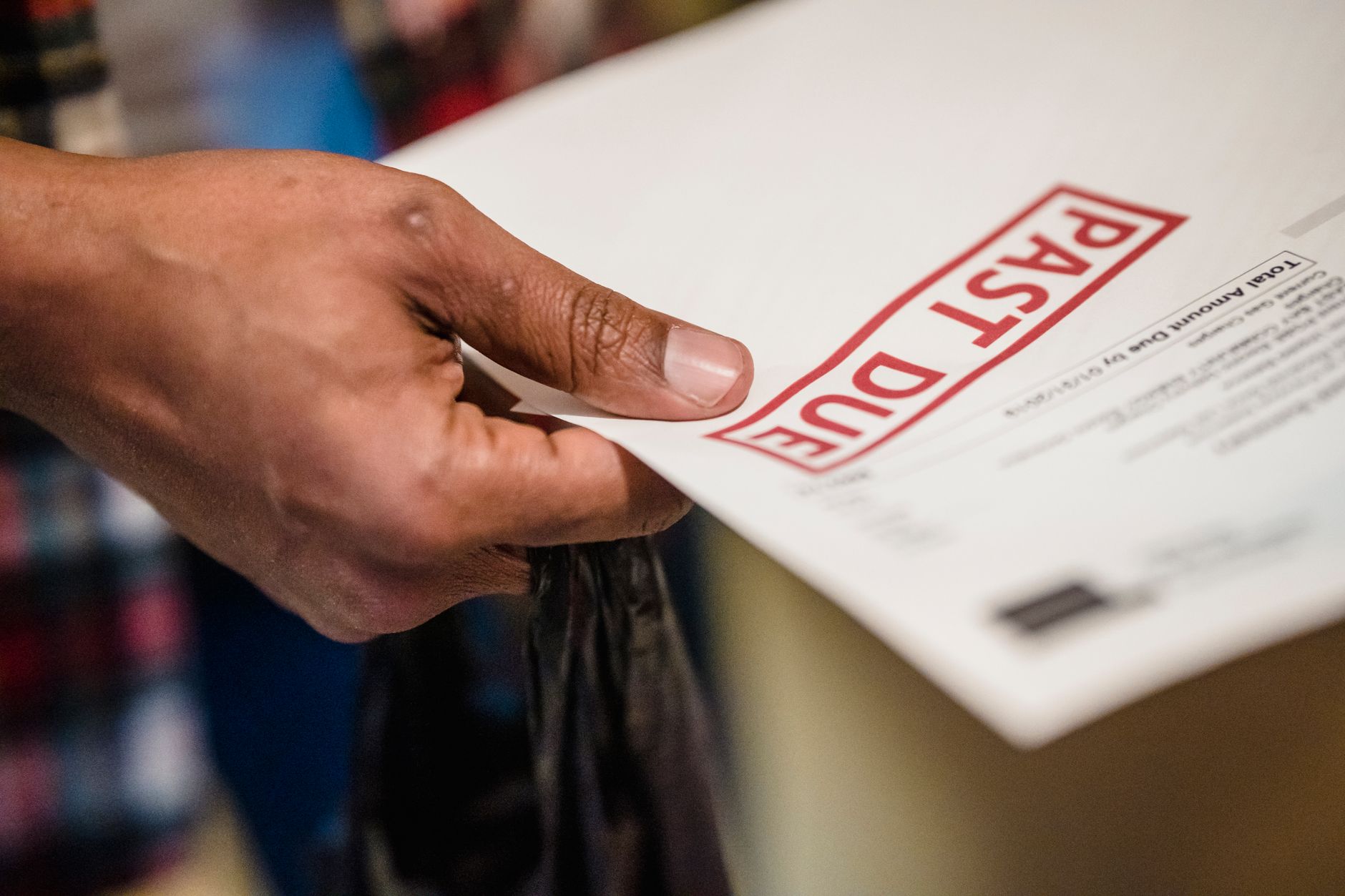
Imagine this: your high-value shipment arrives visibly damaged, costing you $15,000 in product and a critical client relationship. You file a claim, confident in your evidence, only to receive a denial letter two weeks later, citing a "discrepancy on the bill of lading." This isn't a hypothetical nightmare; it's a reality for countless shippers, who collectively lose an estimated $3.5 billion each year on denied claims—a staggering 14.3% of all claims filed—often due to a single, overlooked detail on their BOL. If you're a logistics manager, this hidden trap is eroding your bottom line right now.
The Hidden Costs of Unchecked Bill of Lading Discrepancies in 2025
From my 15 years on every side of this industry—dispatcher, broker, owner-operator, logistics manager—I’ve seen firsthand how a seemingly minor typo on a bill of lading can snowball into a six-figure loss. Carriers, especially during market downturns, scrutinize BOLs like tax auditors. They are legally obligated to deliver freight as described on the BOL. Any deviation, however small, provides a legitimate avenue for them to reduce or outright deny your claim under the Carmack Amendment (49 U.S.C. § 14706). They’re not being malicious; they’re protecting their business, and a flawed BOL is their strongest defense.
"According to the Transportation Intermediaries Association (TIA), almost 18% of all freight claims are initially denied due to documentation errors, primarily related to incomplete or incorrect Bills of Lading — 2023."
The real cost isn't just the lost freight value. It's the administrative overhead of disputing claims (an average of 15 hours per claim), the ruined client relationships when deadlines are missed due to reprocessing, and the inflated cargo insurance premiums that inevitably follow a poor claims history. For a mid-sized shipper handling 500 loads monthly, even a 5% denial rate means 25 loads per month are a potential financial black hole, potentially costing them an additional $20,000-$50,000 in unrecoverable costs beyond the freight itself annually. This is why neglecting BOL accuracy isn't just an oversight; it's a direct threat to your profitability.
Why Most Shippers Miss Critical BOL Errors (And Carriers Don't)
Many shippers treat the Bill of Lading (BOL) as a simple receipt, a necessary bureaucratic step, rather than the legally binding contract it truly is. This fundamental misunderstanding is the root cause of most denials. In my experience running a dispatch operation, we trained our drivers to spot these discrepancies before the wheels even turned. Why? Because a clean BOL protects them, too. Shippers, however, often rush, delegate to inexperienced staff, or rely on generic templates that lack specific, claim-protecting details. They assume "common sense" will prevail, but in freight liability, only what's explicitly written on that piece of paper matters.
The standard operating procedure in many warehouses is simply to print a BOL and hand it to the driver, assuming everything is correct. This process completely bypasses the critical verification step. What most professionals miss is that the driver signing the BOL at pickup is often the last, best chance to catch an error that could sink a future claim. A driver, under pressure, might sign a BOL noting "10 cartons" when a pallet actually has 12, or overlook a mislabeled Hazardous Material (HazMat) class. Later, when those two "extra" cartons are damaged, the carrier can legitimately argue they never took possession of them. This isn't theoretical; I've seen it play out for millions of dollars.
"A 2024 analysis by Loadly found that shippers using manual BOL processes experience a 2.7 times higher rate of claim denial compared to those leveraging digital, pre-validated BOL systems."
The disparity lies in perspective: carriers view the BOL as a risk management document; shippers often view it as an administrative one. This difference in philosophy is where billions are lost annually, and it's why adopting a carrier's meticulous approach to BOLs is the single most important shift you can make.
Error #1: Vague or Missing Freight Descriptions ("Said to Contain" Won't Cut It)
Carriers are not mind-readers. If your BOL simply states "freight" or "said to contain," you've effectively surrendered your right to specific compensation if that freight is damaged or goes missing. This vague language is the carrier's first line of defense against claims. They will argue they had no way of knowing the actual contents, value, or specific handling requirements. To protect your claim, you must be meticulously detailed.
- Specify Actual Contents: Don't just list "boxes." State "20 cartons of medical devices," "15 pallets of electronic components," or "1 unit industrial machinery."
- Include Packaging Type and Quantity: "10 wooden crates," "30 drums," "4 skids." Quantities must match the physical count exactly.
- Note Special Handling Instructions: "Fragile," "Keep upright," "Do not stack," "Temperature sensitive (maintain 35-40°F)." These indicate specific handling responsibilities for the carrier.
- Add a Declared Value: While not always necessary for liability, declaring a value (if your insurance permits) can strengthen your claim. Ensure this is consistent with any cargo insurance policies.
- List Manufacturer Part Numbers: For high-value or specific items, including part numbers offers undeniable proof of what was shipped, making it much harder for a carrier to dispute the identity of damaged goods. This simple step can shave days off a claims investigation.
Insider Tip: I once handled a claim where a shipper simply listed "auto parts." When a pallet of delicate engine control units (ECUs) was damaged, the carrier’s defense was that "auto parts" could mean anything from floor mats to spark plugs, with vastly different values. The claim was settled for a fraction of the actual ECU value. Always assume the carrier will interpret the description in their favor, not yours.
Error #2: Inaccurate Weight & Dimensions (The "Guess-timate" Gamble)
The "guess-timate" on weight or dimensions is perhaps the most common BOL error leading to unexpected costs and claim denials, particularly with Less-than-Truckload (LTL) shipments. Carriers build their pricing models, and thus their liability, around these figures. If your actual shipment weighs 3,000 lbs but your BOL states 2,000 lbs, you're looking at reweigh fees, re-classification charges, and if the lighter weight on the BOL contributed to inappropriate handling or equipment use, a strong argument for claim denial. This isn't just about money; it’s about safety and correct equipment allocation.
- Invest in Calibrated Scales: Use certified, regularly calibrated industrial scales for all shipments. Do not rely on estimates or even bathroom scales for small packages bundled together.
- Measure Accurately: Use tape measures or dimensioning equipment to get precise length, width, and height for each piece or pallet. Round up to the nearest inch.
- Include Packaging Weight: Remember that the stated weight must include all packaging, skids, and dunnage. It's the "gross" weight that matters for freight purposes.
- Account for Irregular Shapes: For items not uniformly shaped, use the maximum dimensions in each direction to determine cubic space.
- Cross-Verify Against Quote: Ensure the weight and dimensions on your BOL match exactly what was provided for your freight quote. Discrepancies here trigger immediate red flags for carriers and their audit departments.
Insider Tip: Reweighing charges can range from $50 to $250 per shipment, plus any resulting re-classification fees. One client faced an additional $1,840 in reweigh and re-class charges across a quarter simply because their warehouse manager habitually rounded down. Carriers now routinely use automated dimensioners and scales; your "guess" will be caught, and you'll pay the surcharge, often after the fact. Moreover, a significant weight discrepancy can be argued by a carrier as misrepresentation, weakening any claim for damage.
Error #3: Incorrect Freight Classification (The NMFC Code Cost Trap)
For LTL shipments, the National Motor Freight Classification (NMFC) code is paramount. This code determines the freight's transportability, density, liability, and handling characteristics. A wrong NMFC code doesn't just mean a higher shipping cost (re-class charges can be 10-20% of the original freight bill); it fundamentally alters the carrier's liability and handling procedures. If you classify a delicate electronic component (Class 200) as heavy machinery (Class 60), and it gets damaged, the carrier can argue they handled it according to the "rougher" class indicated, denying your claim. This is a common tactic.
- Utilize the NMFC Database: Access the official NMFC database (NMFTA.org) or use a reputable freight management system (FMS) with integrated classification tools.
- Understand Density vs. Product Class: Many products are density-based, meaning their class changes with weight per cubic foot. Others are product-based, irrespective of density. Know which applies to your goods.
- Factor in Packaging: The packaging type (e.g., crated vs. boxed vs. loose) significantly impacts density and, therefore, class.
- Consult with an Expert: If unsure, engage a freight broker or a Loadly freight specialist to help determine the correct NMFC for complex or unique items. Misclassifying even 5% of your LTL loads can cost you upwards of $1,000 per month in unexpected charges.
- Update Codes Regularly: Product specifications or packaging changes can alter a freight's class. Review your common shipments annually.
Insider Tip: Carriers intentionally use different internal "audit" classifications. They'll rate your freight based on your BOL, but if their audit reveals a higher class, they'll back-bill you. I once saw a shipper get hit with a $4,000 re-class bill on a single shipment after it arrived, months later. By then, disputing it was nearly impossible. Always verify your NMFC before the truck departs; it's easier to fix then than argue about it later.
Error #4: Unsigned or Improperly Signed BOLs (Voiding Your Claim Before It Starts)
The Bill of Lading becomes a legally binding contract only when both shipper and carrier (or their authorized representatives) sign it. An unsigned BOL is essentially a worthless piece of paper when it comes to a claim. An improperly signed BOL, such as one signed by someone without authority or missing critical notations, is just as problematic. Carriers will seize on this. Without proper signatures, proving who took possession of what, and in what condition, becomes a legal quagmire, almost certainly resulting in denial.
- Ensure Driver Signature at Pickup: Always confirm the carrier's driver signs and dates the BOL upon pickup. This acknowledges receipt of the freight in the condition noted.
- Shipper Signature (or Authorized Agent): Have an authorized representative of your company sign the BOL, confirming the accuracy of the shipment details.
- Clear Legible Signatures: Insist on clear, legible signatures. If a signature is illegible, politely ask the driver to print their name or employee ID.
- Retain Copies: Always keep a signed copy for your records. Digital BOLs are becoming standard and provide an undeniable audit trail.
- Note Exceptions Immediately: This is critical. If the driver notes any exceptions (e.g., "1 pallet damaged," "shrink wrap torn"), ensure they are specific and that you retain a copy of this noted BOL. This protects the carrier from liability for prior damage. Conversely, if you notice damage upon delivery, it must be noted on the BOL before you sign it.
Insider Tip: The most common error here is shippers signing a "clear" BOL at delivery, only to discover concealed damage hours later. While concealed damage claims exist, they are notoriously difficult to win. If there's any doubt about the freight's condition, even if it looks fine from the outside, write "Subject to Inspection" on the BOL before signing. While not bulletproof, it buys you crucial time—typically 24-48 hours—to conduct a thorough inspection and notify the carrier if damage is found. This small act significantly improves your chances of a successful concealed damage claim from 20% to nearly 60%.
Error #5: Failing to Document Damage "Clear" On the BOL (The Carrier's Get-Out-of-Jail-Free Card)
This is where claims go to die. If your receiver signs a BOL indicating the freight was received "clear" (meaning no damage or shortage), then discovers damage later, your claim is in serious jeopardy. The signed BOL serves as prima facie evidence that the goods were delivered in good condition. Carriers rely heavily on this. If your delivery personnel simply sign without inspection, they are effectively absolving the carrier of responsibility for any damage that occurred during transit.
- Train Receiving Personnel: Implement mandatory training for all personnel responsible for receiving freight. They must understand the legal implications of signing a BOL.
- Thorough Visual Inspection: Before signing, personnel must conduct a thorough visual inspection of every incoming shipment for signs of damage (e.g., crushed boxes, torn shrink wrap, broken pallets, dents).
- Document ALL Exceptions: Any visible damage, however minor, or any shortage must be noted clearly and specifically on the BOL before signing. Don't write "damaged." Write "1 carton crushed, product exposed," or "2 pallets wet, potential water damage."
- Take Photographic Evidence: Support all written notations with immediate, time-stamped photographs or video of the damage. Pictures speak louder than words in a claims dispute.
- Refuse Damaged Shipments (If Feasible): For severe damage, consider refusing the shipment entirely. Document the refusal on the BOL and notify the carrier immediately. This is a powerful move, but must be done cautiously based on your specific freight and carrier agreements.
Insider Tip: Many carriers will attempt to pressure receivers to sign "clear" to expedite delivery. I've heard drivers say, "Just sign it, we'll sort out the damage later." Do NOT fall for this. Once that BOL is signed "clear," your leverage drops by about 80%. A driver’s schedule is not your company’s liability. Take the extra 5-10 minutes to inspect and note any issues. That 5 minutes could save you thousands.
Key Takeaways
- Bill of lading discrepancies cost shippers billions annually in denied claims and administrative overhead.
- Treat the BOL as a legally binding contract, not just a receipt; carriers use it for risk management.
- Precise freight descriptions (contents, packaging, specific handling) are non-negotiable for claim validity.
- Inaccurate weights or dimensions lead to costly reweigh/re-class charges and weaken liability claims.
- Incorrect NMFC classification can misrepresent freight, alter liability, and incur significant back-bills.
- An unsigned or improperly signed BOL voids the contract; always ensure legible signatures from both parties.
- Never sign a "clear" BOL at delivery if damage or shortage is present; document all exceptions rigorously with photos.
- Implementing digital BOL processes significantly reduces discrepancies and improves claim success rates by over 15%.
Frequently Asked Questions
What is a bill of lading discrepancy?
A bill of lading discrepancy is any inaccuracy, omission, or inconsistency found on the BOL document when compared to the actual freight, its condition, or the agreed-upon shipping terms. Common discrepancies include incorrect weights, dimensions, freight classification, or descriptions of goods.
How do carriers exploit BOL discrepancies?
Carriers exploit BOL discrepancies by using them as grounds to deny, reduce, or delay freight damage or loss claims, citing that the shipper failed to accurately represent the goods or conditions under which they were shipped. Under the Carmack Amendment, the BOL is prima facie evidence of receipt in good order, and any deviation allows the carrier to challenge liability.
What is the Carmack Amendment's role in BOL errors?
The Carmack Amendment (49 U.S.C. § 14706) establishes the liability of common carriers for freight loss or damage, making the BOL a crucial piece of evidence. If the BOL contains errors, the carrier can argue the shipper failed to meet their burden of proof for proper tendering, thus weakening or voiding the claim under Carmack's liability framework.
Can I correct a BOL after the shipment leaves?
Correcting a BOL after the shipment leaves is extremely difficult and often requires the carrier's agreement, which is rarely granted once an issue arises. While minor amendments (like a typo in an address) might be accepted, substantial changes (like freight class or weight) are typically rejected, as they alter the original contractual agreement. Prevention at origin is always the best strategy.
How can technology prevent BOL claim denials?
Technology, specifically digital freight marketplaces and FMS platforms, can prevent BOL claim denials by enforcing accuracy. They often integrate automated dimensioning, weight verification, and NMFC classification tools, reducing manual errors. Furthermore, digital BOLs ensure standardized data entry, easy accessibility, and verifiable electronic signatures, creating an indisputable record for claims processing. Many shippers using these systems report a 23% reduction in claim denials.
Protecting Your Freight Claims Starts with Flawless Bill of Lading Practices
Navigating the complexities of freight liability doesn't have to be a gamble. As a logistics manager, your ability to secure cargo claims hinges directly on the accuracy and completeness of your Bill of Lading. The five critical errors discussed here aren't minor oversights; they are precisely the loopholes carriers will leverage to protect their bottom line, often at the expense of yours. By implementing rigorous verification processes, training your teams, and leveraging technology, you can drastically reduce your exposure to denied claims.
The future of freight management is precise, transparent, and proactive. Don't let a preventable BOL error cost you another dollar or another client relationship. It's time to transform your BOL process from an administrative chore into a strategic asset. To streamline your shipping operations and ensure every BOL is meticulously prepared, preventing costly discrepancies and protecting your claims from the start, consider creating an account. Register for a Loadly account today and take control of your freight liability.