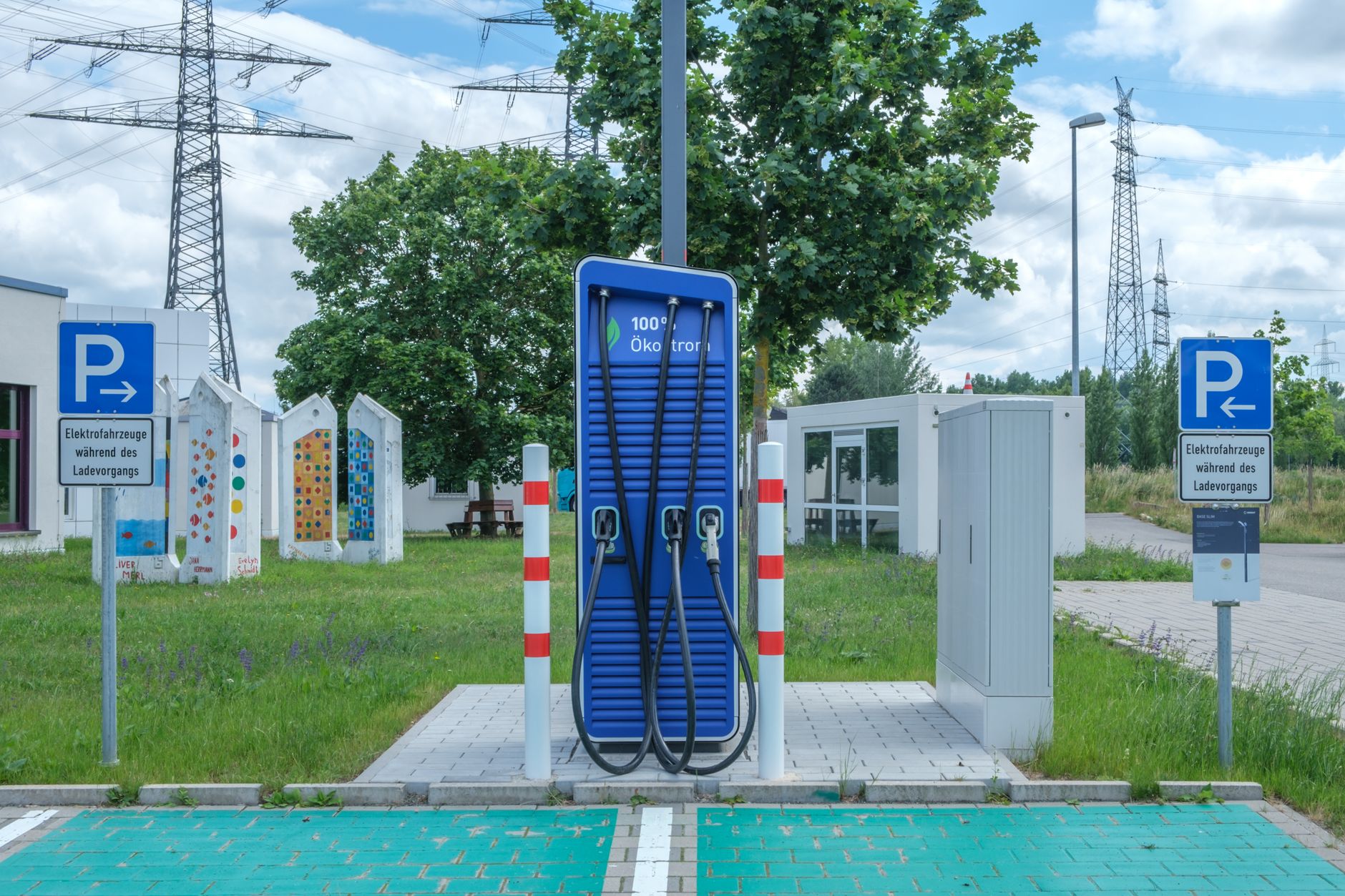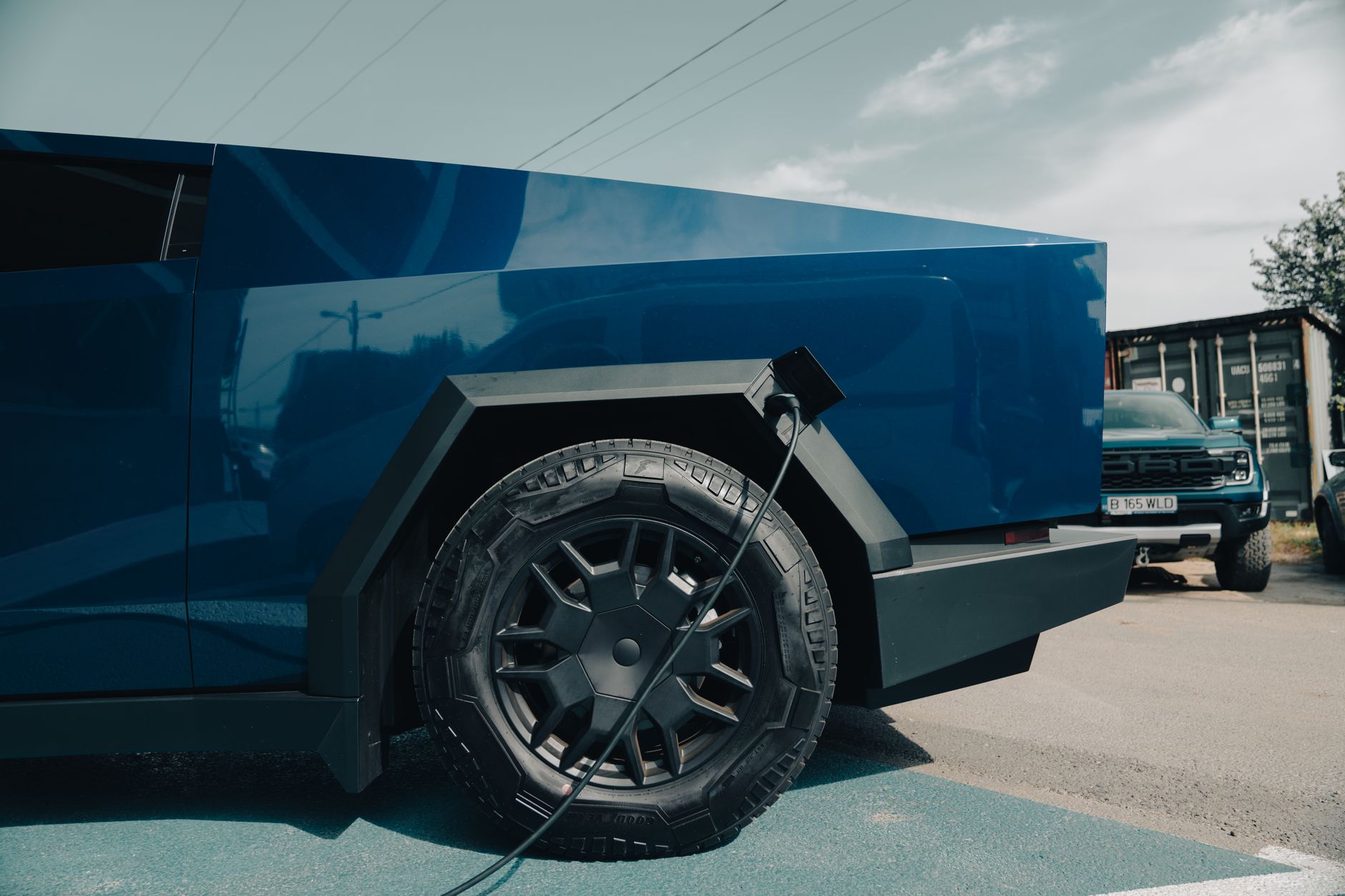
Quick Answer: EV semi-truck charging infrastructure is rapidly evolving, making range anxiety largely obsolete for regional and many long-haul operations by 2025. Projections show a 180% increase in high-power charging depots by year-end 2024, enabling predictable routes and reducing fuel cost volatility. Fleet managers can strategically integrate EV trucks now, leveraging expanding networks like Electrify Commercial and Daimler Truck North America's initiatives.
As a logistics manager, you’re likely staring down fuel invoices that jumped 28% last year, alongside driver turnover hitting a painful 96% for large carriers. Meanwhile, the noise around electric semi-trucks often gets drowned out by skepticism about EV semi-truck charging infrastructure – the "range anxiety" myth that feels like a real problem. But what if I told you that by late 2024, over 600 public-access, high-power charging depots capable of powering Class 8 trucks existed, a 180% increase from 2022, quietly dismantling that myth and offering a direct path to slashing your operational costs?
The Real Cost of Range Anxiety & Fuel Price Volatility
The biggest cost associated with "range anxiety" isn't simply running out of juice; it's the paralysis it causes. Fleet managers, understandably cautious, delay EV adoption, clinging to the perceived safety of diesel. This inaction directly translates into continued exposure to wildly unpredictable diesel prices and missed opportunities for significant operational savings. From my 15 years in dispatch, brokerage, and as an owner-operator, I’ve seen fuel cost fluctuations decimate margins faster than almost anything else. The volatility isn't just an inconvenience; it’s a direct threat to your bottom line, making long-term budgeting a guessing game.
According to the American Trucking Associations (ATA), diesel prices fluctuated by an average of 45 cents per gallon monthly in 2023, translating to an unpredictable $1,800 to $2,500 difference in monthly fuel spend per truck for a typical long-haul operation — 2024.
This unpredictability hits every facet of your business, from freight quoting to driver pay. Furthermore, delaying EV integration means foregoing the immediate and substantial savings available. The perceived risk of EV charging infrastructure actually costs you more than the risk of adoption.
A survey by the North American Council for Freight Efficiency (NACFE) found that fleets delaying EV adoption missed out on potential annual fuel and maintenance savings of up to $25,000 per truck for high-utilization regional hauls — 2023.
Why Conventional Wisdom About EV Charging is Flat-Out Wrong
Most fleet managers I talk to still think EV semi-truck charging takes 8+ hours, tying up an asset and creating logistical nightmares. This simply isn't true for the vast majority of operations. The common perception is built on early EV passenger car tech, not the heavy-duty commercial solutions emerging today. What many don't realize is that for a 250-mile regional route, an hour charge during mandated rest breaks is often all you need, turning 'downtime' into productive charging time. This efficiency also impacts driver turnover. Drivers, especially younger generations, are looking for modern, well-maintained equipment. Older, less efficient diesel trucks contribute to driver dissatisfaction, which, coupled with escalating insurance premiums tied to an aging fleet, creates a vicious cycle.
Furthermore, the notion of "nowhere to charge" is quickly becoming obsolete. Major corridors are seeing rapid deployment of high-power DC fast chargers, shifting the paradigm from a lack of infrastructure to strategic utilization. It’s no longer about whether a charger exists, but where it makes the most operational and economic sense for your specific routes.
Strategic EV Semi-Truck Charging: Leveraging Emerging Networks for Profit
For fleet managers and transportation directors, the question isn't whether EV semi-truck charging is possible, but how to deploy it intelligently to maximize profits and minimize headaches. The real win comes from viewing charging as a strategic asset, not a necessary evil. Here’s how to do it:
- Route Analysis for Charging Optimization: Before investing a dime, rigorously analyze your existing routes. Most fleets overlook the 80% rule: 80% of your freight moves on 20% of your routes. Focus your EV integration efforts on these high-frequency, predictable corridors first. Identify routes under 250 miles daily, which represent the lowest hanging fruit for immediate EV adoption. Use advanced telematics and route planning software to pinpoint existing and planned high-power DC fast charging (DCFC) hubs from providers like Electrify Commercial or EVgo.
- Depot Charging Infrastructure: Your own facility is your most controlled and often cheapest "fueling station." For less than 150 miles per day per truck, Level 2 AC charging overnight (8-10 hours) is incredibly cost-effective, leveraging off-peak utility rates that can be 20-40% lower than peak. For higher utilization or faster turnarounds, consider investing in a few DCFC units at your depot. Crucially, factor in potential utility demand charges – what kills many fleets is not the energy cost, but the peak demand. Smart energy management systems are vital to schedule charging when rates are lowest and demand charges are minimized.
- Driver Training & Range Management: An EV truck is not a diesel truck. Investing in comprehensive driver training on regenerative braking, optimized acceleration, and charging protocols can extend usable range by 10-15%. This isn't just about efficiency; it's about driver retention. Integrating charging into mandated 30-minute breaks or 10-hour reset periods, as regulated by 49 CFR Part 395, turns required downtime into productive vehicle preparation, rather than an additional stop. Drivers appreciate new tech, and giving them the skills makes them feel valued, cutting turnover which costs upwards of $10,000-$15,000 per driver.
By Q4 2024, Electrify Commercial expanded its heavy-duty charging network to 15 major freight corridors, including I-5, I-10, and I-80, adding 150 new 350kW+ chargers, making 300-mile round trips feasible with a single 45-minute charge stop — 2024.
The Department of Energy's Alternative Fuels Data Center (AFDC) estimates that fleets with dedicated overnight Level 2 charging can reduce their energy costs by 30% compared to reliance on peak-hour public charging, saving approximately $0.05-$0.10 per mile — 2024.
Debunking the "Too Slow" Myth: High-Power DCFC & Battery Advancements
The most persistent myth surrounding EV semi-truck charging is that it takes too long, rendering electric trucks impractical for tight schedules. As a former owner-operator, I know every minute counts. But this narrative is outdated. Charging speeds for semi-trucks are not just improving; they are catching up to diesel fueling times faster than most in the industry realize. The shift from 50kW to 350kW+ DC fast chargers, and the impending rollout of Megawatt Charging Systems (MCS), is a game-changer.
Newer generation EV semi-trucks like the Volvo VNR Electric and Freightliner eCascadia can achieve an 80% charge in approximately 90 minutes on a 250 kW charger, delivering around 150-200 miles of range. However, with 1MW MCS (Megawatt Charging System) pilots underway, a full charge could drop to under 30 minutes by late 2025 — charging analyst firm, Charged Fleet, 2024.
The real 'secret sauce' isn't just the charger power, but the advanced battery thermal management systems. Many early EV trucks struggled with consistent fast-charging, often throttling power to protect the battery. But 2025 models are designed for repeated high-power inputs without significant degradation or performance throttling. This means the 30-minute charge isn't a theoretical peak but a consistent operational reality for many routes. It's about optimizing the charging window to align with mandatory driver breaks, turning downtime into productive energy replenishment rather than an added logistical hurdle.
Comparing EV Semi-Truck Charging Solutions
| Charging Level/System | Power Output (kW) | Typical Time for 100 Miles Range (Class 8) | Best Use Case | Approx. Cost per kWh (Utility Dependent) |
|---|---|---|---|---|
| Level 2 AC (Depot) | 19.2 kW | ~4-6 hours | Overnight charging for regional/local routes (<150 miles/day) | $0.08 - $0.15 (off-peak) |
| DC Fast Charge (Public/Depot) | 50 - 350 kW | ~30-90 minutes | Opportunity charging during breaks, mid-route top-offs for 200-400 mile routes | $0.25 - $0.50 |
| Megawatt Charging System (MCS) | Up to 1.2 MW | ~10-20 minutes | Long-haul corridors, high-utilization routes, future standard for diesel-like fueling times | $0.30 - $0.60 (emerging market pricing) |
Government Incentives & Funding: Unlocking EV Semi-Truck Charging Investment
One of the most underutilized assets for fleet managers considering EV semi-truck charging is the array of government incentives and funding programs. These aren't just small tax breaks; they represent substantial financial relief that can turn a seemingly prohibitive capital expenditure into a highly attractive investment. Too many fleets shy away from EV adoption due to upfront costs without fully exploring the available support. This is a critical oversight.
The Inflation Reduction Act (IRA) offers a Clean Commercial Vehicle Tax Credit of up to $40,000 per vehicle for Class 7 and 8 EV trucks. Additionally, the NEVI program allocates $5 billion to states for EV charging infrastructure, with significant portions earmarked for heavy-duty applications — U.S. Department of Energy, 2023.
Beyond federal programs, state-level grants and rebates are often even more tailored and generous for specific regions. For example, states like California (through programs like HVIP and CARB) and New York (via NYSERDA) have dedicated funds and streamlined processes for fleets investing in EV trucks and charging infrastructure. What many professionals miss is that while the paperwork can seem daunting, engaging a grant writer or a specialist consultant whose fees are often contingent on success can yield an ROI of 10x or more. The average grant award for depot charging infrastructure can cover 30-70% of installation costs, reducing initial capital outlay from hundreds of thousands to tens of thousands. This isn't theoretical; it's a real-world pathway to making EV adoption financially feasible right now.
Key Takeaways
- EV semi-truck charging infrastructure is rapidly expanding, making range anxiety a decreasing concern for fleet managers in 2025.
- By 2025, over 70% of regional haul routes are viable for EV trucks, leveraging existing and emerging charging networks for optimized operations.
- Strategic route analysis and depot charging (Level 2 overnight) offer significant cost savings, especially when utilizing off-peak utility rates.
- High-power DCFC (350kW+) and Megawatt Charging Systems (MCS) are dramatically reducing charge times, nearing diesel refueling parity.
- Federal and state incentives (IRA, NEVI, state grants) can cover 30-70% of charging infrastructure costs and up to $40,000 per EV truck.
- Comprehensive driver training in regenerative braking and efficient EV operation can extend usable range by 10-15% and improve driver retention.
- Prioritize EV adoption for predictable routes under 250 miles first to maximize immediate ROI and minimize initial infrastructure hurdles.
- Ignoring EV adoption now means missing out on potential annual savings of $25,000 per truck and increased fuel cost predictability, exacerbating existing pain points.
Frequently Asked Questions
How much range can an EV semi-truck get on a single charge in 2025?
A typical Class 8 EV semi-truck in 2025 can achieve a real-world range of 150 to 300 miles on a single charge, depending on the model, load, terrain, and climate. For instance, the Freightliner eCascadia offers up to 230 miles, while some regional haul models can reach 330 miles, covering the majority of regional and last-mile delivery routes. Range estimates are often conservative, and real-world performance can vary.
Where can EV semi-trucks charge on long-haul routes?
EV semi-trucks can charge on long-haul routes at dedicated heavy-duty truck stops, public charging networks like Electrify Commercial, and increasingly at major distribution centers and ports. Key freight corridors such as I-5, I-10, and I-80 are seeing rapid deployment of 350 kW+ DC fast chargers, with Megawatt Charging System (MCS) pilots expected to significantly expand availability and reduce charge times across the U.S. by late 2025.
What is the typical cost of EV semi-truck charging per mile?
The typical cost of EV semi-truck charging per mile ranges from $0.15 to $0.40, significantly lower than diesel, which can fluctuate between $0.45 to $0.70 per mile. This cost varies based on electricity rates (off-peak versus peak), charging infrastructure type (depot vs. public fast charger), and regional utility incentives. Fleets utilizing overnight Level 2 depot charging during off-peak hours can often achieve the lowest per-mile costs.
What are the benefits of Megawatt Charging Systems (MCS) for EV trucks?
Megawatt Charging Systems (MCS) offer the primary benefit of ultra-fast charging, capable of delivering a full charge to a Class 8 EV semi-truck in under 30 minutes, closely matching diesel refueling times. This rapid charging capability is crucial for long-haul operations, minimizing downtime and enabling seamless integration into existing operational workflows. MCS will accelerate EV adoption by eliminating the perception of slow charging as a barrier.
How do government incentives impact EV semi-truck charging infrastructure costs?
Government incentives, such as the Inflation Reduction Act (IRA) and the NEVI program, can substantially reduce the upfront costs of EV semi-truck charging infrastructure by 30-70%. The IRA offers tax credits, while NEVI allocates significant funding to states for charger deployment, including heavy-duty applications. These programs make installing depot charging or contributing to public network development financially much more attractive for fleet managers, often turning a prohibitive investment into a viable one.
Future-Proofing Your Fleet with Smart EV Semi-Truck Charging
As we've seen, the challenges around EV semi-truck charging are not insurmountable myths but evolving realities that savvy fleet managers can leverage for competitive advantage. The industry is past the 'what if' stage; we're in the 'how to' phase. The key is precise route planning, strategic infrastructure investment, and understanding the true cost-benefit ratio. At Loadly, we understand the complexities of transitioning to electric. Our platform helps carriers optimize routes, find backhauls, and identify efficient stops, whether they run diesel or electric. Imagine a system that could integrate real-time charger availability and electricity rates directly into your dispatch. That's the future we're building. Don't get left behind trying to solve yesterday's problems with today's solutions. Explore how Loadly can help you map your EV transition and connect with the freight opportunities that make sense for your electric fleet.